How to store shoes so they last
In this guide
Shoes usually end up wherever they came off: a heap by the front door, a jumble on the closet floor, a stack of boxes nobody opens. Then the good leather pair comes out for a wedding with a crushed toe and a fine bloom of mildew, and the sneakers you meant to keep for the gym have flattened heels. Learning how to store shoes is less about furniture than about three conditions: each pair needs to be dry, supported and not pressed against anything heavier than itself.
This guide starts with what shoes need, then works through the pairs you wear every day, the ones that live in the closet, what to do when you have no room, and how to put a pair away for a whole season without regrets.
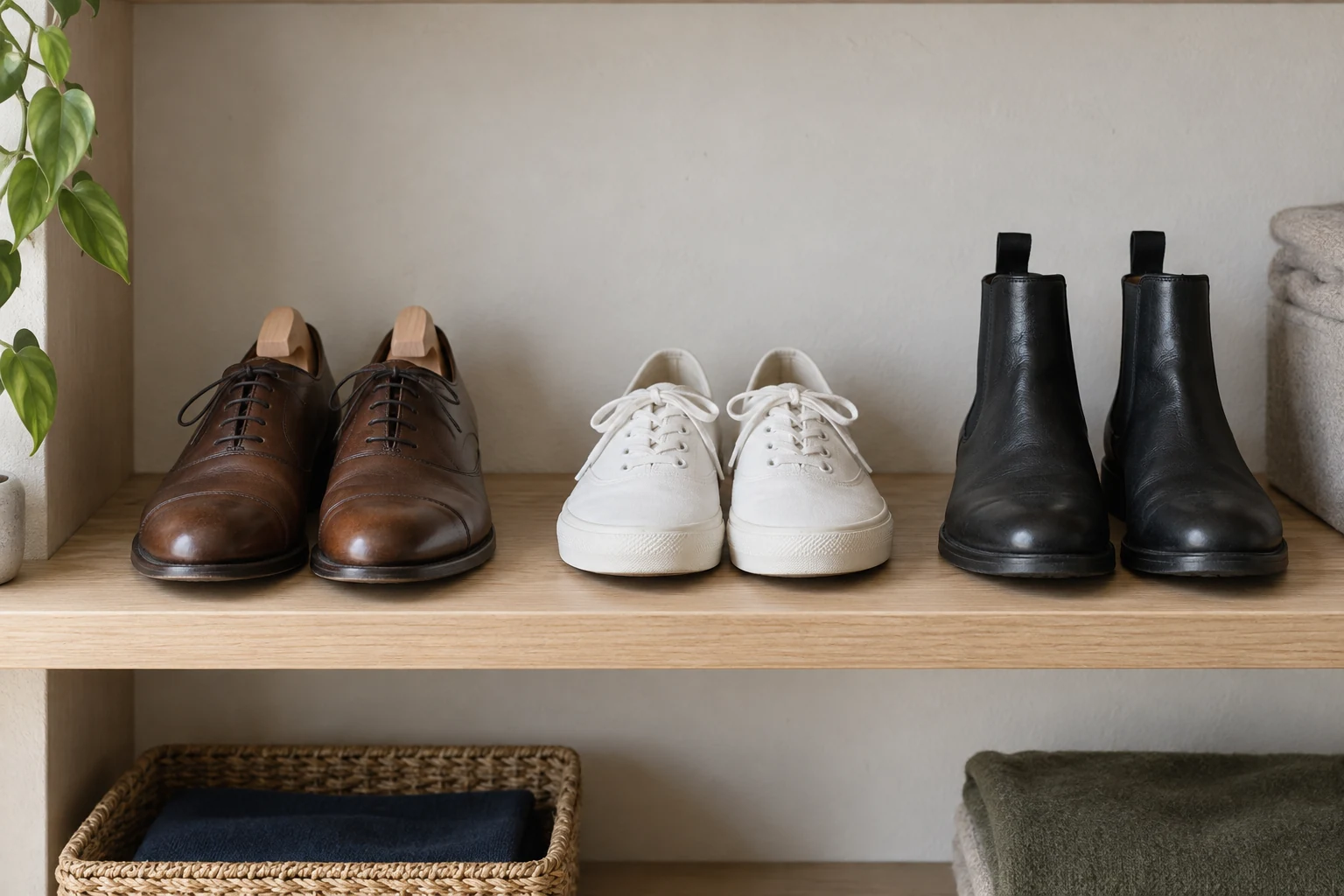
What shoes need in storage
Feet sweat, and a pair of shoes goes back on the shelf holding some of that moisture in the lining and insole. Leather that stays damp can grow mold and smell, and leather that is dried too hard, beside a radiator or in a hot car, stiffens and cracks. The University of Kentucky extension guide to clothing storage suggests giving every item, shoes included, at least a day of rest between wearings, and keeping stored things below about 75°F (24°C) with relative humidity under 55 percent. Most bedrooms and hall closets meet that easily; attics, garages and many basements do not.
Shape is the second need. The toe box and heel counter are built to hold a form, but a boot folded over on itself or a flat pressed under three other pairs will keep the dent. Light is the third. Red Wing advises keeping boots in a cool, dry, ventilated place out of direct sunlight, and Crockett and Jones recommend shoe bags to protect shoes from dust, scratches and light. Put those together and you have the whole method: dry, shaped, shaded and uncrowded.
Use shoe trees for leather shoes
If you own leather dress shoes or boots, shoe trees are the most useful storage item you can buy. Crockett and Jones describe them as absorbing moisture, drying the shoe gradually from the inside and reducing creasing across the vamp, the part over the top of your foot. Red Wing recommends boot trees for the same reasons. Unvarnished cedar shoe trees are the usual choice because the wood takes up moisture well and leaves a clean smell; plastic trees hold shape but do nothing for dampness.
Put the trees in soon after you take the shoes off, while the leather is still warm and slightly damp, and leave them in until the next wear. A tree should fill the shoe without forcing it: the toe piece reaches the front and the heel knob sits in the heel without bulging the leather. You do not need a pair for every shoe you own. Buy them first for the pairs you care most about and rotate, since a shoe that has had a day or two on trees has usually given up its moisture. For boots with tall shafts, a boot shaper or even a rolled magazine keeps the shaft upright so it does not crease at the ankle.
Where to keep the shoes you wear every day
Daily pairs, sneakers, flats and the boots you wear to work, are best kept in the open. An entryway shoe rack with slatted or wire shelves lets air reach the soles and linings, so they dry between wears and dirt stays by the door instead of traveling to the bedroom. Leave a small gap between pairs, and give wet shoes a spot on a tray or mat until they have dried before they join the rest. Limit the rack to what the household actually wears that week; once it overflows, shoes start stacking and heels get stepped on.
A closed shoe storage cabinet by the door looks tidier and keeps shoes out of sight, which matters in small apartments. The trade off is airflow. If you choose a cabinet, put only dry shoes inside, leave the door open for a while after a rainy day, and wipe the shelves now and then. Tip out cabinets are narrow and handy for flats and sneakers, but they angle shoes steeply and suit bulky boots poorly.
How to store shoes in a closet
In the closet, aim to see every pair without lifting another one. A simple shoe rack for the closet floor, two or three tiers, keeps pairs off the ground and in a single row. Shelves work even better if you have them: place shoes side by side, one heel forward and one toe forward if space is tight, which saves a few inches per pair. Keep what you wear most at waist to eye level and party shoes or snow boots higher or lower. Our guide to organizing your closet explains how to plan the whole space by frequency of wear.
Over the door pocket organizers hold flats, sandals and sneakers well and use space that is otherwise empty. They are less kind to heels, which poke through fabric pockets, and to structured leather, which bends when squeezed into a pocket. Clear drop front boxes that stack are a good shoe organizer for a closet with deep shelves, because you can see the pair and open the box without unstacking the pile. Choose boxes with ventilation holes if the shoes will stay in them for weeks. Boots need their own lane: stand them upright with shapers inside, or lay tall boots flat on a top shelf rather than letting them slump.
How to store shoes when you do not have space
When there is no room, store fewer pairs close at hand and move the rest somewhere out of the way. Under bed shoe storage is the classic solution. Low, lidded under bed storage containers, ideally fabric or plastic with vents, keep dust off and slide out easily, and those on wheels save your back. Set pairs side by side rather than stacked, add a sachet of silica gel if your home runs humid, and check the containers at the change of season.
Other overlooked spots: the top shelf of a coat closet for occasion shoes, a narrow bench with a shelf underneath by the door, or a hanging organizer inside a wardrobe door. If you keep bumping into the question of space, it may be a sign that some pairs are no longer worn at all. Our guide to decluttering your clothes applies just as well to shoes, and pairs still in good condition can go to a donation center or be listed for sale.
Plastic or cardboard boxes for shoes
This is one of the most common questions, and both answers come with a condition. Cardboard breathes a little and is free with most pairs, so it is fine for dry, clean shoes in a dry closet. It also absorbs moisture from damp air, softens, crushes under a stack and can attract pests in a basement. Plastic is sturdy and lets you see what is inside, but a sealed plastic box traps whatever moisture the shoes still hold. The Kentucky extension guide warns against plastic bags for storing clothing because they trap moisture, and Red Wing tells owners to avoid plastic bags for leather and use cloth instead.
The practical rule: leather and suede do best in cloth shoe bags, inside a box or on a shelf. Plastic bins are acceptable when they are vented or not fully sealed and the shoes went in bone dry. Tissue paper or a light stuffing in the toe keeps soft shoes in shape whatever box you use. Never close a lid on shoes that were worn that day.
| Option | Works well for | Watch out for |
|---|---|---|
| Open entryway rack | Daily pairs that need to air out | Overflowing and stacking |
| Closed cabinet | Tidy look in small homes | Less airflow; only dry shoes inside |
| Over the door pockets | Flats, sandals, sneakers | Heels poke through; structured leather bends |
| Cardboard boxes | Dry, clean shoes in a dry closet | Softens in damp air, crushes, attracts pests |
| Plastic bins | Visible, sturdy storage when vented | Sealed lids trap moisture |
| Cloth shoe bags | Leather and suede on a shelf or in a box | Needs shoes that went in dry |
How to store shoes for a season or longer
Before a pair goes away for months, it needs to be clean, because dirt and salt left on leather keep working on it in storage. Brush or wipe off dirt, clean the soles, and let the shoes dry fully at room temperature; Red Wing specifically warns against radiators and hair dryers. Condition smooth leather, then polish or not as you prefer, using our guide to polishing shoes. Brush suede and nubuck and treat marks first with the methods in cleaning suede shoes. Wash sneakers and let them dry completely, since trapped damp is what makes a stored pair smell; see cleaning white sneakers.
Then support the shape with trees or paper, bag each pair in cloth so they cannot scuff each other, and store them in a cool, dry room rather than the attic or garage. Label the box so you do not have to open ten to find one. Check stored shoes once or twice a season. A white or greenish bloom on leather is mold: take the pair outside, brush it off, wipe with a cloth barely dampened with a cleaner meant for leather, dry at room temperature and move the rest of the collection somewhere drier. If the smell or staining persists, a cobbler can advise before you treat it yourself.
Common mistakes
Piling shoes on top of each other
Weight crushes toe boxes and heel counters, and hard soles scuff the uppers underneath. Give each pair its own spot, even if that means fewer pairs out at once.
Putting shoes away damp
A closed box or cabinet holds moisture against the lining, which is how odor and mold start. Let shoes air out for a day on an open rack before they go into any container.
Drying wet shoes by the heater
Fast heat shrinks and cracks leather and can loosen glued soles. Stuff wet shoes with plain paper, change it when it is soaked, and let them dry at room temperature, then add shoe trees.
Storing shoes in the attic or garage
Summer heat, winter cold and damp all reach these spaces. Keep shoes inside the living area of the home, where temperature and humidity stay moderate.
Questions people ask
What is the best way to store a lot of shoes?
Split them by frequency. Keep the pairs you wear weekly on an open rack or shelf where you can see them, and move occasional and seasonal pairs into clear, vented boxes or cloth bags stored side by side. Labeling each box saves you from opening every one.
Is it bad to store shoes in their original boxes?
Not if the shoes are clean and dry and the room is dry. The drawbacks are that you cannot see the pair, the cardboard softens in humid air, and stacks of boxes crush the ones at the bottom. For shoes you wear often, open storage is more practical.
Do cedar shoe trees really help?
Shoemakers recommend them because they absorb moisture from the lining and hold the leather in shape while it dries, which reduces deep creasing. They matter most for leather dress shoes and boots worn regularly. Sneakers and canvas shoes do fine with paper stuffing when they need it.
Can I store shoes under the bed?
Yes, as long as the floor is dry and the pairs are clean. Use lidded containers so dust stays out, choose fabric or vented plastic, and set the shoes side by side rather than stacked. Look in every couple of months, especially if you live somewhere humid.
Should I keep silica gel packets with stored shoes?
They can help in a humid home, particularly inside closed boxes of leather shoes. Keep them away from children and pets, and dry or replace them when they stop working. They are a supplement to a dry room, not a substitute for one.
Sources and further reading
References used for this guide. Each opens the original page in a new tab.
Keep reading
Shoes and jewelry
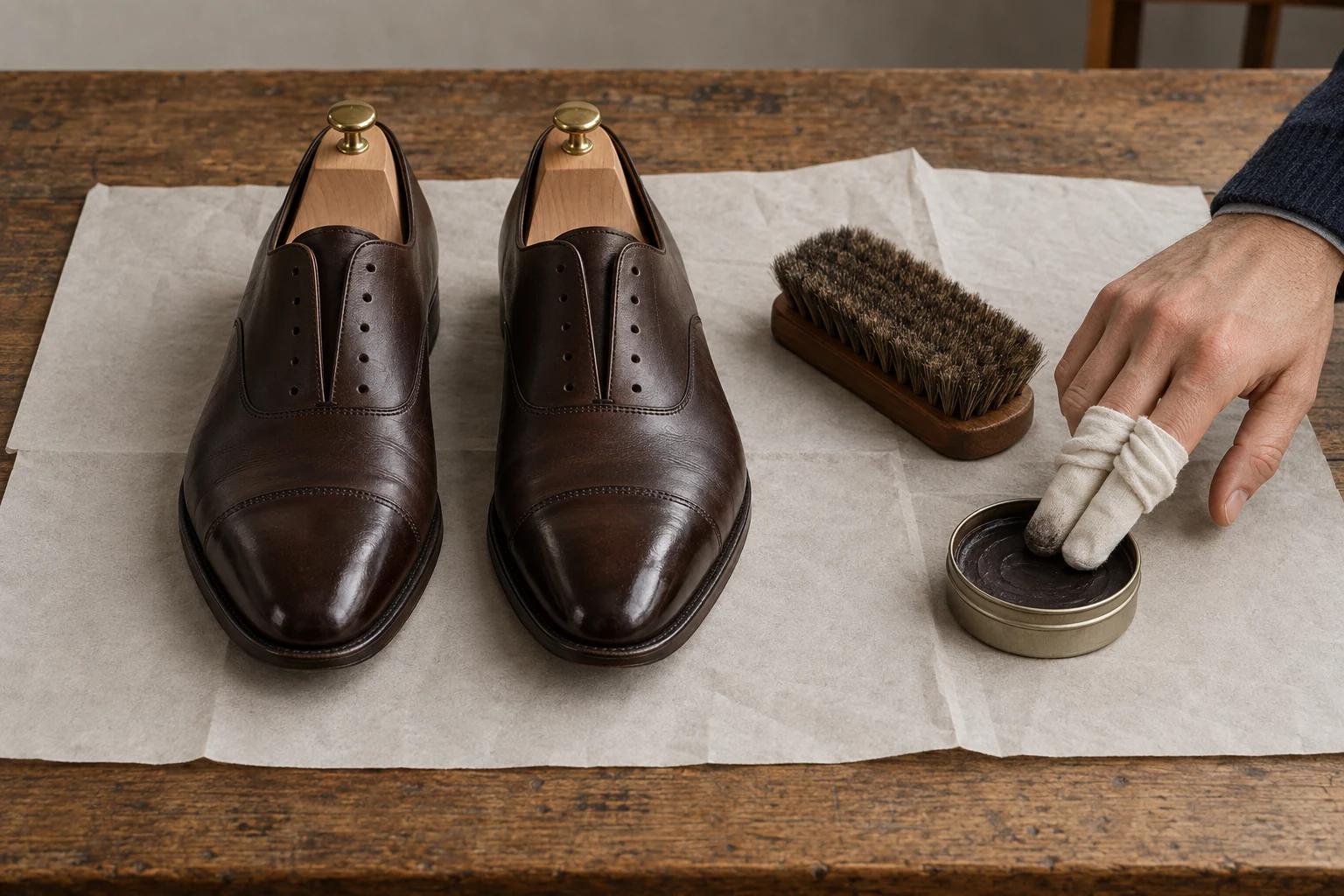
How to polish shoes at home, step by step
How to polish leather shoes at home: clean and condition first, use cream for color and wax for shine, buff properly, and keep the shape with shoe trees.
Shoes and jewelry
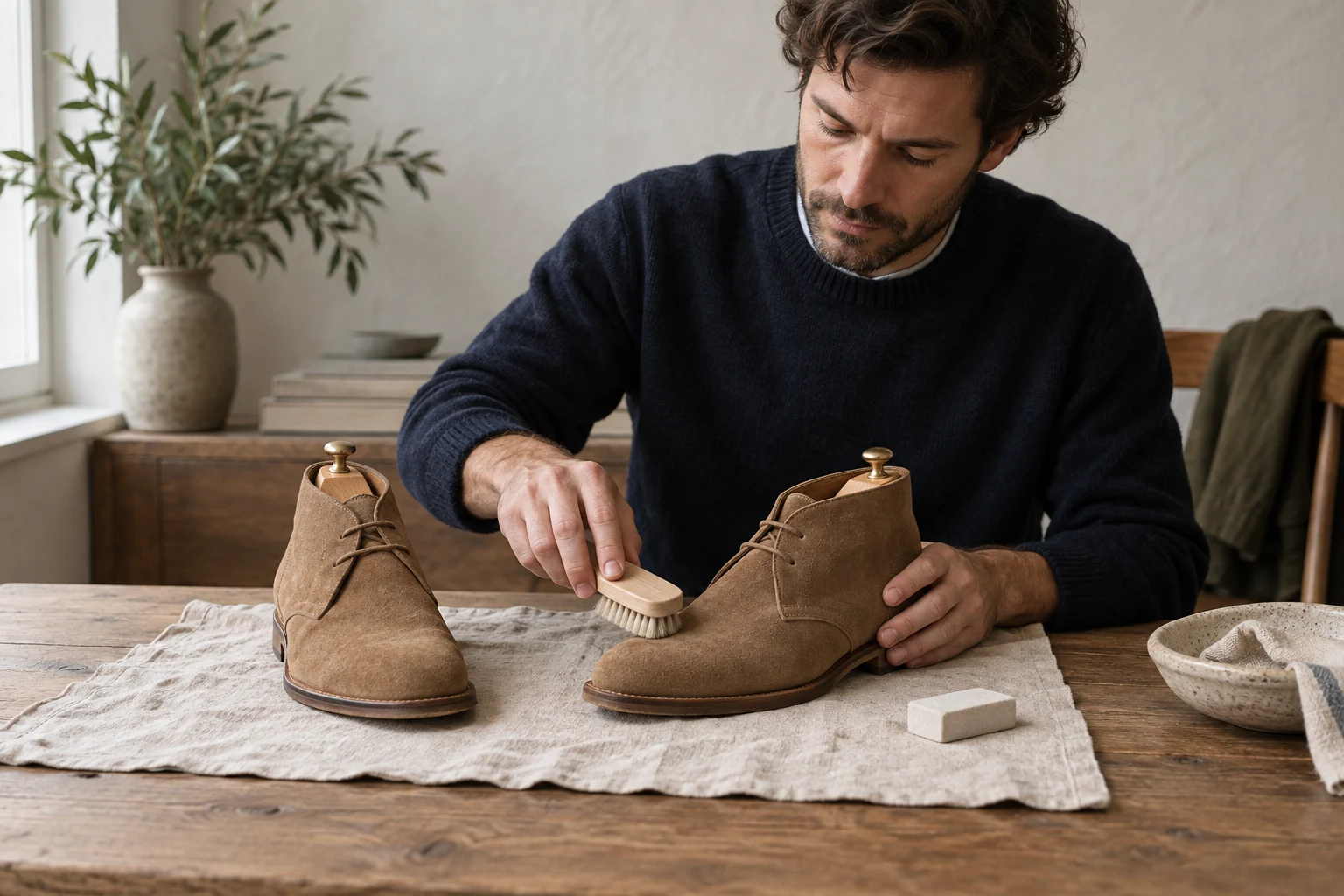
How to clean suede shoes without flattening the nap
Clean suede shoes at home with a brush, a suede eraser and a little patience, and learn how to handle water stains, oil marks and salt lines without soaking them.
Closet and packing
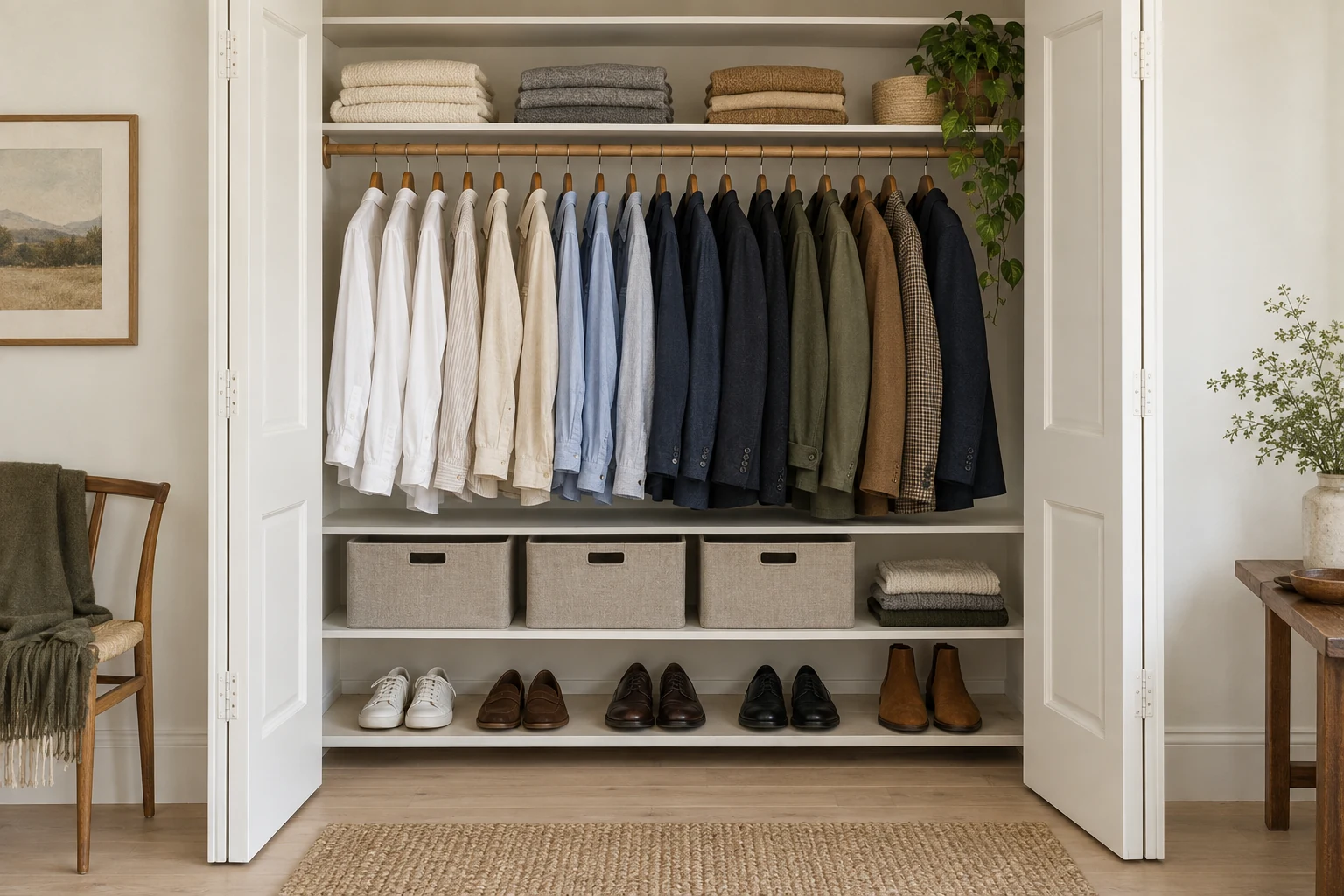
How to organize your closet so you can see everything
How to organize your closet by what you wear most: what to hang and fold, zones and shelves, small closet ideas and a simple seasonal rotation.
Shoes and jewelry
How to clean white sneakers by material
How to clean white sneakers at home: a gentle method for leather, canvas and mesh, what to do about soles, laces and yellowing, and why the washer is a last resort.
Closet and packing
How to declutter your clothes and decide what to keep
How to declutter clothes one category at a time, with honest questions for deciding what to keep, what to repair, and where the rest should go.