How to air dry clothes indoors and out
In this guide
Maybe you have no dryer, maybe the label says do not tumble dry, or maybe you have noticed that your favorite T shirts shrink and fade a little every time they go through the machine. Air drying is the gentlest thing you can do for most clothes and it uses no energy. It also has a reputation for crunchy towels, sour smelling shirts and a living room full of damp laundry for two days. Knowing how to air dry clothes well is mostly about speed: the faster water leaves the fabric, the softer and fresher the result.
This guide covers getting clothes as dry as possible before you hang them, how to hang each kind of garment, indoor and outdoor drying, and how to fix stiffness and smells. The advice applies to most washable clothes; delicate pieces such as wool, silk and bras have their own notes below and in their guides.
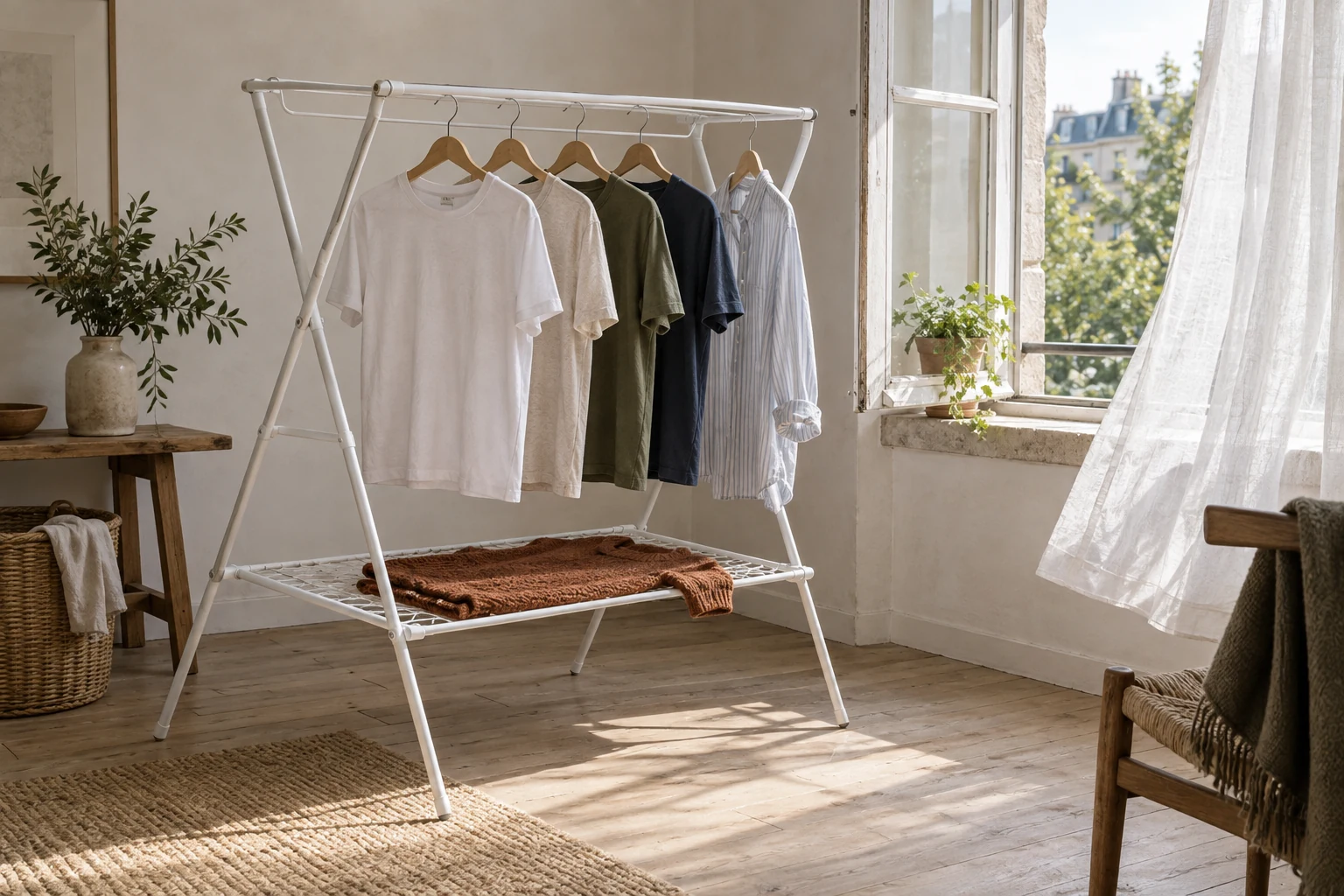
Start in the washer
Drying begins at the end of the wash cycle. Use the highest spin speed the fabric can take, because every bit of water the spin removes is water that does not have to evaporate in your home. Cotton, denim and towels can take a high spin; delicates and wool need a gentle one. Do not overload the drum, since tightly packed clothes spin out less water and come out twisted into ropes that dry slowly and wrinkle deeply.
Take clothes out as soon as the cycle ends. Wet laundry left sitting in a closed drum starts to smell within hours, and no amount of fresh air afterward fully fixes it. If you often come back late, use the delay start so the cycle finishes when you are home. Using the right amount of detergent matters too, because residue left in the fibers makes air dried clothes feel stiff; our guide to how much detergent to use explains how to measure it.
How to hang each kind of garment
Shake every piece out sharply before it goes on the rack or line. This lifts the fibers, releases creases and does more to prevent stiffness than anything else. Then give each piece the shape you want it to dry in, because air drying sets whatever shape the fabric is in while the water leaves.
Shirts, blouses and dresses on hangers
Hang them on plastic or wooden hangers, fasten the top button, straighten the collar and pull the seams and placket straight with your hands. They dry with far fewer wrinkles, often needing no ironing. Avoid wire hangers, which can rust and leave marks on wet fabric.
Sweaters and knits flat
Lay wool, cashmere and heavy knits flat on a towel or a mesh sweater rack and pat them into shape. Hanging lets water weight stretch the shoulders and length. Woolmark advises drying wool away from direct sunlight and radiators; our guide to washing wool covers the full routine.
Pants and jeans by the waist or hems
Clip pants by the waistband or hang them upside down by the hems so the weight of the legs pulls out wrinkles. Turn jeans inside out to protect the color and let the thick pockets and seams dry.
T shirts and everyday cotton
Drape T shirts over a rack bar at the chest rather than pinning them by the shoulders, which can leave peg marks and bumps. Or hang them on hangers. Turn dark and printed pieces inside out.
Small items last
Socks, underwear and bras go on clips or a hanging clip rack. Hang bras by the center or the band, not by the straps, which stretch when wet.
Air drying clothes indoors
Drying clothes indoors is perfectly fine as long as the moisture has somewhere to go. Every load releases its water into the room as it dries, and the EPA lists indoor clothes drying among the sources of excess household moisture. The agency recommends keeping indoor humidity below 60 percent, ideally between 30 and 50 percent, and notes that damp materials dried within 24 to 48 hours usually do not grow mold. Clothes that take longer than a day to dry are the ones that smell musty.
Choose the room with the best airflow, not the warmest corner. Set the drying rack for clothes near an open window or in a room with an exhaust fan, space the pieces so they do not touch, and point a fan across them. A dehumidifier for drying clothes works very well in a closed room, especially in humid summers and basements, and pulls the water out of the air as it leaves the fabric. In a small apartment, a folding or wall mounted clothes drying rack over the bathtub, with the bathroom fan running, keeps the moisture out of your living space. Do not drape clothes directly on radiators or space heaters: it scorches and shrinks fabric and can be a fire hazard with heaters.
| Garment | How to dry it | Watch for |
|---|---|---|
| Shirts, blouses, dresses | Plastic or wooden hanger, top button fastened, seams pulled straight | Wire hangers can rust and mark wet fabric |
| Sweaters and knits | Flat on a towel or mesh rack, patted into shape | Hanging stretches shoulders; keep away from sun and radiators |
| Pants and jeans | Clipped at the waistband or hung upside down by the hems | Turn jeans inside out for color and thick seams |
| T shirts | Draped over a rack bar at the chest, or on a hanger | Pegs at the shoulders leave marks and bumps |
| Bras | Clipped at the center or the band | Wet straps stretch |
Air drying clothes outside
A breezy, dry day outside is the fastest and freshest way to air dry. Wind does more than sun, because moving air carries moisture away from the fabric. Hang clothes with the heaviest part at the bottom, peg shirts by the side seams or hem rather than the shoulders, and leave space between pieces.
Sunlight is a mixed blessing. It helps whiten cotton sheets and towels, but it fades colors and can yellow wool and silk, so dry dark, bright and delicate pieces inside out and in the shade. If you have pollen allergies, clothes dried outside on high pollen days can carry it indoors, so dry inside on those days or give the load a quick shake before bringing it in. Bring laundry in once it is dry; leaving it out overnight lets dew dampen it again.
How to dry clothes faster
Most clothes air dry in a few hours to a day, depending on the fabric and the air. Thin synthetics and athletic wear can be dry in two or three hours; jeans, towels and heavy sweatshirts can take a full day indoors. To speed things up, run an extra spin, separate thick and thin items so the thin ones can come down early, turn thick pieces inside out halfway through, and move air across them with a fan.
For a single item you need urgently, roll it firmly in a dry bath towel and press or kneel on the roll to squeeze out more water, then hang it in front of a fan. Pockets, waistbands and collars dry last, so turn pockets out. Our guide to hanging clothes has more on hangers that suit different garments.
Fix stiffness and musty smells
Air dried cotton feels stiffer than tumbled cotton because the fibers dry pressed together without movement. Less detergent, a hard shake before hanging, and a breeze all help. So does a quarter to half cup of white vinegar in the rinse, which clears detergent residue, but never add vinegar to a load that contains chlorine bleach. If your clothes can go in a dryer, five to ten minutes on low heat after air drying softens them without the wear of a full cycle.
A musty smell means the clothes dried too slowly or sat wet too long. You can sometimes freshen a lightly musty piece without washing by hanging it outside in a breeze or in the sun for a few hours, if the fabric tolerates sun. If the smell persists after drying, rewash with the right amount of detergent and dry faster the next time. Visible spots of mildew need a proper treatment; see removing mold from clothes and getting smells out of clothes.
Common mistakes
Crowding the rack
Pieces touching each other trap wet air between them and dry slowly and unevenly. Leave a gap between items, even if it means two batches.
Drying on a radiator
Direct heat shrinks and scorches fabric and can leave uneven stiffness. Place the rack near the heat, not on it, and keep laundry well away from space heaters.
Hanging sweaters
Water weight stretches knits out of shape on a hanger or line. Dry them flat on a towel or a mesh rack.
Questions people ask
Is air drying better for your clothes?
Generally yes. Air drying avoids the heat and tumbling that shrink cotton, weaken elastic and wear fibers into lint, so clothes keep their size and color longer. The tradeoffs are time, space and some stiffness in cotton.
Is it okay to air dry clothes indoors?
Yes, as long as you ventilate. Open a window, run a fan or exhaust fan, or use a dehumidifier so humidity stays below about 60 percent and the clothes dry within a day. Drying indoors in a closed, humid room is what leads to musty smells and condensation.
Can I put clothes labeled air dry in the dryer?
Not if the label says do not tumble dry or line dry only. Those pieces often have elastic, coatings, wool or delicate fibers that heat damages. If the label allows tumble drying on low, a short cool cycle to soften them after air drying is fine.
What are the downsides of air drying?
It takes longer, needs space, and can leave cotton and towels a little stiff. Outdoors, sun fades colors and pollen can cling to fabric. Indoors, slow drying in a humid room can cause musty smells, which good airflow prevents.
Sources and further reading
References used for this guide. Each opens the original page in a new tab.
Keep reading
Closet and packing
How to hang clothes: which hanger for what
How to hang clothes so they keep their shape: what to hang and what to fold, which hanger suits each garment, small closet fixes and how to hang clothes to dry.
Washing and ironing
How to do laundry: a complete beginner's guide
How to do laundry from start to finish: reading labels, sorting, choosing the cycle and water temperature, measuring detergent, loading the washer and drying.
Washing and ironing
How to get smell out of clothes
How to get smell out of clothes, whether it is sweat, a musty washer smell or smoke: airing, better washing, careful use of baking soda and vinegar, and prevention.
Washing and ironing
How to wash towels so they stay soft
How to wash towels in a washing machine: the right temperature, less detergent, no softener, when vinegar helps, and how to fix towels that smell or feel stiff.
Washing and ironing
How to get wrinkles out without an iron
Five ways to get wrinkles out without an iron: a clothes steamer, shower steam, the dryer, a spray bottle and smart hanging, matched to the fabric you have.