How to wash cashmere by hand or machine
In this guide
Most cashmere that comes out of a wash smaller and thicker was ruined in a few careless minutes: water that was too warm, hands that rubbed, a spin in the dryer. None of that is needed. Knowing how to wash cashmere comes down to a few decisions: whether the label allows water at all, which detergent to use, how little you move the garment while it is wet, and how patiently you let it dry.
Cashmere is the fine undercoat of cashmere goats (our guide to what cashmere is explains grades and quality), and like wool it is a protein fiber with a scaly surface. Warm water plus rubbing, twisting or tumbling lets those scales lock together, which is how knitwear felts and shrinks. Everything below is built around avoiding that combination.
Start with the care label
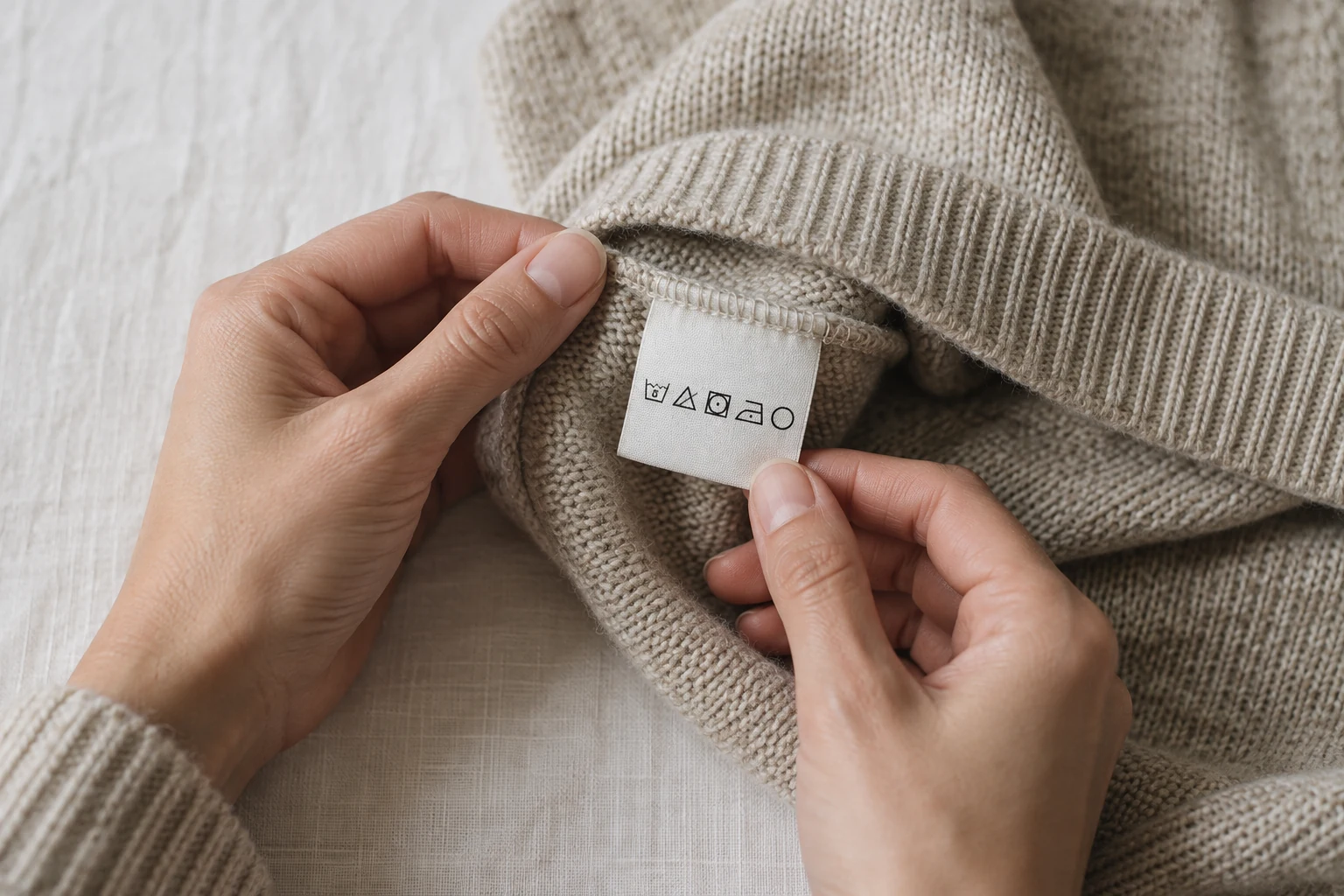
Look for the washtub symbol before anything else. A tub with a hand in it means hand washing is fine; a tub with a number and one or two bars underneath means a gentle machine cycle at that temperature is allowed; a circle with a P or F means the maker tested it for professional dry cleaning. If you are unsure what the marks mean, our guide to reading care label symbols walks through each one. Under the US care labeling rule, the maker only has to give you one safe method, so a label that simply says dry clean does not prove water will harm the piece. Dry clean only is a stronger signal that the maker expects water to cause damage.
Knitted sweaters, cardigans and hats are the pieces most often washed at home. Woven cashmere, such as a scarf, a coat or a blanket, is a different case. Johnstons of Elgin, a Scottish mill that has worked cashmere for generations, recommends hand washing its knitwear but professional dry cleaning for woven pieces. Anything lined, structured with interfacing, trimmed in leather or suede, or heavily beaded belongs with a cleaner regardless of what you are willing to risk.
How often cashmere needs washing
Cashmere does not need washing after every wear. Johnstons suggests a gentle wash after roughly three or four wears for knitwear, and many people stretch that further for a sweater worn over a shirt. Between washes, lay it flat or drape it over a chair in fresh air overnight, which lets odors fade without any water or handling. Brush off lint and deal with small food marks by dabbing, not rubbing.
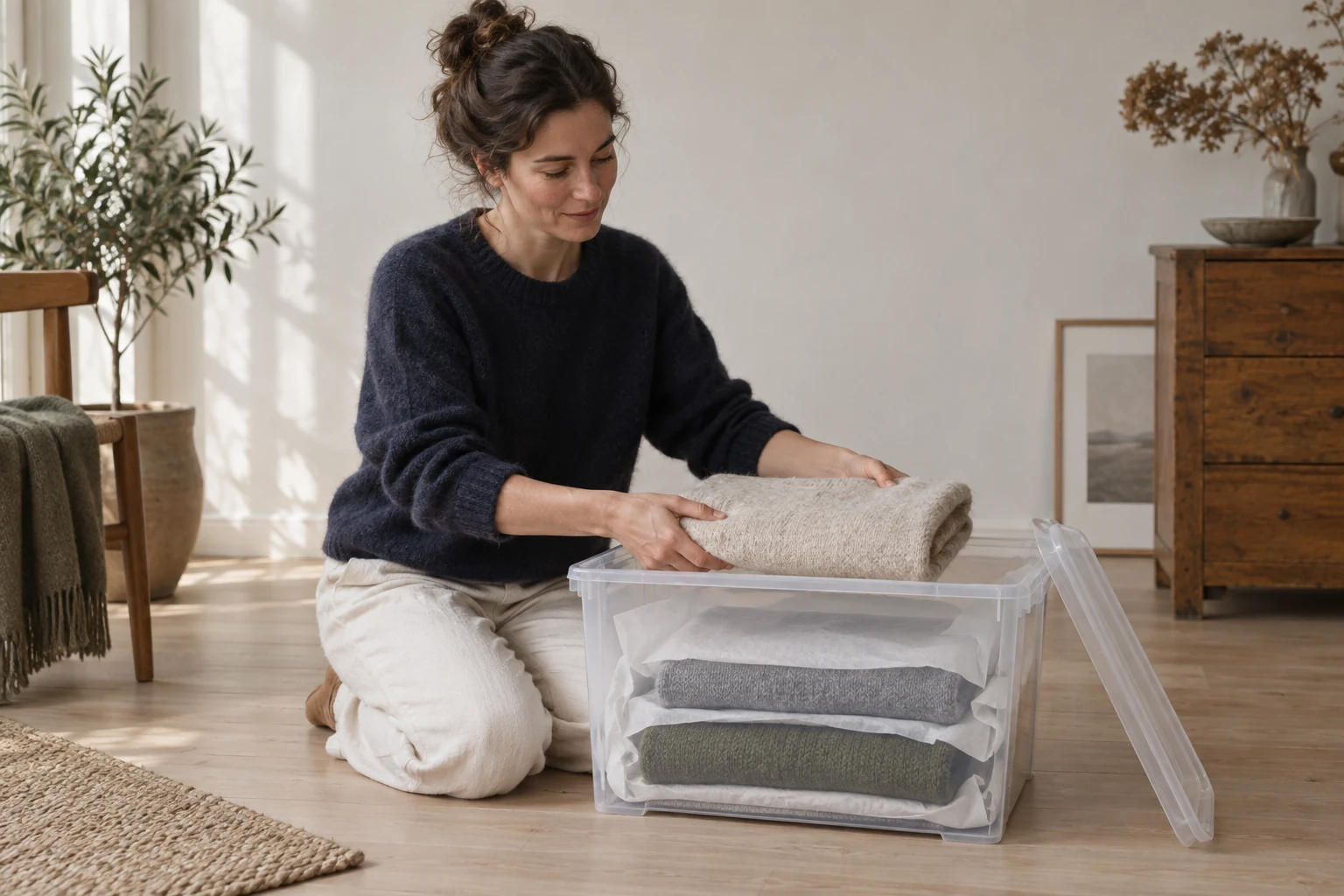
Do wash it before storing it for the summer. Clothes moth larvae feed on animal fibers and do the most damage where food or perspiration stains are left behind, so a clean, fully dry sweater is the one most likely to survive the off season. Our guide to storing knitwear covers folding, breathable bags and moth prevention in detail.
Choose a detergent made for wool and cashmere
The best detergent for cashmere is a mild, pH neutral wash labeled for wool. The Woolmark Company advises against enzyme detergents, heavy duty formulas and any bleach, chlorine or oxygen. The reasoning is simple: the enzymes in many everyday detergents are there to break down protein stains, and cashmere is itself a protein. Bottles sold as cashmere shampoo or wool and cashmere shampoo are wool detergents under a friendlier name, and they work well. Use the dose on the bottle; extra detergent only means more rinsing.
You will often read that hair shampoo is the secret to washing cashmere. It is gentle enough in a pinch, but it is formulated for scalp and hair, and many shampoos carry conditioners and fragrance that you would then have to rinse out of a sweater. If you have nothing else, choose a plain one without added conditioner, use a small amount and rinse well. Go easy on fabric softener too: Woolmark notes that too much softener can encourage pilling in later washes.
How to wash cashmere by hand
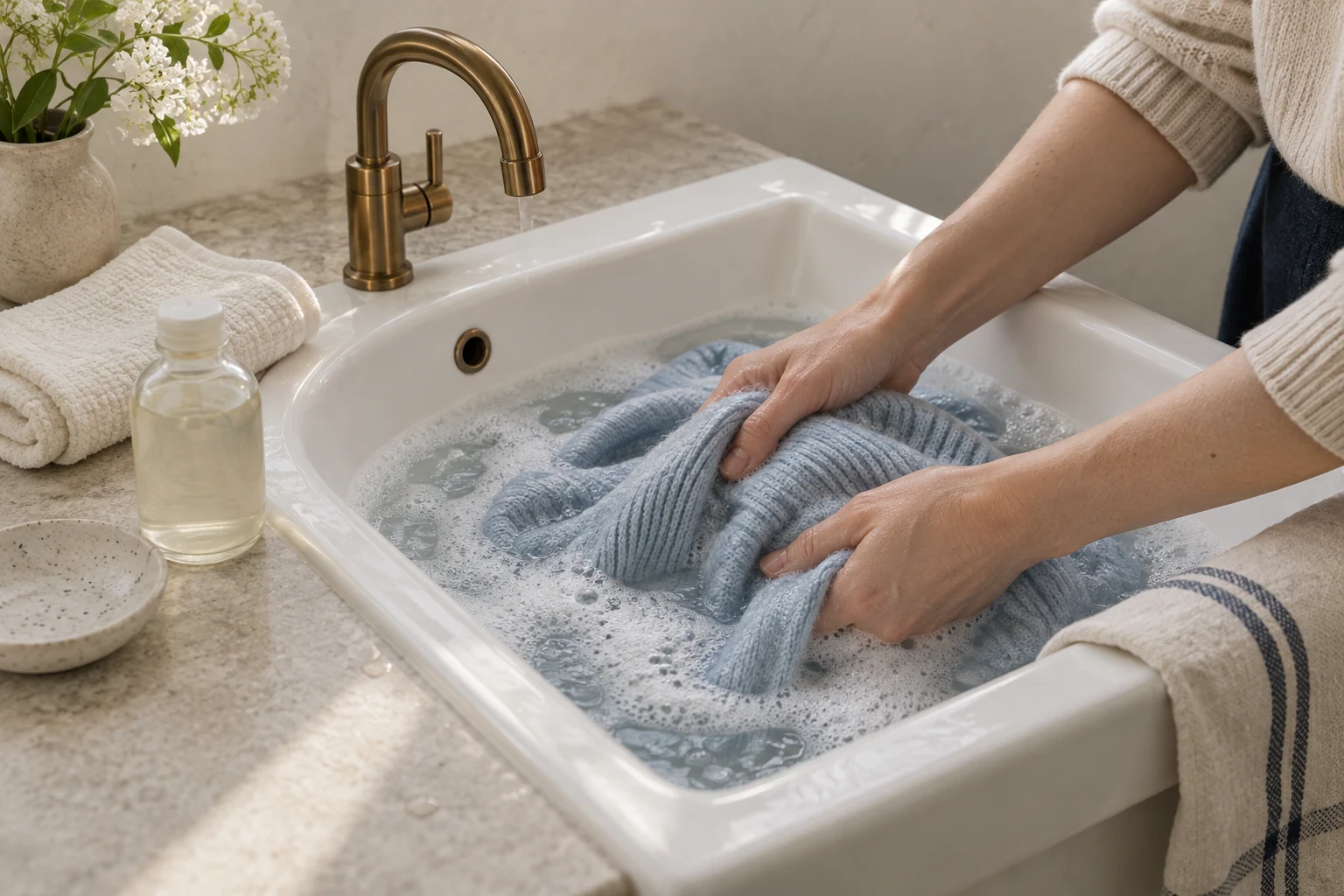
Hand washing is the gentlest option and the one most cashmere makers prefer. Clear a sink or basin, lay out a clean, pale towel and make sure you have a flat place to dry the piece before you start, because a wet sweater should go straight from the rinse to the towel.
Fill a basin with lukewarm water
Aim for water that feels barely warm on your wrist, around 86°F (30°C), which is the temperature Woolmark suggests for hand washing. Dissolve the detergent fully before the garment goes in so no concentrated patch sits on the fibers.
Turn it inside out and submerge it
Inside out protects the face of the knit from what little friction there is. Press the sweater under the surface and let it soak for a few minutes, no more than about ten.
CheckYou should see it darken evenly as the water soaks through.
Squeeze, do not scrub
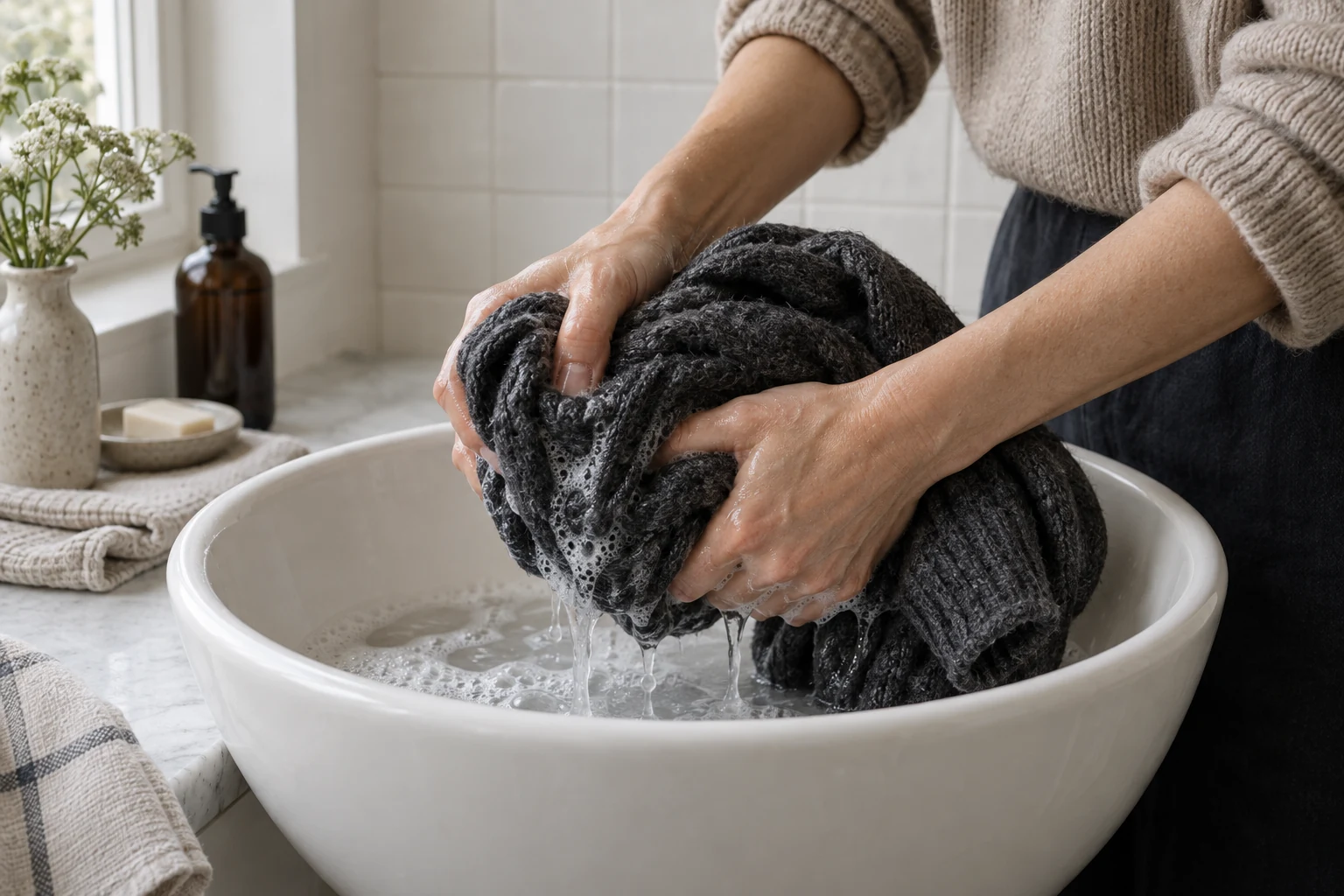
Gently squeeze the suds through the fabric, paying a little attention to the cuffs, collar and underarms. Do not rub the knit against itself, twist it or lift it by the shoulders, because rubbing is what starts felting and the weight of water stretches a hanging sweater.
Rinse at the same temperature
Drain the basin, support the sweater with both hands while it drains, and refill with clean water of the same temperature. Johnstons recommends rinsing several times at a steady temperature. Repeat until the water runs clear and the fabric no longer feels slippery.
Press out the water in a towel
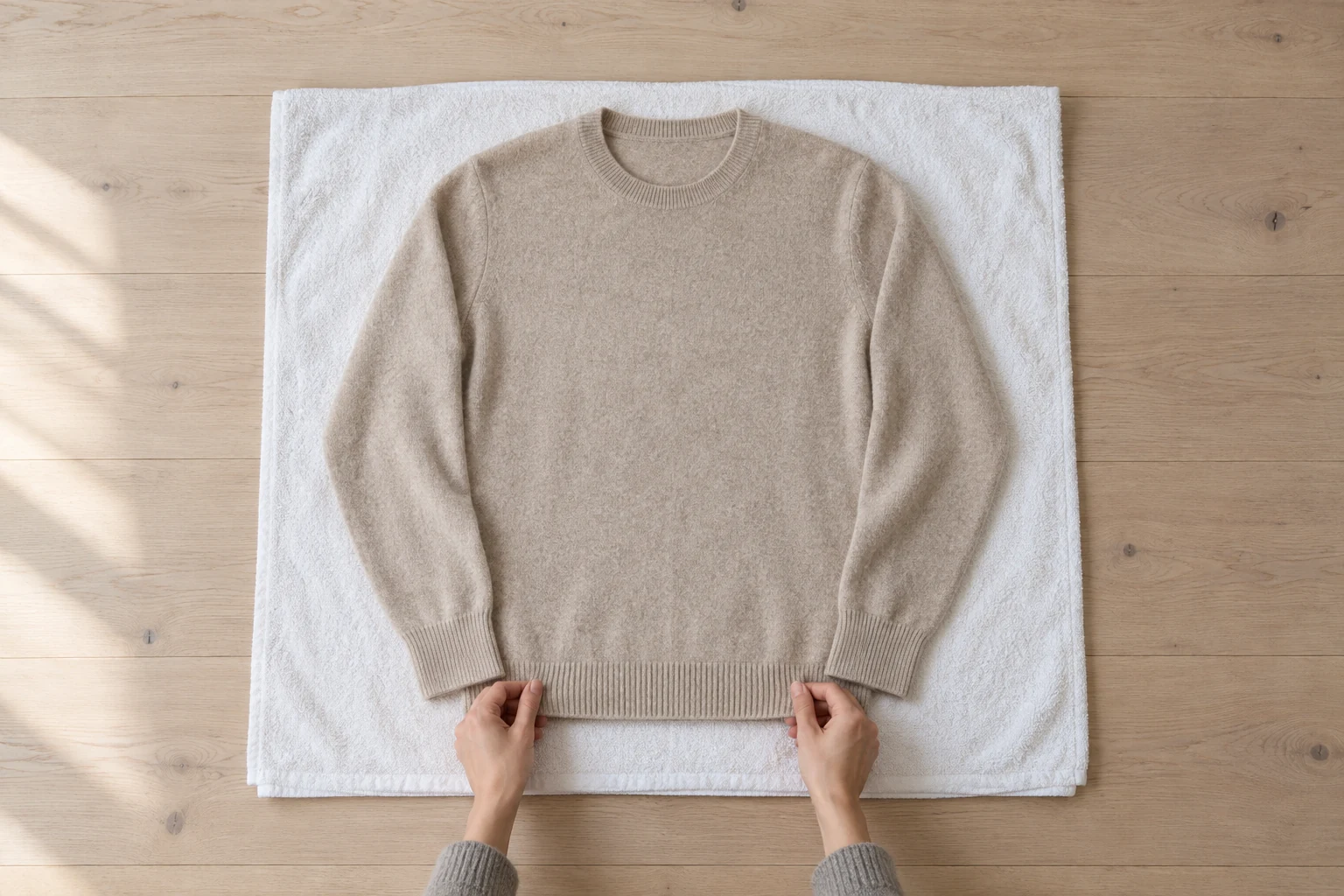
Press the sweater against the side of the basin to remove the worst of the water, then lay it flat on the towel, roll the towel up from one end and press down along the roll. Never wring it.
CheckWhen you unroll it, the sweater should feel damp rather than dripping.
How to wash cashmere in a washing machine
Only use a machine if the label shows a washtub symbol rather than a hand in the tub. Some cashmere is sold as machine washable, and the label is the only reliable proof of that; you cannot tell by touch. Woolmark explains that untreated animal fibers felt because their scales interlock during agitation, and machine washable finishes work by smoothing those scales. An untreated sweater in a machine is at real risk even on a gentle setting.
If the label allows it, turn the piece inside out, put it in a mesh laundry bag and choose the wool or hand wash cycle with cold or cool water and the lowest spin speed. Check the actual temperature the cycle uses, since program names vary between machines. Wash it with a few similar weight knits or on its own, never with towels or jeans that would rub against it, and take it out as soon as the cycle ends so it can dry flat.
Dry it flat and reshape it
Lay the sweater on a dry towel or a mesh drying rack, then pat it back into shape: shoulders square, sleeves straight, ribbed cuffs and hem gently eased in. You can use a sweater you have not washed, or a measurement taken beforehand, as a guide to the original width and length. Keep it away from radiators, heaters and direct sun, and do not put it in the dryer. Turning it over once, and swapping to a fresh towel if the first one is soaked, helps the underside dry evenly.
Expect a light sweater to take most of a day and a chunky knit longer, especially in a humid room. Seams and cuffs dry last, so check them before you fold the piece away. To smooth creases once dry, Johnstons suggests a cool iron over a damp cloth; holding a steamer or steam iron a little above the surface also works, as our guide to steaming clothes shows.
Cashmere scarves, coats and when to use a cleaner
Can you dry clean cashmere? Yes, when the label shows a P or F, and for woven scarves, coats and anything tailored it is usually the right choice. Between cleanings, shake a scarf out, air it and blot fresh spots with a little cold water; Johnstons suggests testing any spot cleaning on a hidden corner first with colored pieces. If a knit scarf carries a hand wash symbol, wash it exactly like a sweater, but pay attention to fringes, which tangle if you swish them, and dry it flat with the fringe combed straight. A cashmere throw follows the same logic: a knitted one can be washed like a large sweater if the label allows and you have room to dry it flat, while a woven one is a job for the cleaner, as are most coats; see our guide to cleaning a wool coat for what you can do at home between visits.
Choose a cleaner over your sink when the label says dry clean only, when the piece mixes cashmere with silk, leather or a lining, when a dark or bright color bleeds onto a damp white cloth pressed against a hidden seam, or when the stain is large and oily. Take it in soon and point out the stain, rather than trying detergent on it first.
| Piece | Method |
|---|---|
| Knit sweater, cardigan or hat with a hand wash symbol | Hand wash at about 86°F (30°C), dry flat |
| Knit labeled machine washable | Wool cycle, cool water, mesh bag, lowest spin |
| Knit scarf with a hand wash symbol | Wash like a sweater, keep fringes still, dry flat with fringe combed |
| Woven scarf, coat or throw | Professional dry cleaning |
| Lined, structured, leather or suede trimmed, beaded, or mixed with silk | A cleaner, whatever the label allows |
Common mistakes
Using hot water or a normal machine cycle
Heat and agitation together are what felt cashmere, the same combination people use deliberately when they want to shrink clothes. Felting cannot be undone. If a sweater comes out only slightly tighter, soak it again in lukewarm water with a little wool detergent, press out the water and gently ease it back to size while damp, but accept that a thick, matted knit will not return.
Hanging a wet sweater
Water makes a knit heavy, and a hanger lets that weight pull the shoulders into points and the body into a longer, narrower shape. Always dry it flat, and fold rather than hang it in storage too.
Treating pills as damage
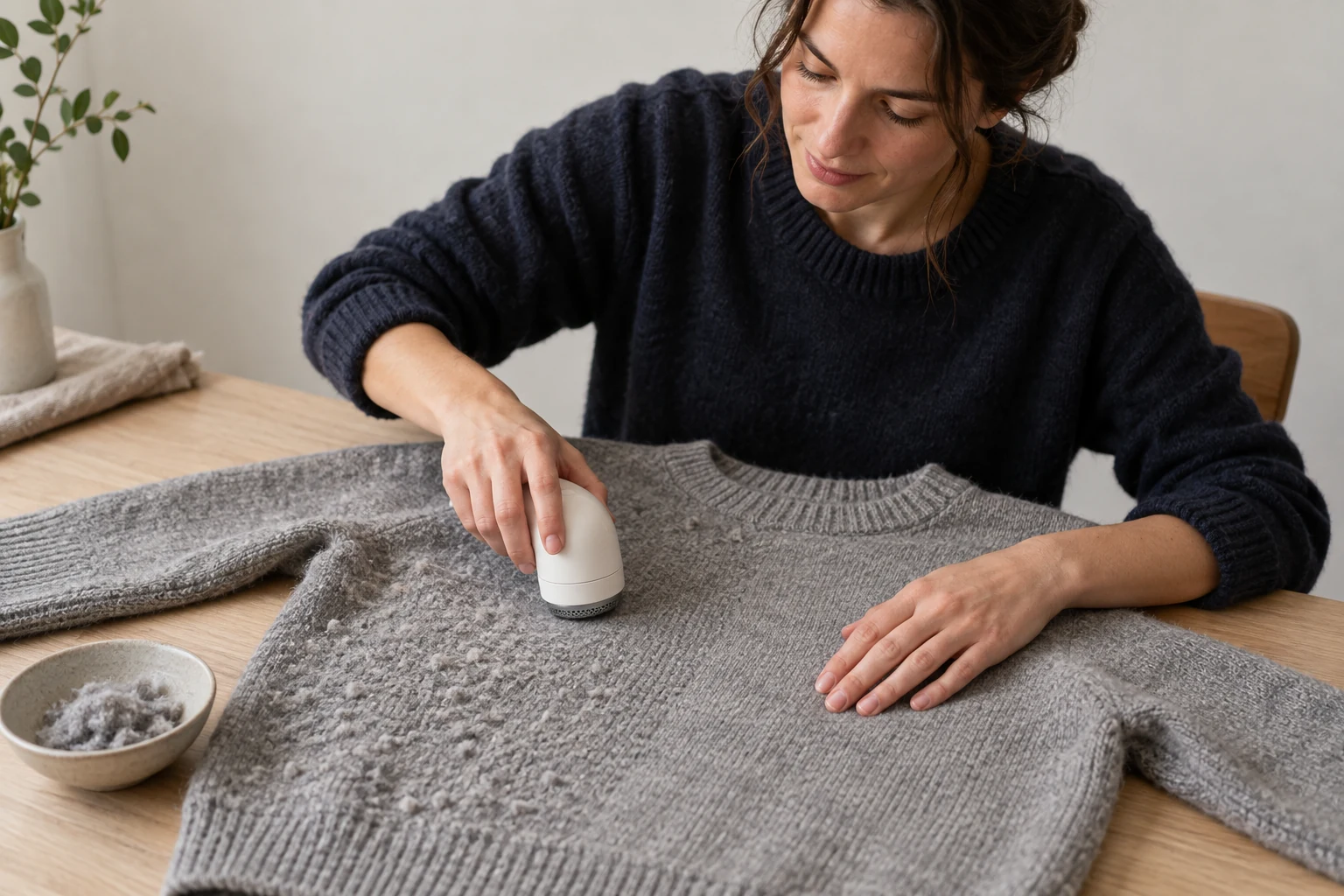
Small balls of fiber on the sides and underarms are normal, especially in the first weeks of wear, and they are not a sign that you washed it wrong. Remove them with a cashmere comb or fabric shaver on a flat surface, as described in our guide to removing pilling.
Questions people ask
Does 100% cashmere shrink?
Yes. Pure cashmere is an animal fiber with a scaly surface, and warm water combined with rubbing or tumbling makes those scales lock together, so it felts and shrinks just as wool does. Lukewarm water, very little handling and flat drying prevent it. Only a label that shows a machine wash symbol tells you the piece has been treated to resist it.
What detergent should I use for cashmere?
Use a mild, neutral wash that says it is suitable for wool or cashmere and contains no enzymes or bleach. Products sold as cashmere shampoo are fine. A gentle liquid laundry detergent for delicates can work if its label confirms it is safe for wool.
Can I use dish soap on cashmere?
Not for the whole wash. Dish liquid is designed to cut grease on plates, and cashmere makers and Woolmark point you to a mild detergent made for wool. A tiny drop dabbed onto an oily spot and rinsed out thoroughly is a common spot treatment, but test it on an inside seam first, especially on dark or bright colors.
Can you put cashmere in the dryer?
No. Even low heat combined with tumbling can felt and shrink cashmere. Dry it flat on a towel or rack at room temperature.
Is it better to dry clean or hand wash cashmere?
For knit sweaters with a hand wash symbol, careful hand washing is gentle and many makers prefer it. For woven scarves, coats and anything labeled dry clean only, a professional cleaner is the safer route. When the label gives only one method, follow that method.
How do you wash a cashmere and wool blend?
Treat it exactly like pure cashmere, following the label, because both fibers felt the same way. Our guide on washing wool covers the Woolmark approach for blends and machine washable wool.
Sources and further reading
References used for this guide. Each opens the original page in a new tab.
- Johnstons of Elgin: how to wash cashmere Opens in a new tab
- Johnstons of Elgin: caring for cashmere knitwear and woven pieces Opens in a new tab
- The Woolmark Company: how to wash wool Opens in a new tab
- The Woolmark Company: choosing a detergent for wool Opens in a new tab
- Federal Trade Commission: complying with the Care Labeling Rule Opens in a new tab
- The Woolmark Company: how machine washable wool works Opens in a new tab
Keep reading
Washing and ironing
How to wash a wool sweater without shrinking it
How to wash a wool sweater by hand or in the machine: read the label, pick a wool detergent, keep water cool and calm, then dry it flat so it keeps its shape.
Closet and packing
How to store sweaters: folding, seasons and moths
How to store sweaters day to day and between seasons: fold instead of hang, clean before packing, choose bins or bags with care, and keep clothes moths out.
Washing and ironing
How to remove pilling from a sweater, and lint too
How to remove pilling from a sweater with a fabric shaver or sweater comb, clear lint with a roller, and wash and wear knits so the pills come back more slowly.
Washing and ironing
How to hand wash clothes properly
How to hand wash clothes in a sink or basin: which detergent to use, water temperature by fabric, how long to soak, how to rinse and how to dry without stretching.
Washing and ironing
Laundry symbols explained: how to read a care label
What laundry symbols mean, in plain words: the wash tub, triangle, square, iron and circle, plus the dots, bars and crosses that change each instruction.