How to clean a hat of any kind
In this guide
Can it go in the washer? The question usually comes while you are looking inside a favorite hat, at the band that sat against your forehead all summer and slowly turned gray, yellow or salty white. The outside collects only dust and the odd splash; the band is the real problem. And some hats come out of water looking like a different hat.
The safe way to clean a hat starts with one question: what is it made of, and what gives it its shape? A cotton cap, a felt fedora, a woven straw hat and a knit beanie need four different methods. This guide sorts them, then covers sweat stains, drying and the few things that ruin hats for good.
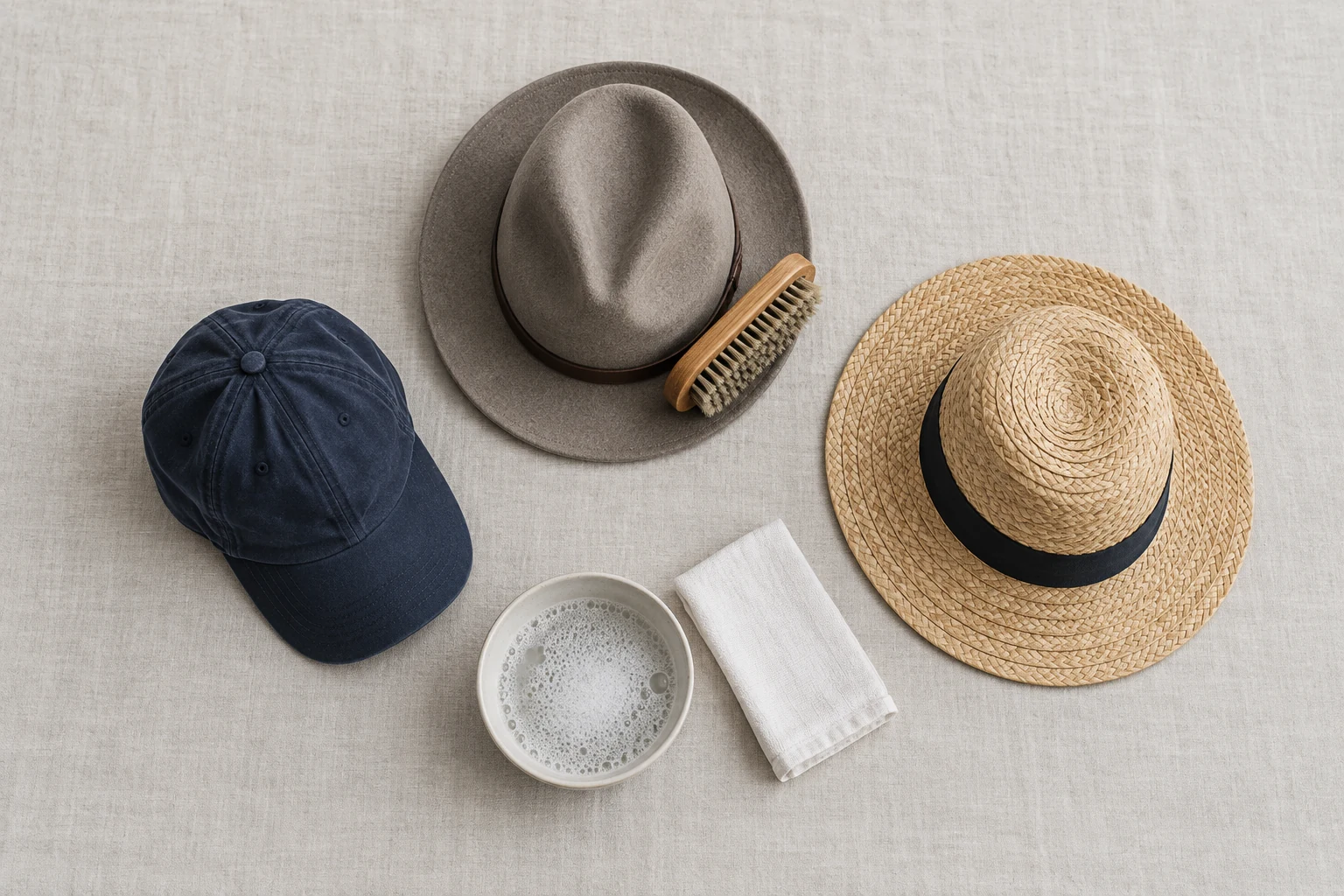
Identify the hat before you get it wet
Read the label first if there is one, and our guide to reading care symbols will translate it. Then look at the construction. A soft, unstructured cap in cotton or polyester usually tolerates a gentle hand wash. A structured cap with a stiff front panel, a fitted cap with a sized sweatband or an older cap whose brim might contain cardboard should never be soaked. New Era, for example, describes its structured fitted caps as spot clean only and warns against submerging them or drying them by machine.
Felt hats, from fedoras to cowboy hats, are made of wool or fur fibers matted together and shaped with heat and moisture, so water and heat can soften or shrink them. Straw hats are woven plant fibers, often stiffened with sizing, and they can warp or lose their stiffness when soaked. Knit hats are simply small sweaters. Hats with leather, suede or silk parts belong in the most careful category: dry methods only, or a professional. Our guide to types of hats helps if you are not sure which family yours belongs to.
How to clean a baseball cap or soft fabric hat
For a washable fabric cap, fill a clean basin with cool to lukewarm water and a small amount of mild liquid detergent. A drop of dish soap also works on greasy sweat marks, since it is designed to lift oil, but rinse it out thoroughly. Test an inside seam first to be sure the color does not bleed, then work the band and any marks with a soft toothbrush, rinse in clean water and press the water out with a towel rather than wringing.
For caps that should not be submerged, dip only the brush or a cloth in the soapy water and work one area at a time, keeping the brim as dry as you can. New Era suggests testing multicolored caps first so darker panels do not bleed into lighter ones. The full routine, including what to do with a cardboard brim, is in our guide to washing a baseball cap. The washing machine and the dishwasher are poor shortcuts for any cap you care about: tumbling bends the brim and crown, and dishwasher heat and detergent are far harsher than the cap needs.
How to clean a felt hat
Felt is cleaned mostly dry. Stetson recommends a soft brush, starting at the left side of the hat and brushing counterclockwise around the crown and brim, which follows the direction of the felt. Brush regularly and dust never gets ground in. For a light surface mark, a clean dry sponge or a felt eraser can lift it; press and lift rather than scrub, which roughens the nap.
For grease spots on a light felt, Stetson suggests a little cornstarch or baby powder rather than any liquid cleaner. Sprinkle it on, leave it for several hours so it can absorb the oil, then brush it away and repeat if needed. If a felt hat gets caught in the rain, shake off the water, turn the leather sweatband down so air reaches it, and let it dry at room temperature resting on its crown so the brim does not flatten. Keep it away from heaters, lamps and closed cars in summer: Stetson warns that heat combined with sweat shrinks the leather sweatband, and a shrunken band makes the whole hat fit tighter. A valuable or very dirty felt hat is a job for a hatter, who can steam, clean and reblock it. Our guide on wearing a fedora covers the style side.
How to clean a straw hat
Straw needs a light hand and very little water. Stetson recommends a mild soap solution, such as a wool wash in water, applied with a very soft brush, or even baby wipes, and letting the hat dry at room temperature. Wring the cloth until it is barely damp, wipe in the direction of the weave, and never soak the hat or hold it under a tap, since wet straw can sag, lose its stiffening or ripple as it dries.
Work on the sweatband separately with a barely damp cloth and a little soap, then leave the band turned out to dry. For dust in a loose weave, a soft brush or a hair dryer on the cool setting at a distance clears it without moisture. Panama hats and fine toquilla straw are delicate and expensive to replace, so for a stubborn stain on one, a hatter is worth the trip.
How to wash a beanie or knit hat
A knit hat has no structure to lose, so the question is only fiber. Acrylic and cotton beanies can usually go in a mesh bag on a gentle cycle, or be hand washed if the label says so. Wool and cashmere hats should be hand washed in cool water with a wool detergent, pressed gently, never wrung, and dried flat, following the same method as our guide to washing wool. Woolmark advises drying knitwear flat and away from direct heat; unless the label specifically allows a low wool setting, keep a wool beanie out of the dryer, where heat and tumbling can shrink it.
Reshape the hat while it is damp, and dry it flat or over a rounded object slightly smaller than your head so it does not stretch. A pompom made of fur or faux fur should stay as dry as possible; hold it out of the water while you wash the knit, then fluff it with your fingers once it is dry.
| Hat | How to clean it | Avoid |
|---|---|---|
| Soft fabric cap | Hand wash in cool water with mild detergent | Washer and dishwasher, which bend the brim and crown |
| Structured or old cap | Spot clean with a damp brush, brim kept dry | Soaking, especially with a cardboard brim |
| Felt hat | Brush counterclockwise; cornstarch for grease | Liquid cleaners, and heat that shrinks the sweatband |
| Straw hat | A barely damp cloth with mild soap, along the weave | Soaking or holding it under a tap |
| Knit beanie | Wool by hand in cool water, then dry flat | The dryer, unless the label allows a low wool setting |
How to clean hats from sweat and odor
Sweat stains form where skin oil, salt and sometimes sunscreen meet the band, and they come out most easily while they are new. On washable caps, work a little liquid detergent or dish soap into the band with a soft toothbrush, leave it for ten minutes, then rinse. For older yellow marks on white or light fabric, a soak in an oxygen bleach solution, if the care label allows it, often helps; our guide to using oxygen bleach explains how. Never use chlorine bleach on a colored cap, and New Era warns against bleach on wool blend caps.
On felt and straw, leave the leather sweatband alone apart from a barely damp cloth, and Stetson advises turning it down now and then so it can dry out, which also keeps sweat from soaking into the felt. For a lingering smell, airing the hat outside in the shade or leaving a small open dish of baking soda near it in a closed box for a day draws some of it out. A thrift store hat gets the same treatment by type, with one extra step: brush or vacuum it gently first, and inspect the band and lining before deciding whether a home clean is enough.
Dry and store a hat so it keeps its shape
Every hat dries best on a rounded form: a cap or hat form, a large bowl, a balloon, or a rolled towel stuffed into the crown. That keeps the crown from collapsing and the brim from curling as the fibers shrink back. Dry it at room temperature, out of direct sun, which can fade dyes and yellow straw. Heat from a dryer, radiator or hair dryer on high setting shrinks cotton sweatbands and felt.
Once dry, store brimmed hats upside down on their crowns or in a hat box, as Stetson recommends, so the brim is not flattened. Pick them up by the front and back of the brim rather than pinching the crown, which is how dents and cracks start. Caps can hang on hooks or stack loosely, and knit hats fold into a drawer like sweaters.
Common mistakes
Soaking a structured cap or straw hat
Water can soften cardboard brims, stiffening and sizing. Spot clean anything that relies on stiffness for its shape.
Drying on a radiator or in a hot car
Heat shrinks leather sweatbands, can tighten felt and warps brims. Let every hat dry slowly at room temperature.
Scrubbing felt with water
Rubbing wet felt raises and mats the fibers into a rough patch. Use a brush, a dry sponge or cornstarch first, and a hatter for anything more.
Questions people ask
Is it okay to wash a hat in a washing machine?
Only if it is a soft, unstructured fabric cap or an acrylic or cotton knit, placed in a mesh bag on a cold gentle cycle. New Era allows machine washing only for unstructured cotton or polyester caps, in cold water, and never machine drying. Structured caps, felt and straw should never go in the machine. Hand washing is safer and not much slower.
Can I use dish soap to wash a hat?
Yes, a drop of mild dish soap in water is good for greasy sweat marks on fabric caps because it is made to cut oil. Use very little and rinse well so no residue stiffens the band. On felt and leather, stick to dry methods instead.
Will soaking a hat ruin the brim?
It can. Older caps and some cheaper ones use cardboard in the brim, which softens and warps in water; modern caps usually use plastic, which tolerates it. If you cannot tell, tap the brim: a dull, papery sound suggests cardboard, and the safest choice is to keep it dry.
How do you clean a hat with baking soda or vinegar?
Baking soda works as a gentle paste with water for sweat marks on washable fabric caps; brush it in, wait, then rinse. A little white vinegar in the rinse water helps with odor on washable caps. Neither belongs on felt, straw or leather, where moisture is the bigger risk.
How often should you clean a hat?
Brush felt and straw hats after wearing, and clean the band whenever you see it darkening. A cap worn in summer heat benefits from a gentle wash every few weeks. Frequent light cleaning is easier on any hat than a rescue after a full season.
Sources and further reading
References used for this guide. Each opens the original page in a new tab.
Keep reading
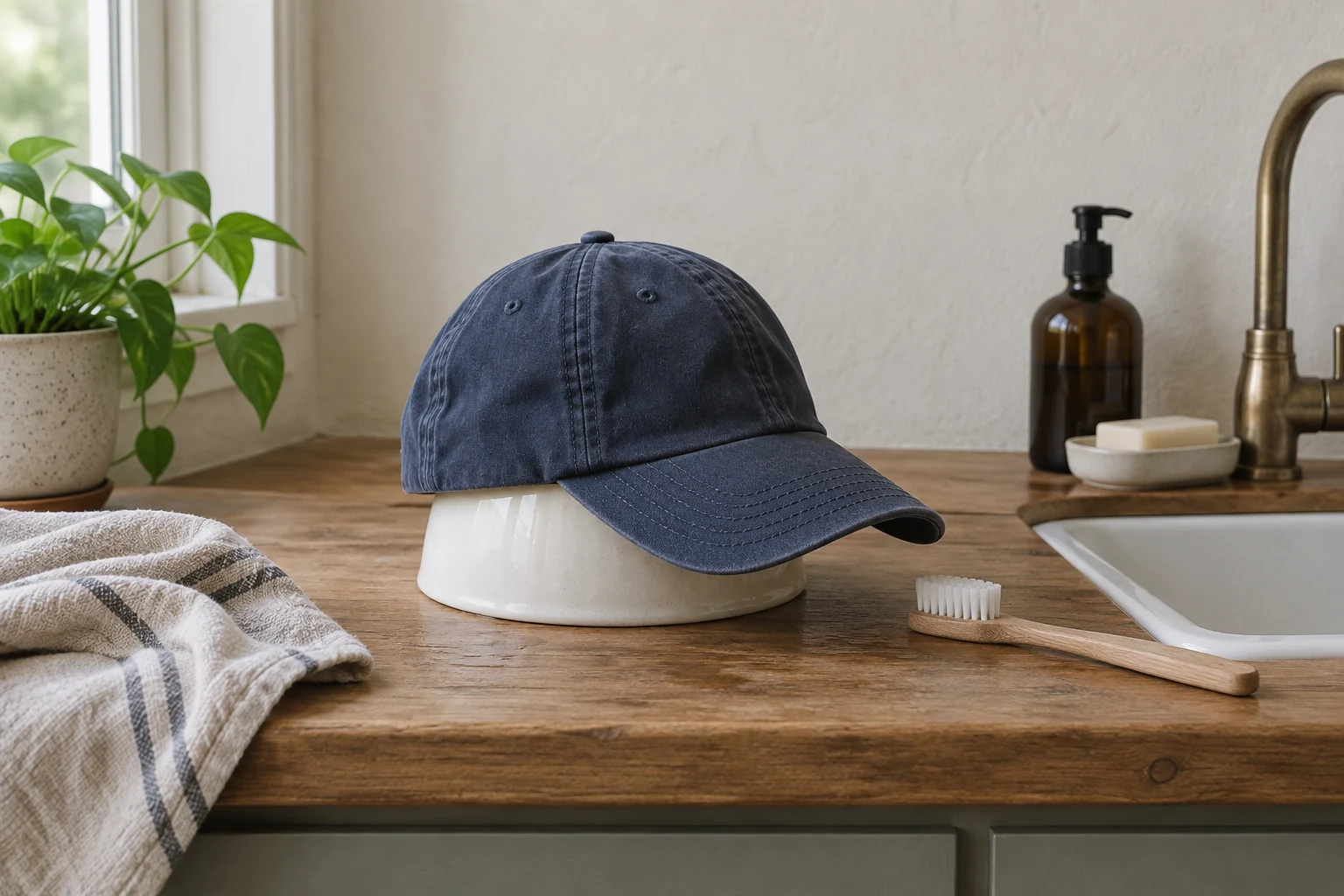
Washing and ironing
How to wash a baseball cap without ruining its shape
How to wash a baseball cap by hand, when a washing machine is safe, why the dishwasher is a poor idea, and how to dry a cap on a form so it keeps its shape.
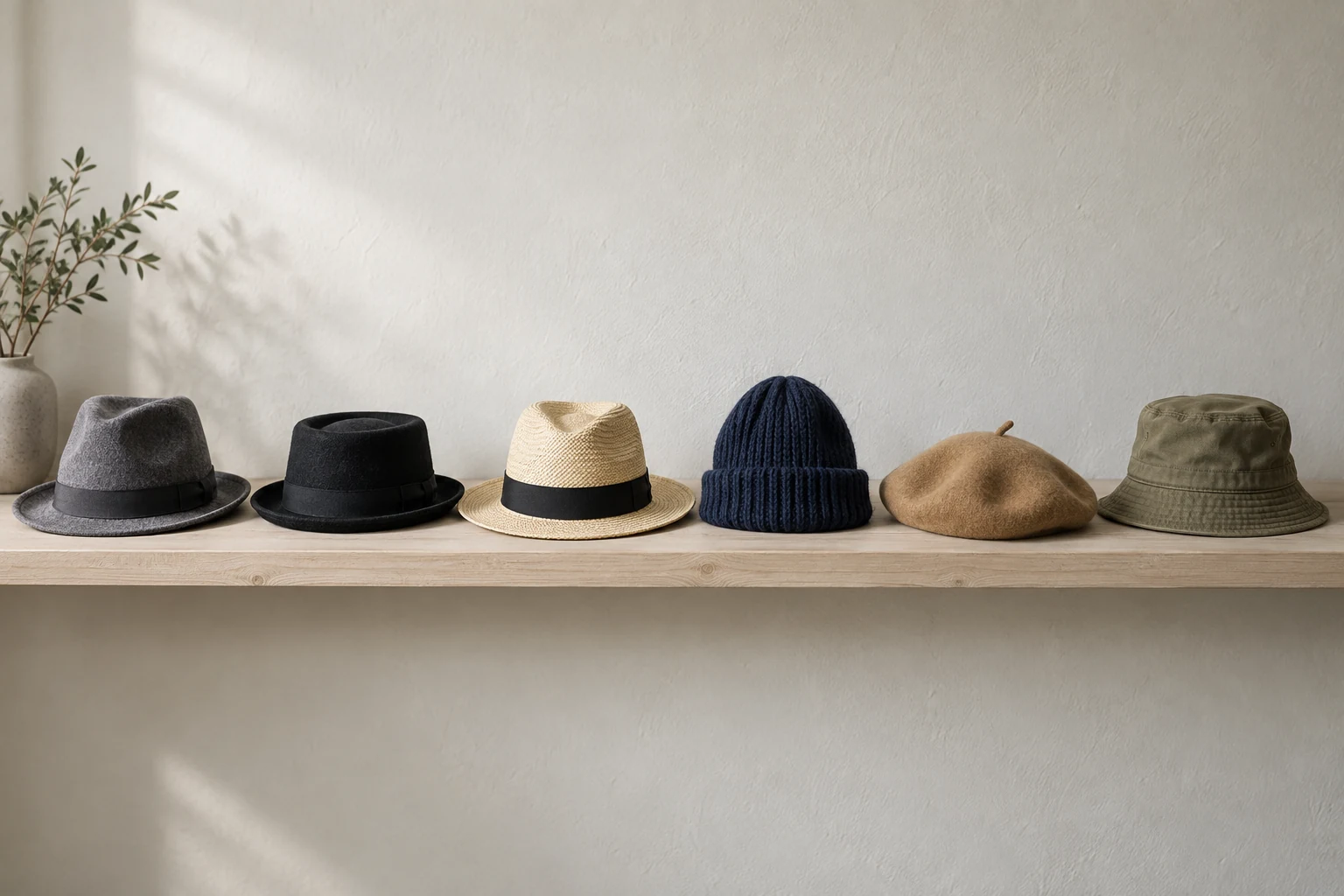
Everyday style
Types of hats and how to wear them
The names of hat types explained, from fedora, porkpie and derby to toque, beret, bucket hat and sun hat, with how to tell them apart and how to wear each one.

Sizing
Hat size chart: how to measure your head for any hat
Measure your head for a hat at home, read a hat size chart in inches and centimeters, and choose sizes for fitted caps, snapbacks, cowboy hats and knitted hats.

Everyday style
Fedora hat for men: how to wear one without looking costumed
How to wear a fedora hat as a man: fedora vs trilby, felt or straw, brim width and fit, outfits that suit it, hat etiquette and care, plus notes for women.
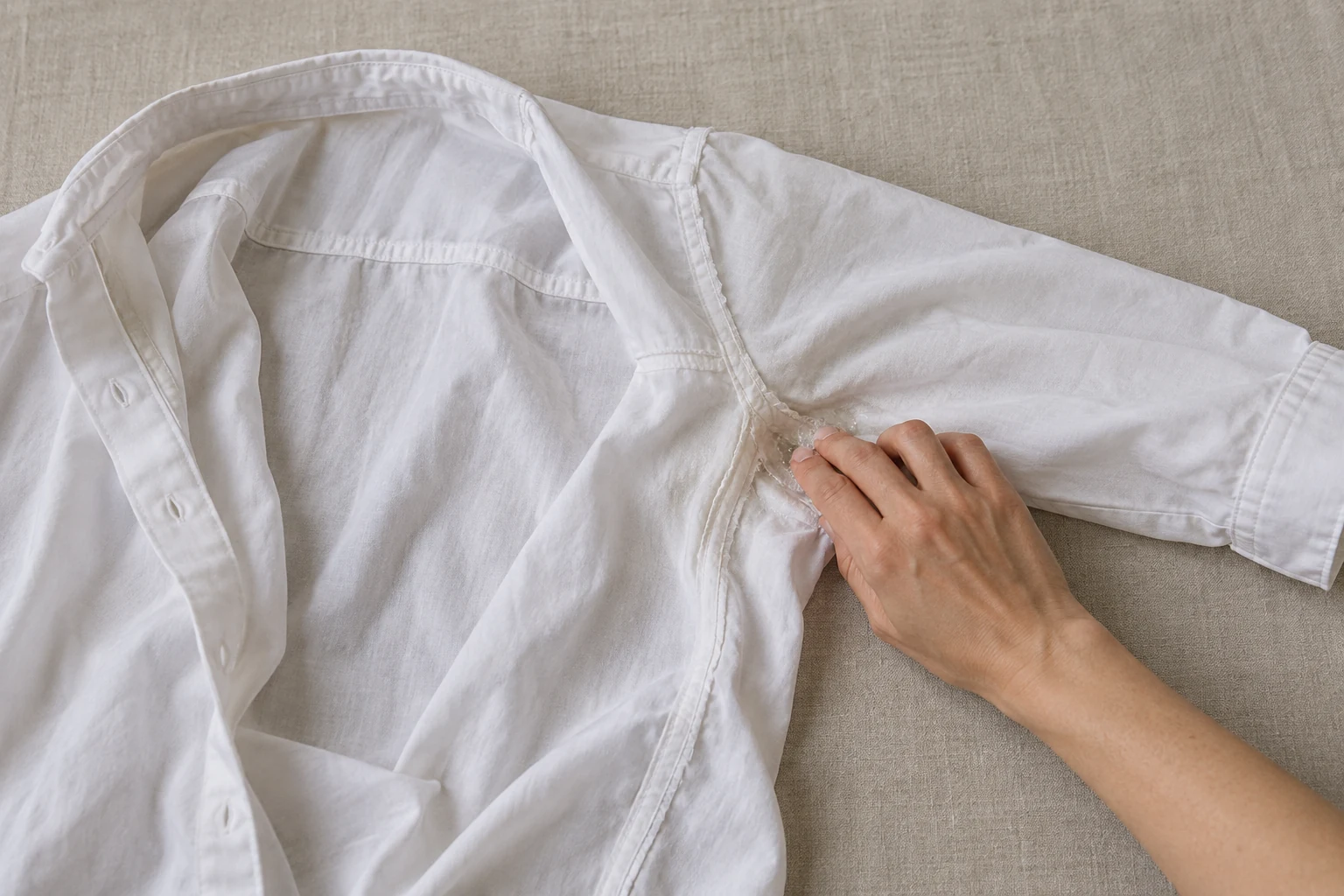
Stain removal
How to remove deodorant and sweat stains
Remove deodorant stains from black shirts, lift yellow sweat stains from white clothes, and prevent armpit stains from building up in the first place.