Business professional attire for men and women
In this guide
The email from the recruiter, the conference program or the new employee handbook says business professional attire, and you are trying to work out whether that means the suit you wore to a wedding, the blazer you wear on Mondays, or something you have to buy this week. The short answer is a suit, or for women the equivalent in tailored separates or a dress with a jacket. The longer answer is about which suits, which shoes and which details keep you looking appropriate rather than dressed for a different occasion.
Business professional is the formal end of work clothing. It is what you see in law firms, banks, courtrooms, government offices, many client facing roles and most formal interviews. The Emily Post Institute calls the same level business formal and describes it as a suit jacket with matching trousers or skirt. It sits one clear step above business casual, and it is a daytime working code, not an evening one, so it has nothing to do with tuxedos or cocktail dresses.

What counts as business professional attire
The core idea is matching. A business professional outfit is built around a jacket and trousers or a skirt cut from the same cloth, in a conservative color, worn with a dress shirt or blouse and leather shoes. Career offices at Duke University and the University of Texas at Austin describe the same essentials: solid, dark or neutral colors, matching suit pieces, closed toe dress shoes, and clothes that are clean, pressed and free of loose threads. Most employers who ask for business professional mean this, even when their written policy is vague.
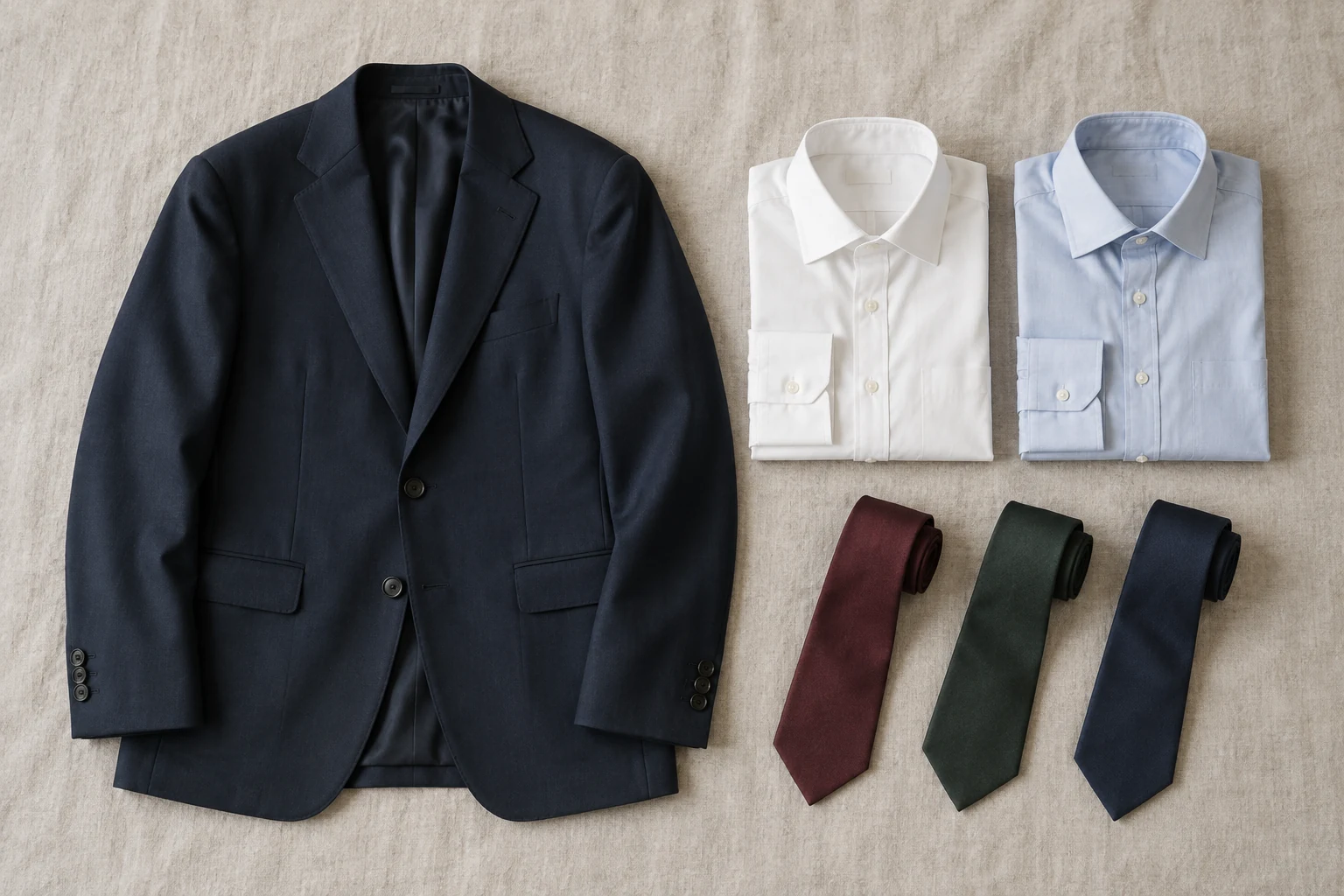
Within that frame there is still a range. At the traditional end, sometimes called boardroom attire, men wear a navy or charcoal suit with a white shirt and a quiet tie, and women wear a dark suit with a knee length or longer skirt or tailored trousers. At the more relaxed end, a gray suit with a light blue shirt, a patterned tie, or a structured dress under a matching jacket is still clearly business professional. What moves an outfit out of the code is losing the jacket, mixing casual fabrics such as denim and jersey into the suit, or casual shoes.
Business professional vs business casual
The easiest way to see the difference is to take one outfit apart. A business professional look for a man is a navy suit, white shirt, tie and black oxfords. Remove the tie and swap the suit trousers for gray flannels under a different jacket, and you have stepped down to business casual. Remove the jacket as well, and you are at the relaxed end of business casual. For women, a matching suit is business professional; a blazer over tailored trousers that do not match, or a knit dress without a jacket, is business casual.
Business casual allows separates, a wider range of colors and patterns, open collars, knitwear and, in some offices, dark jeans. Business professional expects matched pieces, darker and more conservative colors, a tie for men in most settings, and more formal shoes. If you are unsure which your office means, watch what senior people wear on an ordinary day, not on a Friday, and match them. For the relaxed code in detail, see our guides to business casual for men and for women.
| Element | Business professional | Business casual |
|---|---|---|
| Jacket and trousers | Matching suit in one cloth | Separates, or no jacket at all |
| Colors | Dark and conservative, navy, charcoal, gray | A wider range of colors and patterns |
| Neck | A tie for men in most settings | Open collars and knitwear |
| Shoes | Polished leather lace ups, pumps or loafers | Less formal leather shoes |
| Denim | Never | Dark jeans in some offices |
Business professional attire for men
Start with the suit. Navy and charcoal are the most useful colors because they suit almost every complexion and occasion; medium gray is a close third. Solid cloth or a very subtle pattern such as a fine pinstripe or a quiet check is safest. A plain worsted wool suit in a medium weight works in most climates for most of the year. Fit matters more than price: shoulders that end where yours do, a jacket that closes without pulling, sleeves that show a little shirt cuff, and trousers with a clean break. Our guide to how a suit should fit walks through each point, and the button rules explain which buttons to fasten.
Wear a long sleeve dress shirt in white or light blue, with a collar that sits close to the neck when buttoned. The tie should be silk, in a solid color or a small, conservative pattern, and long enough that its tip lands around the middle of the belt buckle. Shoes are leather lace ups, black or dark brown, polished; black oxfords are the most formal choice and never look wrong with navy or charcoal. Match the belt leather to the shoes and wear dark dress socks long enough that no skin shows when you sit. If you want ideas for shirt and tie combinations, our guide to shirts and ties for a navy suit is a good place to start.
Business professional attire for women
Women have more options, all built on the same principle of matched, tailored pieces. A pantsuit or skirt suit in navy, charcoal, black, gray or a muted neutral such as camel is the most straightforward choice. A tailored sheath dress in a solid dark color, worn with a jacket, counts as well, and Emily Post lists a business dress, a dress with a jacket and a suit as equally correct. Skirts and dresses should reach the knee or fall slightly below it, and Duke's career guide puts the limit at the top of the kneecap. Choose wool, wool blends or crepe with enough structure to hold their shape through a long day.
Under the jacket, a silk or synthetic blouse, a fine knit shell or a simple tailored shirt works. Keep necklines modest and colors either neutral or one quiet accent. Shoes should be closed toe pumps, low block heels, loafers or polished flats in leather; heels are common but not required, and Duke advises nothing higher than about 4 inches (10 cm). Hosiery used to be expected with skirts in business professional settings and still is in some conservative offices, while many others have dropped it, so follow what you see around you. Jewelry should be simple, and a structured bag that holds documents without bulging looks more composed than a large casual tote.
Is business professional always a suit?
For men in most offices, yes: the jacket and tie are what separate business professional from business casual. A navy blazer with gray trousers is a common compromise and will pass in many workplaces, but where the code is strictly enforced, a matching suit is expected. For women, no. A dress with a jacket, or a tailored dress in a substantial fabric, meets the standard without a suit, and in some settings a very structured dress alone is accepted. If you do not identify with either set of guidance above, the rule is the same for everyone: tailored, matched or coordinated pieces, a jacket, conservative colors and polished shoes.
Religious dress fits within business professional. A head covering, turban, yarmulke or modest long skirt worn with the rest of a professional outfit is fully appropriate, and in the United States the Equal Employment Opportunity Commission explains that employers generally must accommodate religious dress and grooming unless it would cause undue hardship. Choose the covering in a color and fabric that sit comfortably with the suit, as you would with any other accessory.
What not to wear in a business professional setting
Most mistakes come from mixing in pieces from other codes. Sneakers, sandals, open toe shoes, jeans, chinos, polos, T shirts under a jacket, visible logos and athletic fabrics all read as casual. On the other side, evening details such as sequins, satin, very high heels, sheer fabrics and cocktail length dresses look out of place in daylight at a desk. Very bright colors and bold patterns are not banned, but in business professional they work as one accent, a tie or a blouse, rather than the whole outfit.
Condition matters as much as choice. A good suit with a creased collar, scuffed shoes or trousers dragging on the floor looks worse than a modest suit that is pressed and polished. Check the night before: press the shirt, brush the jacket, polish the shoes, and make sure hems and cuffs are the right length. If you are dressing for an interview in a business professional industry, our guide to what to wear to a job interview covers the extra considerations for that day.
Common mistakes
Wearing a suit that does not fit
Sleeves covering the shirt cuffs, shoulders that overhang and trousers pooling on the shoes make even an expensive suit look borrowed. A tailor can fix sleeves and hems for much less than a new suit costs.
Pairing a suit with casual shoes
Sneakers and suede loafers can work with a suit in fashion settings, but in a business professional office they undo the rest of the outfit. Keep to polished leather dress shoes.
Treating business professional as evening wear
Business professional is a daytime working code. Cocktail dresses, satin and tuxedo details belong to evening events, not meetings, even when both are described as formal.
Questions people ask
What is the difference between business professional and business formal?
In most American offices the two terms mean the same thing: a matched suit, dress shirt or blouse, and leather shoes. Emily Post uses business formal for this level. Some companies use business formal for an evening work event that calls for a dark suit and tie, so if the words appear on an event invitation rather than in a dress code policy, lean toward your darkest suit.
Can women wear dresses for business professional?
Yes. A tailored dress in a solid, conservative color, at or just below the knee, is business professional, especially with a matching or coordinating jacket. Avoid clingy knits, bright prints and cocktail fabrics, which move the dress into business casual or evening wear.
Are jeans ever business professional?
No. Jeans can be business casual in some offices, but they never meet the business professional standard, even dark, well fitted ones worn with a blazer. If a workplace allows jeans on Fridays, that is a relaxation of the code for that day, not part of it.
What colors are best for business professional attire?
Navy, charcoal and medium gray are the most useful suit colors, with black also common for women's suits. Shirts and blouses in white, light blue, soft pastels or muted neutrals are safest. A single accent in a tie, scarf or blouse is fine as long as the overall effect stays calm.
Sources and further reading
References used for this guide. Each opens the original page in a new tab.
- Emily Post Institute: attire guide from casual to white tie Opens in a new tab
- Duke University Career Center: attire guide Opens in a new tab
- University of Texas at Austin, College of Natural Sciences Career Services: professional clothing Opens in a new tab
- US Equal Employment Opportunity Commission: religious garb and grooming in the workplace Opens in a new tab
Keep reading
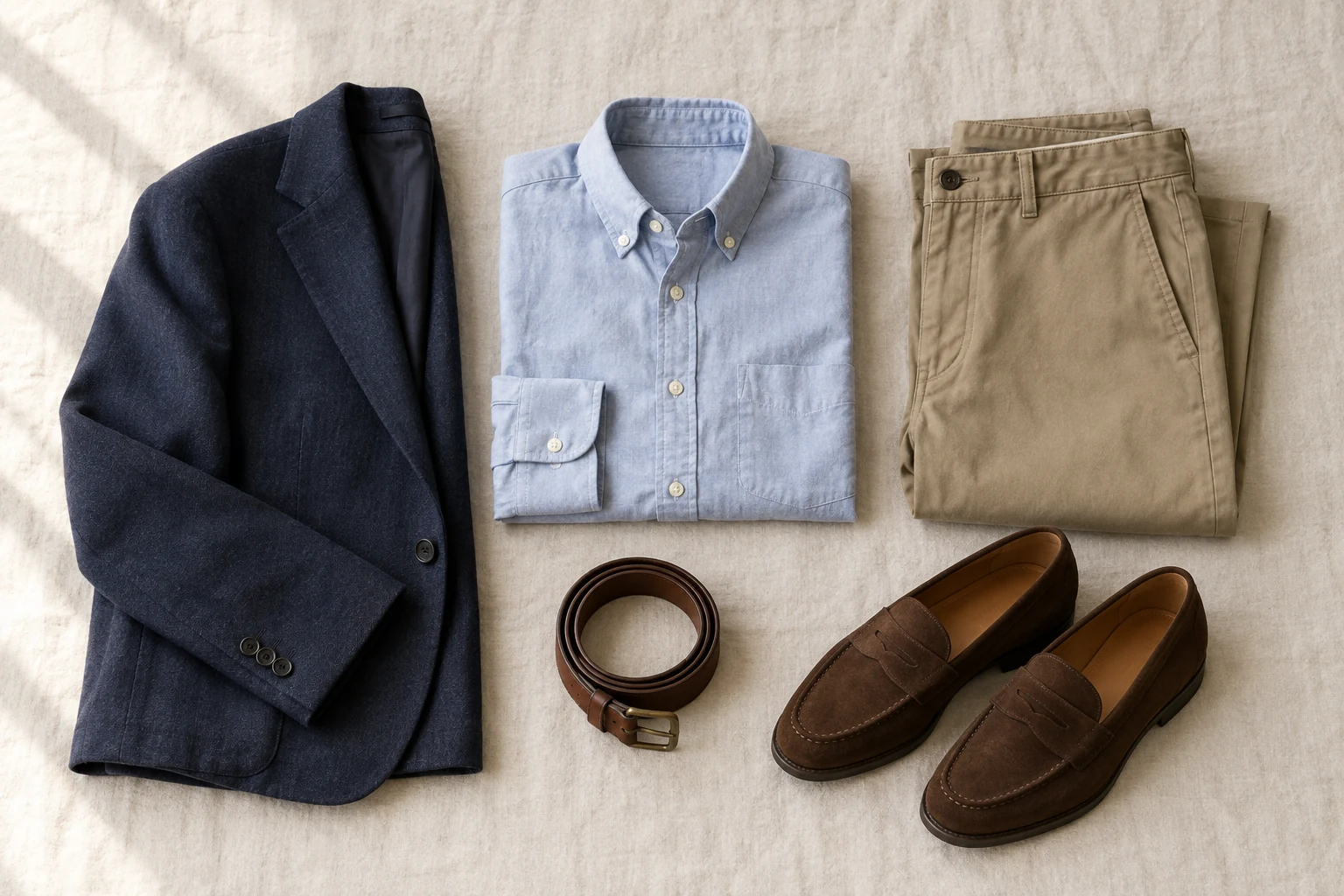
Dress codes
Business casual for men: what to wear to work
What business casual means for men at work, with outfit formulas, the right shoes, when jeans are allowed and how to read your own office's version of the code.
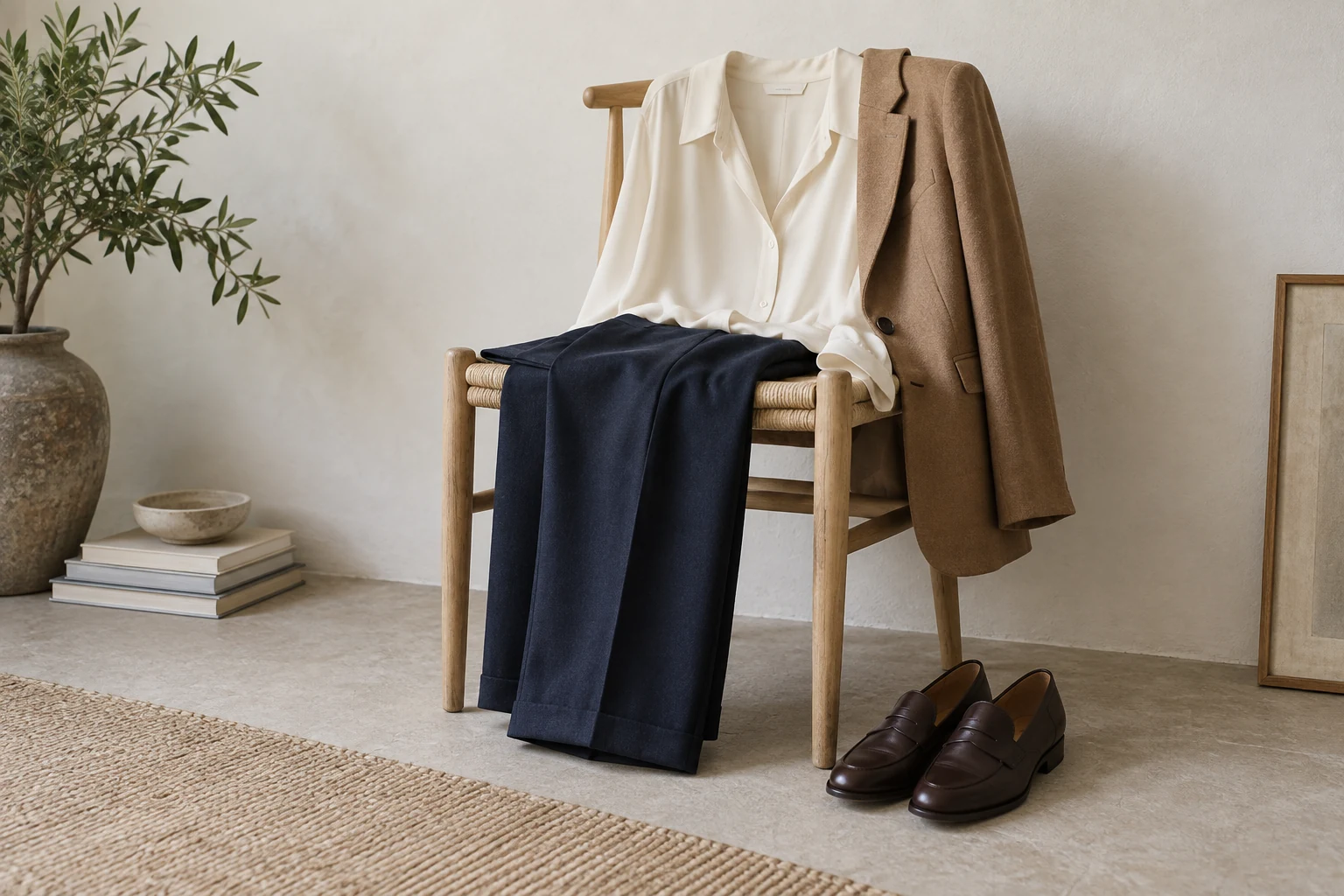
Dress codes
Business casual for women: what to wear to work
What business casual means for women at work: trousers, skirts, dresses, knitwear and shoes, with outfit formulas, what to avoid and how to read your office.
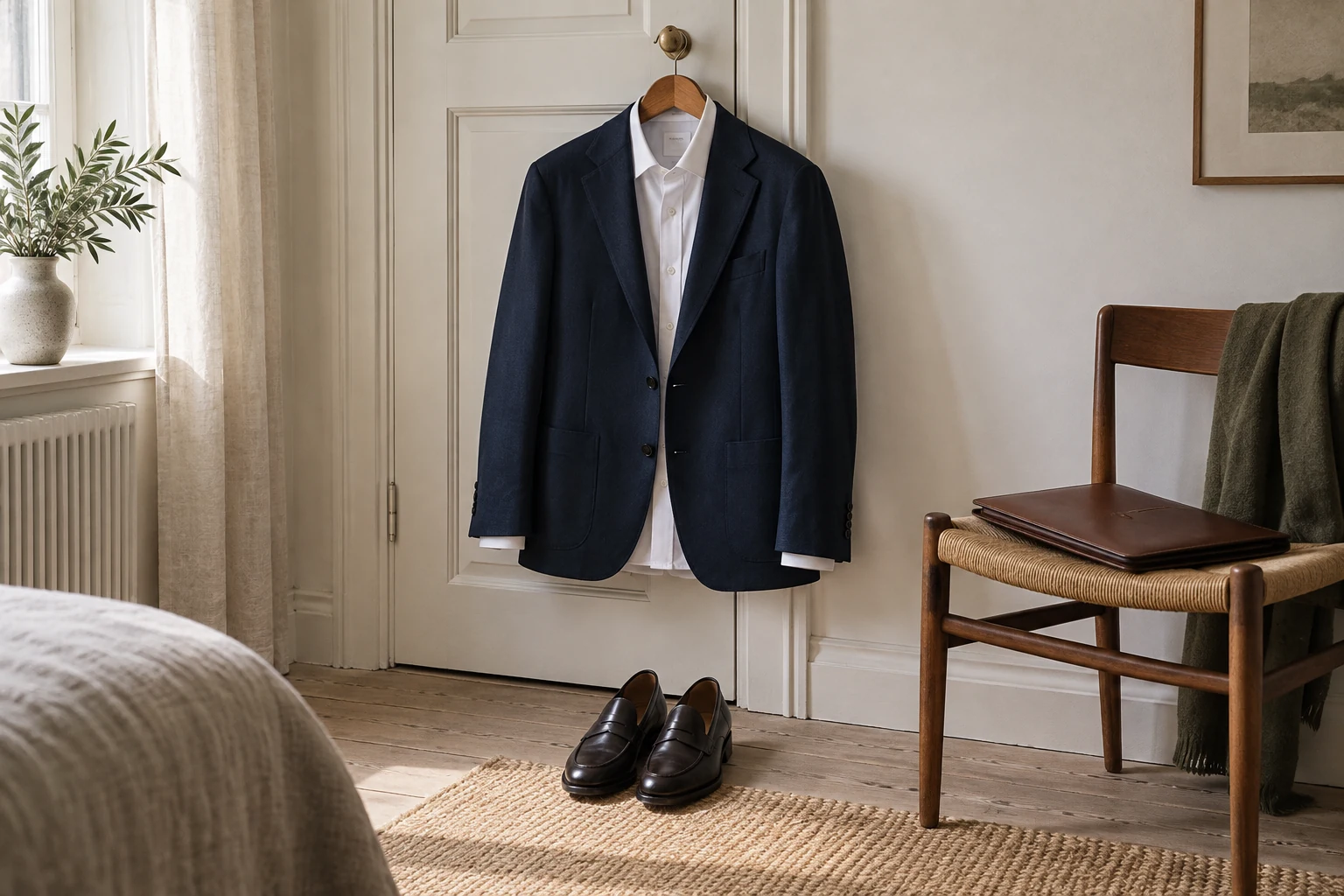
Dress codes
What to wear to a job interview
What to wear to a job interview: how to read the company, dress one step above daily wear, outfits for men and women, video interviews and what to avoid.
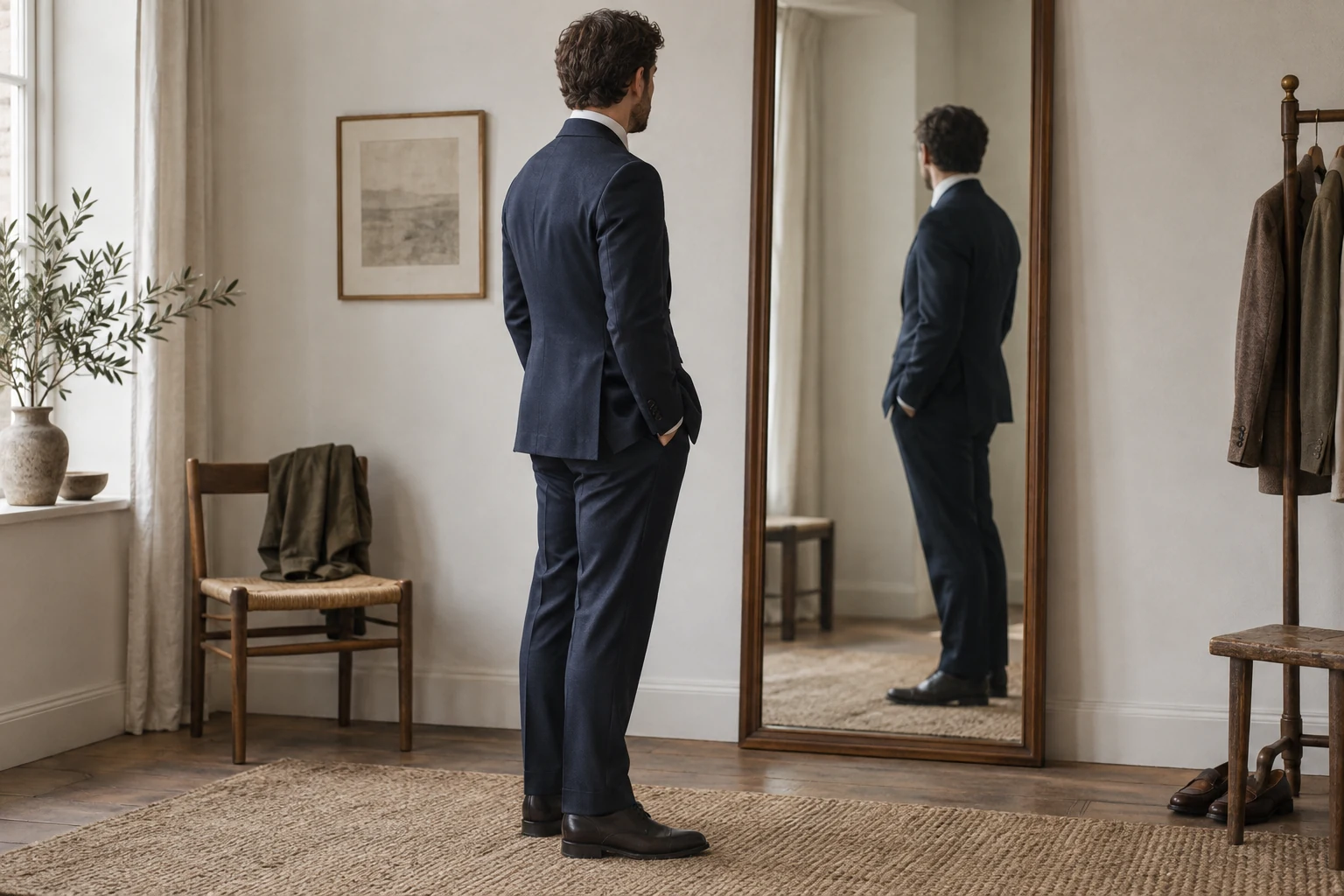
Suits and tailoring
How a suit should fit: shoulders, sleeves and length
How should a suit fit? Check the shoulders, collar, button, jacket length, sleeves and trousers in the mirror, and learn which problems a tailor can and cannot fix.
Suits and tailoring
What shirt and tie to wear with a navy suit
What color shirt with a navy suit? Reliable shirt and tie combinations for work, weddings and interviews, how to mix patterns, and the same rules for charcoal gray.