How to tie a bandana around your neck or head
In this guide
A bandana is a simple square of cotton, and that is exactly why it can feel awkward. Held by one corner it looks like a handkerchief, and tied carelessly it slides down your forehead or bunches under your collar. Knowing how to tie a bandana comes down to two folds, the triangle and the band, and a handful of knots built on them. Once you have those, you can wear the same square around your neck on a hot afternoon, over your hair on a windy day or under a cap on a hike.
The steps below use your own left and right. Most bandanas are printed on both sides, but if yours has a paler back, keep the brighter side facing down on the table before you fold, so it ends up on the outside.
Know your bandana before you fold it
Bandanas are sold in a few standard squares. The regular size is 22 inches (56 cm); smaller 20 inch squares suit neckerchiefs and headbands, and larger 24 inch squares give more fabric for full head coverage and bigger knots. If a style below leaves your ends too short to tie, the square is probably too small for it, and a narrower fold or a different style will work better than pulling harder. Cotton is the easiest fabric to learn with because it grips itself and your hair. Silk and satin squares tie in the same way but slip, so they need a firmer knot or a couple of bobby pins.
The familiar pattern has a long history. The word comes from bandhani, a tie dyeing technique from India, whose patterned kerchiefs were imported to Europe in the eighteenth century. European makers later produced their own, dyed in Turkey red, and the paisley motif on the classic paisley bandana imitates the pattern of Kashmir shawls. The kerchiefs were made for hard use, which is still the best argument for a plain cotton one: it washes well, softens with age and does not mind being knotted every day.
Make the two basic folds
Nearly every style starts with a triangle. The band is a triangle folded down further, and it is what you use for headbands, necklace styles and anything worn under a hat. Fold on a table the first few times; it keeps the edges straight and makes the band come out even.
Fold corner to corner
Lay the bandana flat as a diamond and bring the top corner down to meet the bottom one.
CheckA triangle with one long folded edge and the point facing you. This is the neckerchief and head wrap fold.
Fold the point to the long edge
For a band, fold the point up so it touches the middle of the long folded edge. You now have a wide strip with pointed ends.
Keep folding until it is the width you want
Fold the strip in half along its length again, and once more if you want it narrow. About 1 to 2 inches (3 to 5 cm) is right for a headband or a necklace style.
CheckA flat band with no raw point showing along either side.
How to tie a bandana around your neck
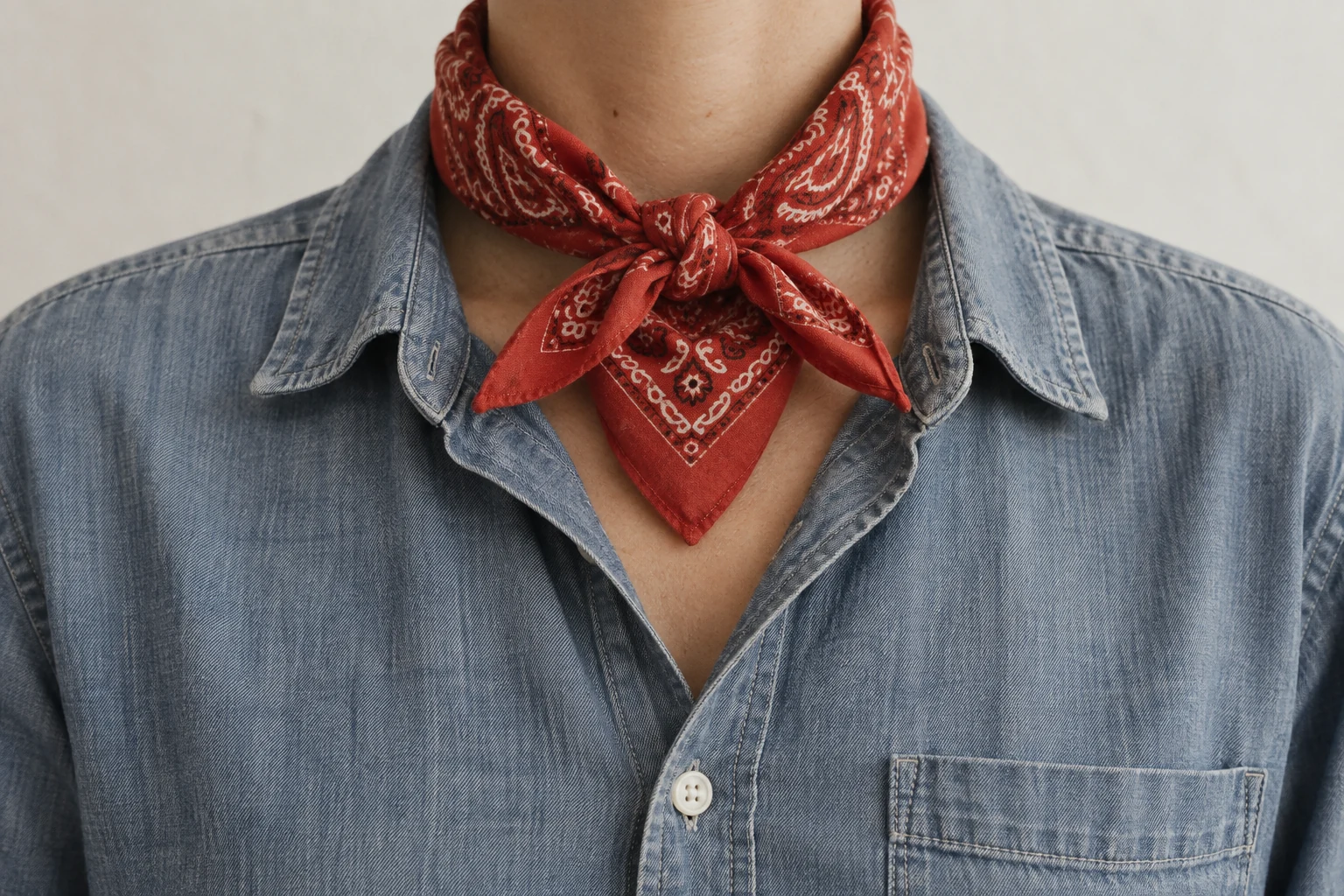
The classic neckerchief is what most people picture: the point hangs at the front like a small bib and the knot sits behind the neck. It works with a T shirt, a denim shirt or an open collar, and it is the style that keeps sun off the front of the neck on a hot day. It is also the cowboy or cowgirl style: worn a little looser, with the point falling lower, it is the western neckerchief that working riders used against dust and sun.
Fold a triangle
Make the triangle fold. For a neater result, fold the long edge over once by about an inch (2.5 cm) so it does not roll.
Put the point in front
Hold the two ends and lay the folded edge against the front of your neck, with the point hanging down your chest. Take the ends around to the back of your neck.
Knot at the back
Tie the ends in a double knot at the nape, or at the side if you prefer. Leave room for two fingers between the bandana and your neck.
CheckThe point is centered below your chin and the knot is hidden behind you.
Three other ways to wear it around your neck
For a smaller, more modern look, reverse the neckerchief: put the point behind your neck and tie the knot at the front, slightly off center, letting the ends stick out a little. It frames an open collar and looks deliberate rather than western. For the band style, fold the bandana into a band, wrap it snugly around your neck and knot it at the side, which reads almost like a short scarf and tucks under a jacket collar on a cool morning.
The necklace style uses a rolled or very narrow band. Roll the triangle from the point toward the long edge into a tight tube, tie a small knot in the middle, then place that knot at the front of your neck and tie the ends behind. It sits close like a choker and works well with a sleeveless top or a dress. Any of these can be held with a bandana ring instead of a knot: thread both ends through the ring and slide it up to where the knot would sit.
How to wear a bandana on your head
A full head wrap covers the top of the head and holds hair back from the face. It is also how to tie a head scarf of any small size, so the same steps work with a cotton square from a scarf drawer. Worn low on the forehead with the knot and tails left visible at the back, the same wrap is what people call the pirate style.
Set the folded edge on your hairline
Make a triangle and hold it by the two ends with the point away from you. Lay the long folded edge across your forehead at the hairline. The point falls over the crown to the back of your head.
Bring the ends back over the point
Take the ends behind your ears to the nape of your neck, crossing over the hanging point so it is trapped underneath.
Double knot and tuck
Tie a double knot at the nape, then tuck the point up under the knot, or leave it hanging for a looser look.
CheckThe edge sits straight across your forehead and the wrap feels secure when you shake your head.
Easy bandana hairstyles
The headband is the most useful bandana hairstyle and the easiest to wear every day. Fold a band, center it on top of your head behind the hairline, and knot the ends at the nape under your hair for a clean line. For a retro version, reverse it: set the middle of the band at the nape under your hair and tie the knot on top of your head, letting the ends stand up a little. A wider band holds short or fine hair better; a narrow one looks lighter on thick hair.
Bandanas also work as hair ties. Wrap a narrow band over an elastic around a ponytail or bun and knot it with the ends showing, which adds color without extra hold. With a half head wrap, tie the triangle so the knot sits at the nape but leave your hair loose below it. If a bandana slides back on smooth hair, a bobby pin at each side above the ears will anchor it.
| Style | Fold | Where the knot sits |
|---|---|---|
| Classic neckerchief | Triangle, point in front | Behind the neck |
| Reversed neckerchief | Triangle, point behind | Front, slightly off center |
| Band around the neck | Band | At the side |
| Necklace or choker | Tight rolled tube with a center knot | Behind the neck |
| Full head wrap | Triangle, edge on the hairline | Nape, over the point |
| Headband | Band | Nape, under the hair |
| Retro headband | Band, middle at the nape | Top of the head |
Ways to wear bandanas for guys
Men tend to wear bandanas in three practical ways. The first is the neckerchief, with the point in front or the knot at the side, worn with a denim, chambray or work shirt, a T shirt or an open collar shirt. The second is the band as a sweatband, tied around the forehead with the knot at the back, which works under a baseball cap on a run or a hike and keeps sweat out of your eyes. The third is simply in a pocket or tied around a wrist or a bag strap, where it is always at hand. Color is easy: a red or navy paisley bandana sits naturally with denim, khaki and olive, and our guide to colors that go together covers the rest.
On a hot day, a cotton neckerchief soaked in cold water and wrung out feels noticeably cooler as it dries (one of the tricks in our guide to dressing for 90 degree weather), and it keeps sun off the back of the neck if you turn the point to the back. Rinse sweat out of it the same day and wash it before the next use, especially if it sat under a cap, which you can clean with our guide to washing a baseball cap.
Common mistakes
Tying it tight at the neck
A bandana does not need tension to stay on. A tight knot at the throat is uncomfortable and pulls the point up. Leave two fingers of room and let the double knot do the holding.
Rolling a band instead of folding it
A bandana rolled loosely twists and shows its hem when you tie it. For headbands, fold flat layers. Save rolling for the tight necklace style, where a firm tube is exactly what you want.
Washing a new red bandana with whites
Deeply dyed cotton can release color in the first few washes. Wash a new bandana with similar colors or on its own, and check the tag; our guide to reading care labels explains the symbols. If color has already bled onto something, see removing dye transfer.
Questions people ask
What size is a standard bandana?
The regular size is a 22 inch (56 cm) square. Smaller 20 inch squares are fine for neckerchiefs and headbands, and 24 inch squares give more room for full head wraps and larger knots.
What is the difference between a bandana and a head scarf?
A bandana is usually a smaller square of cotton, while a head scarf is often larger and may be silk, rayon or a lighter cotton. The folds are the same, but a larger scarf can wrap around the head more than once. See our guide on how to tie a scarf for silk squares and longer scarves.
How do you keep a bandana from slipping off your head?
Tie a double knot and trap the point under it, so the whole wrap is held in two places. Cotton grips hair much better than silk. A bobby pin on each side above the ears adds hold on smooth or fine hair.
How do you tie a bandana on your head if you have no hair?
Use the full head wrap with a cotton bandana, which grips skin better than silk. Set the folded edge a little lower on the forehead than you would with hair, tie a firm double knot at the nape over the point, and tuck the point under the knot so nothing can slide. A 22 or 24 inch square gives enough length for a secure knot on a larger head.
Can you tie a bandana like a durag?
You can approximate it with the full head wrap, knotted snugly at the nape, which holds hair flat and covers the crown. A bandana is smaller and stiffer than a durag, though, and it has no long ties to wrap around the head, so it will not compress waves or protect a hairstyle overnight the way a proper durag or silk wrap does. For hair care, the purpose made garment works better.
Can you wear a bandana to work?
In a casual or creative workplace, a small neckerchief or a knotted headband usually reads as an accessory rather than a statement. In more formal offices, a bandana tends to look out of place, and in food service or workshops the employer's safety rules come first. When unsure, keep it in a pocket.
Sources and further reading
References used for this guide. Each opens the original page in a new tab.
Keep reading
Everyday style
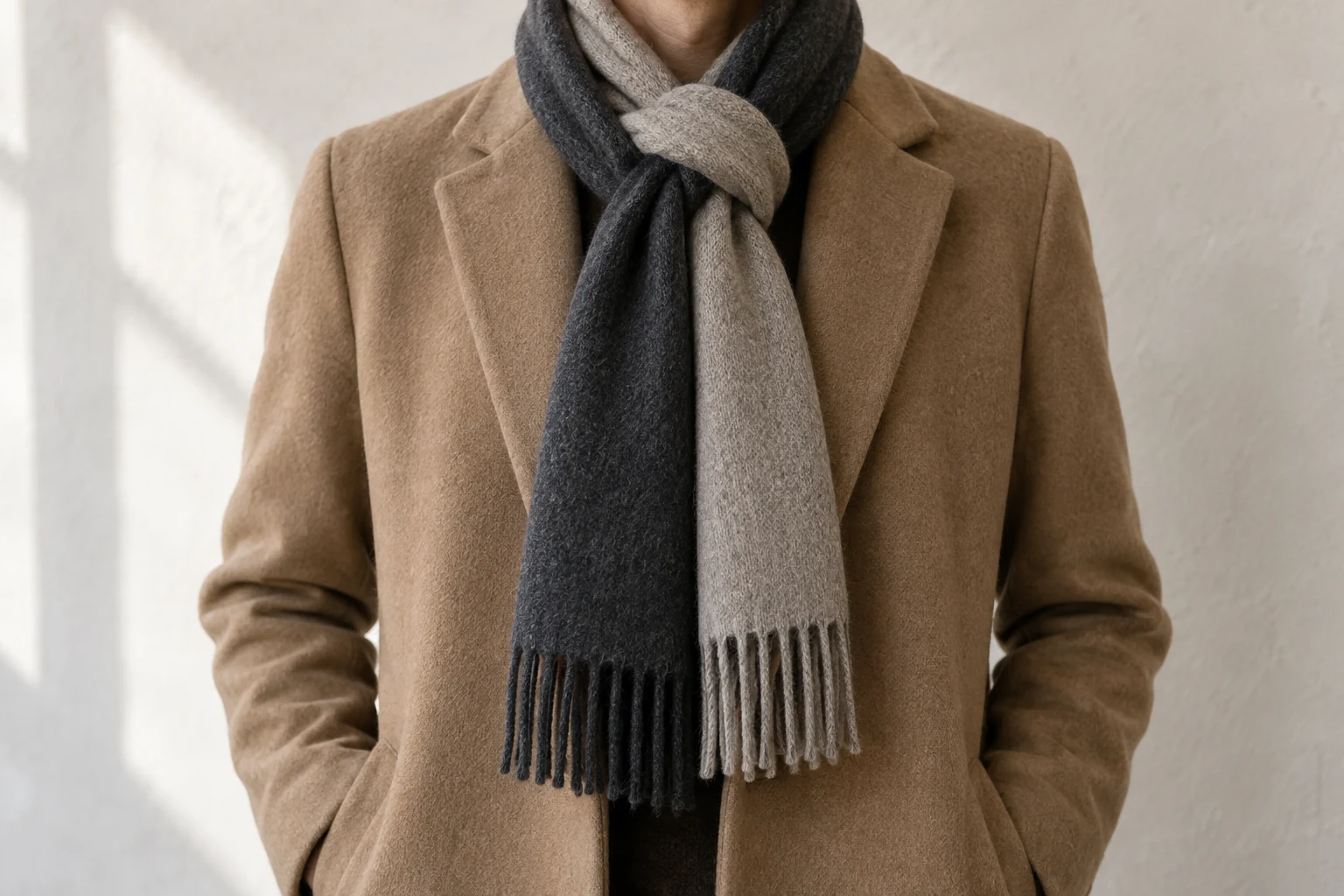
How to tie a scarf: easy ways for every coat
How to tie a scarf step by step: warm knots for a long winter scarf, neat ways to wear a silk square, head scarf styles and the knots men reach for most.

Everyday style
What colors go together: color combinations for outfits
Practical color combinations for outfits: build on neutrals, try tonal dressing, add one accent, and test contrast against your own skin and hair in daylight.
Washing and ironing
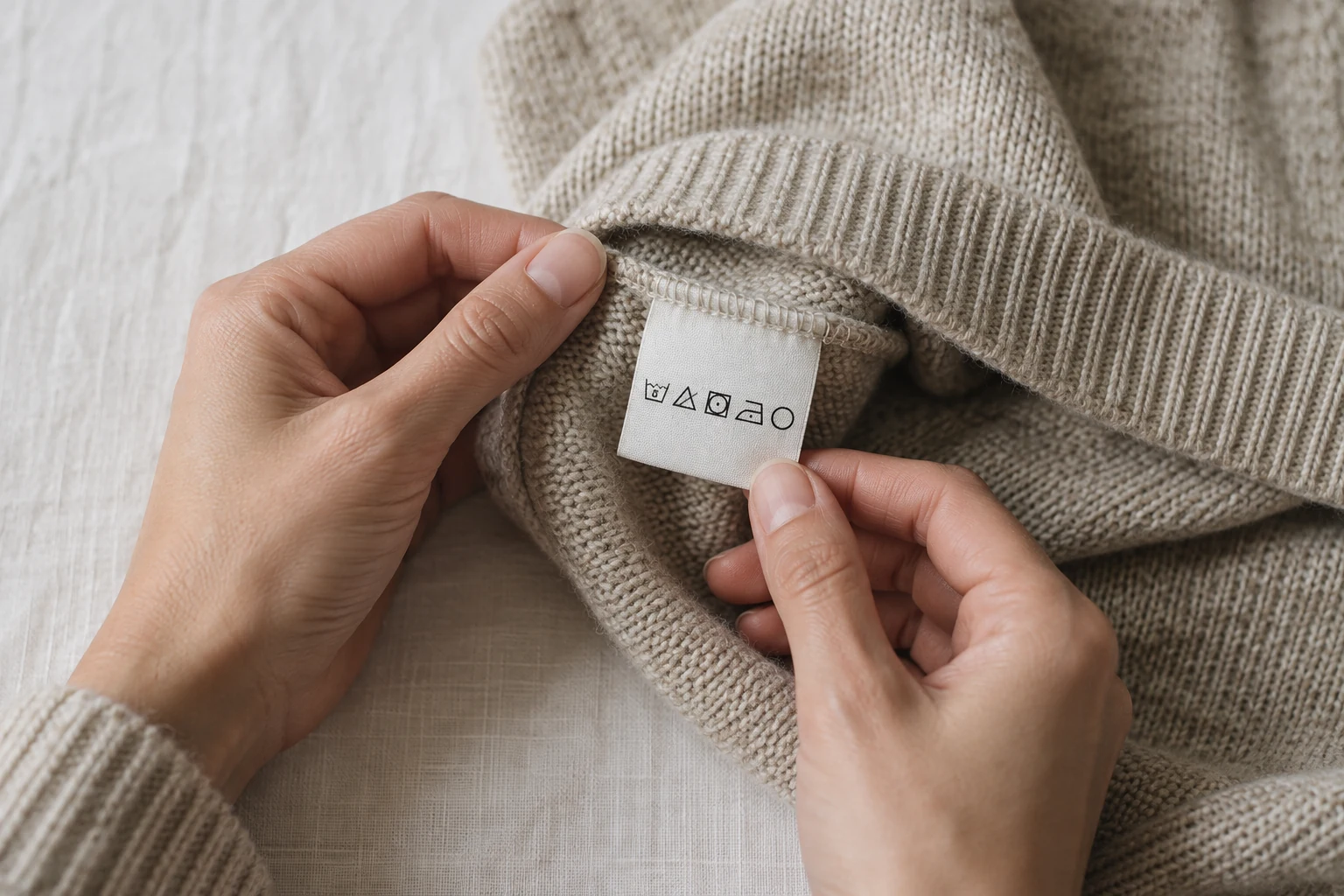
Laundry symbols explained: how to read a care label
What laundry symbols mean, in plain words: the wash tub, triangle, square, iron and circle, plus the dots, bars and crosses that change each instruction.
Washing and ironing
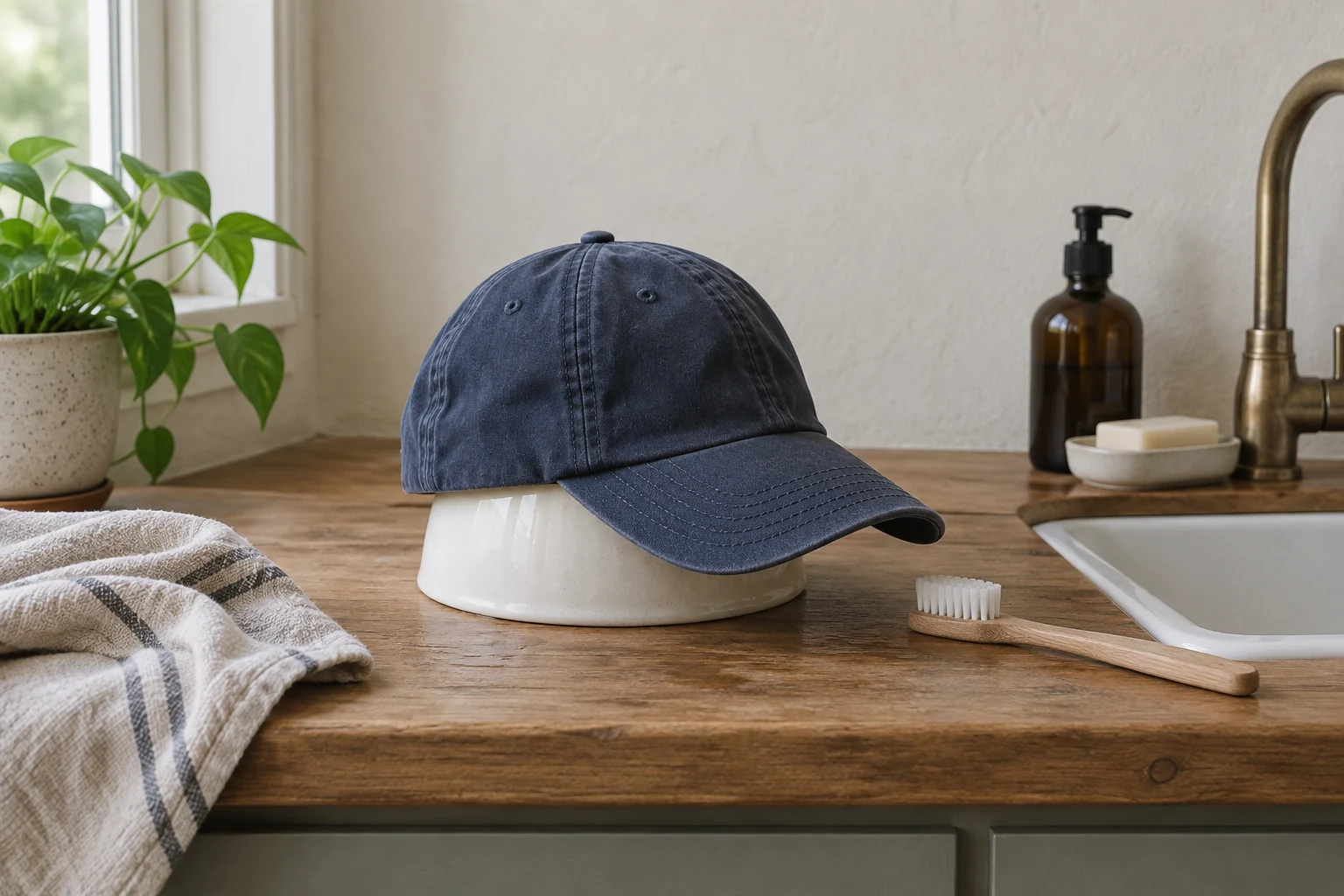
How to wash a baseball cap without ruining its shape
How to wash a baseball cap by hand, when a washing machine is safe, why the dishwasher is a poor idea, and how to dry a cap on a form so it keeps its shape.