What to wear in 40 degree weather
In this guide
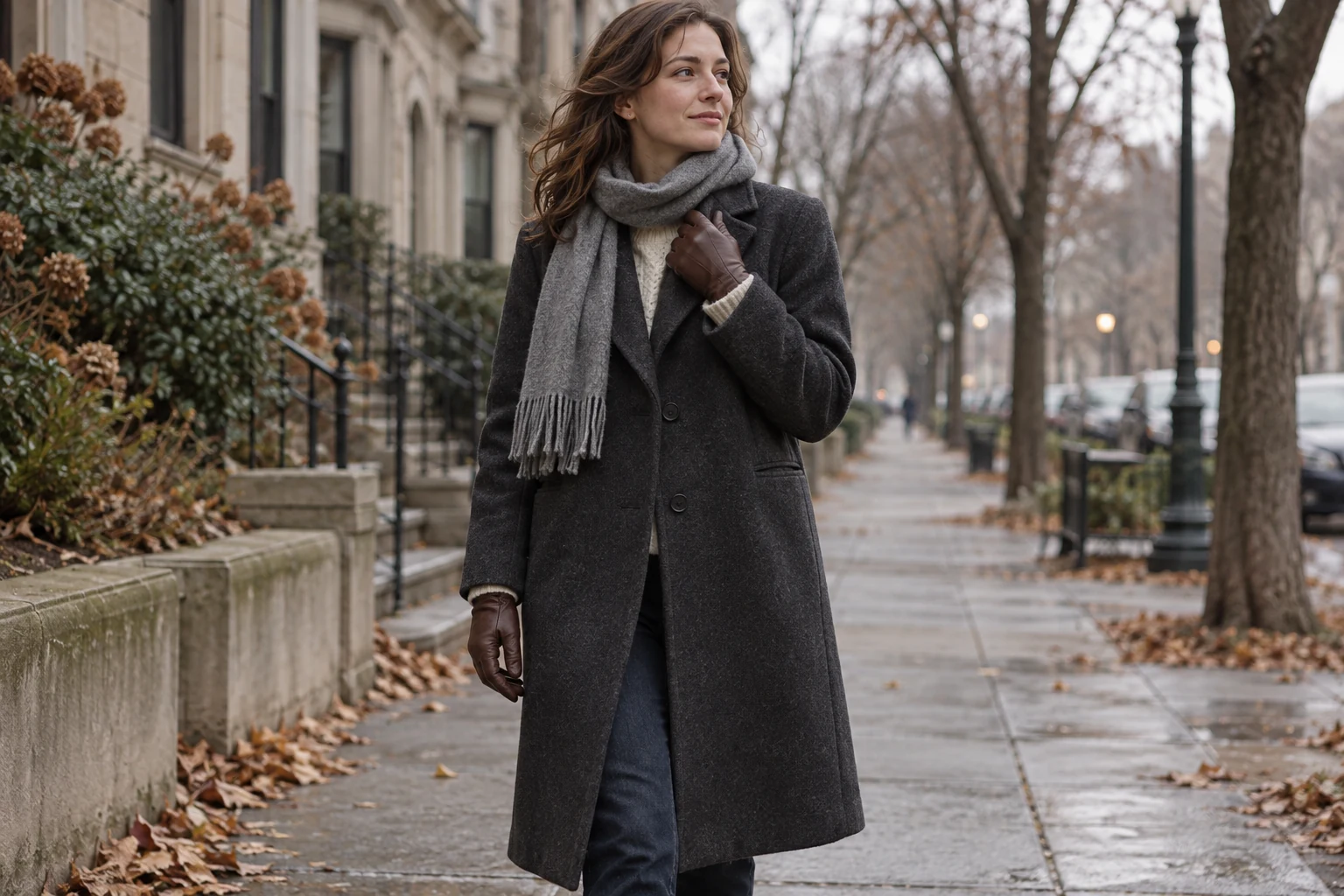
The forecast says 40°F, the sky is flat and gray, and you are standing at the closet deciding between the heavy coat you wore all winter and the lighter jacket that feels more hopeful. Knowing what to wear in 40 degree weather comes down to three questions: will you be moving or standing still, is the wind blowing, and could it rain. On a calm, sunny afternoon when you walk briskly between buildings, a sweater and a wool coat are plenty. On a windy, drizzly morning at a bus stop, the same number calls for nearly everything you own short of snow boots.
This guide starts with the two things that change 40°F the most, wind and wet, then builds the layers, closes the gaps at your neck, hands and feet, and ends with outfits sorted by how long you will actually spend outside. If your day will climb into the 50s by lunch, read it alongside our guide to dressing for 50 degree weather, because a day that swings calls for a coat you can open or take off.
Check the wind before the temperature
Forty degrees is cold but above freezing, and the wind decides which kind of cold you get. The National Weather Service wind chill chart puts 40°F with a 5 mph breeze at about 36°F on exposed skin, a 15 mph wind at 32°F, and a 30 mph wind at 28°F. That gap separates sweater weather from something that feels like midwinter. Look at the wind speed in the forecast before anything else, and treat anything above 10 mph as a reason to close your collar and bring gloves.
Sun pulls in the other direction. The weather service calculates wind chill as if there were no sun at all, and notes that bright sunshine can make it feel 10 to 18°F warmer. That is why a clear 40 degree noon on a sheltered sidewalk can feel almost mild, while the same street in shade, or after sunset, feels raw. The coldest part of most days is early morning, so a day that peaks at 40°F often starts near freezing, with frost on the car and a sharper wind at the station.
When 40 degrees comes with rain
Rain changes the problem again. NOAA points out that frostbite cannot happen above freezing, but hypothermia can, and wet clothing is how people get there. A cold rain at 40°F soaks cotton, flattens insulation and keeps pulling heat away for as long as you stay out. Many people also find damp days near a lake or the ocean more penetrating than dry ones at the same reading, which the forecast number does not capture. If the day is wet, dress as though it were ten degrees colder and put a water resistant layer on the outside.
In practice that means a waterproof or water resistant shell, or a wool coat with a sturdy umbrella, over wool or synthetic layers. A hood matters more than it seems, because rain on your hair and the back of your neck keeps drawing heat for the rest of the day. Smooth leather or rubber soles beat suede and canvas, and a spare pair of socks at work turns a wet walk from the station into a minor event rather than a cold afternoon. Our guide to what to wear in the rain covers shells, umbrellas and shoes in more detail.
Layer for 40 degrees: three pieces, chosen well
Outdoor clothing makers describe layering in three parts: a base layer against the skin that moves sweat away, a middle layer that holds warmth, and an outer layer that blocks wind and rain. In town, a shirt or fine knit is your base, a sweater is your middle, and a coat is your outer layer. What matters is that each piece does its own job, so you can open or remove the coat indoors without being left in something too thin.
Fabric is where most people go wrong. L.L.Bean's layering advice is blunt that cotton neither wicks nor insulates well, and that wool and synthetics are the better choices when it is cold and wet. A cotton hoodie under a denim jacket is fine for ten dry minutes and miserable for an hour. A merino or lambswool sweater, a brushed flannel shirt or a fleece gives far more warmth for its thickness and keeps working if you sweat on the walk to the train.
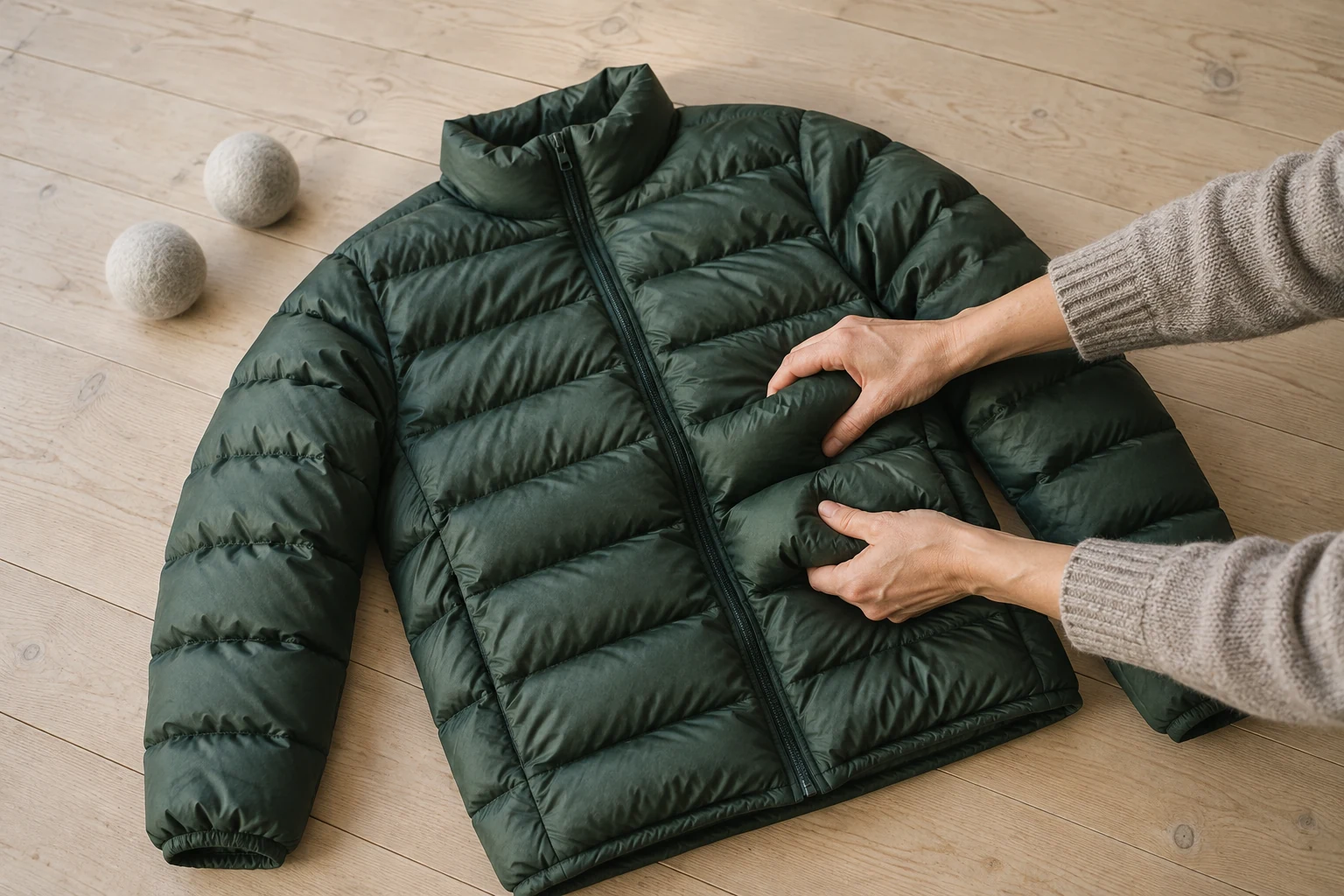
For the coat itself, a wool overcoat or peacoat is the natural choice for 40°F in town: it cuts a moderate wind, looks right over tailoring and is warm enough when you keep moving. A lightly insulated jacket or a down jacket suits long periods outside, where you stand still and lose heat faster. The general rule from the outdoor makers holds here too: the less you move, the more insulation you need. If you choose down, our guide to washing a down jacket will keep it lofty for years.
Close the gaps at your neck, hands and feet
You may have heard that you lose most of your heat through your head. NOAA calls that a myth: the head is roughly 7 percent of your body's surface and loses heat at about the same rate as any other exposed patch of skin. The useful lesson is that whatever is uncovered gets cold. At 40°F that usually means the open neck of a coat, your hands and your ears, and closing those gaps adds more comfort than a thicker sweater would.
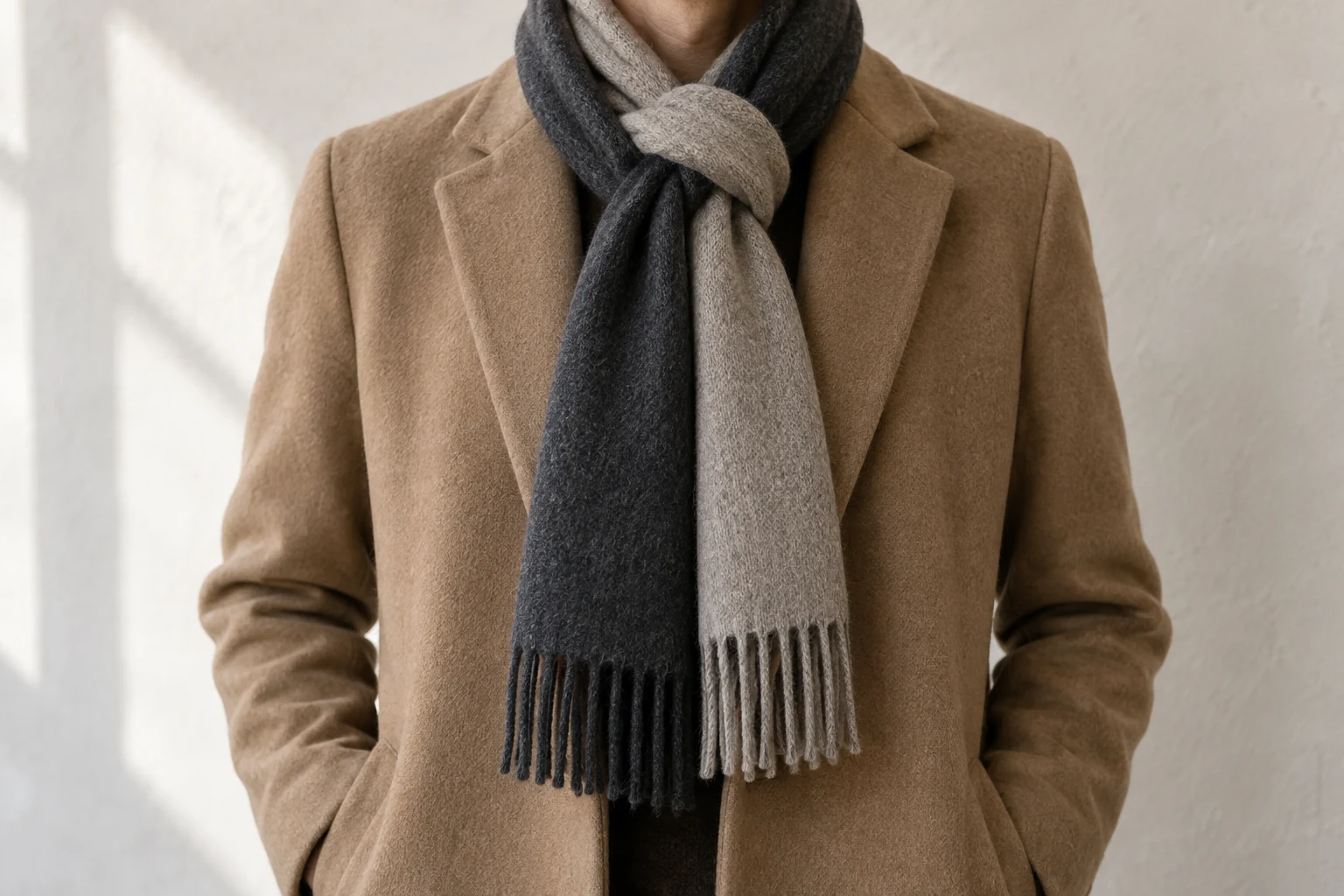
A scarf is the easiest fix, because it seals the gap between coat collar and throat where wind gets in. A wool or cashmere scarf looped once and tucked into the coat does the job; our guide on how to tie a scarf shows knots that stay put in wind. Thin leather or knit gloves are enough for most 40 degree days, and a knit hat or a wool cap is worth carrying when the wind is up or you will be outside after dark.
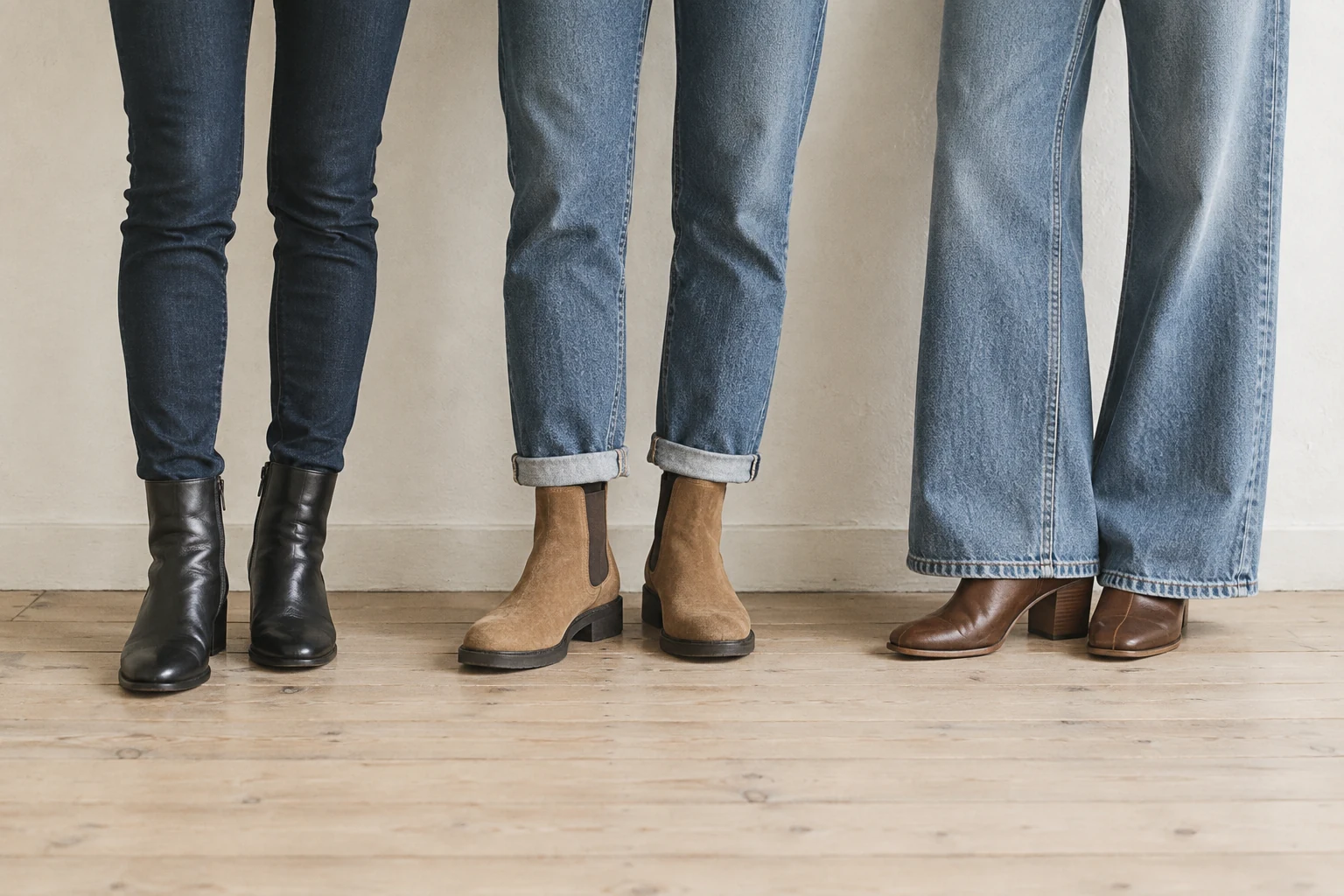
Feet are the other place cold arrives. Mesh running shoes let wind straight through, and canvas sneakers soak up puddles. Leather shoes or boots with wool blend socks are the better choice, and a pair of ankle boots is probably the most useful single shoe for this temperature, since they work with trousers, jeans, and skirts worn with tights. Save suede for dry days.
What to wear in 40 degree weather, by how long you are outside
Door to door is the easy case: short walks between a heated home, a car or train and an office, where the coat does nearly all the work. For a business casual office, men can wear wool or flannel trousers, an oxford or flannel shirt and a merino sweater under a navy or charcoal overcoat, with leather shoes or chukka boots; in a suit, a thin knit or a slim down vest under the overcoat adds warmth without bunching the tailoring. Women can wear wool trousers, or a midi skirt with opaque tights, and a fine knit or blouse under a cardigan, with a long wool coat and ankle boots or loafers with socks. In both cases the sweater is what lets you take the coat off at your desk and still look put together.
Hours outside, at a football game, a farmers market or a long walk in the park, call for insulation rather than tailoring, because standing still produces little heat. For men, that means dark jeans or chinos, a thermal henley or flannel shirt and a shawl collar sweater or fleece under a quilted or down jacket, with leather boots and wool socks. For women, it means jeans or corduroys, a thick sweater and a puffer or lined parka, with lug sole boots. Leggings on their own let the wind through, so choose fleece lined ones or a coat long enough to cover the thighs. Either way, put the beanie and gloves on before you leave rather than hoping you will not need them.
After dark, the temperature usually slips a few degrees below the afternoon high, and the coldest minutes are the ones spent waiting for a table or a ride. Men can wear a fine gauge turtleneck under a sport coat with dark wool trousers, leather boots, a scarf and a wool topcoat. Women can wear a dress or skirt with black tights, a fitted sweater, heeled ankle boots and a long coat, or wide leg wool trousers with a fine knit if you will be in and out of cold air. A coat that reaches at least mid thigh keeps your legs noticeably warmer than a waist length jacket, and it is the piece you will be glad to leave on through a short wait outside.
| Situation | What to wear | Keep in mind |
|---|---|---|
| Door to door, office | Wool trousers or a skirt with tights, a knit, a wool overcoat | The sweater lets you take the coat off at your desk |
| Hours outside | Jeans or corduroys, flannel or thermal, thick sweater, down or quilted jacket | Standing still makes little heat; put on hat and gloves before leaving |
| Evening out | Fine turtleneck or fitted sweater, wool trousers or a dress with tights, long coat | A coat to mid thigh keeps legs warmer |
| Rain | Wool or synthetic layers under a water resistant shell with a hood | Dress as though it were ten degrees colder |
| Running | Tights or shorts, long sleeve synthetic top, light wind jacket, thin gloves | Carry a layer if you will stop for long |
Running at 40 degrees
Running turns the picture around, since your body produces a great deal of heat. A rule of thumb widely repeated among runners is to dress as if it were 15 to 20°F warmer than the thermometer says, which at 40°F usually means running tights or shorts, a long sleeve synthetic top, a light wind jacket, thin gloves and a headband. You should feel slightly cold for the first few minutes. If you stop to walk or stretch for long, the same outfit chills quickly, so finish near home or carry a light layer for afterward.
Common mistakes
Dressing for the afternoon high
A forecast high of 40°F often means a morning near freezing and an evening in the mid 30s. Dress for the coldest hour you will spend outside, and carry what you will not need later.
Forgetting that indoors is warm
Heavy layers you cannot remove leave you sweating on the train, and sweat chills you the moment you step outside again. Put your warmth in the coat and accessories, which come off easily.
Questions people ask
Is 40 degrees cold enough for a winter coat?
For most people, yes, at least a wool coat or a lightly insulated jacket. A heavy parka is usually more than you need unless you will stand outside for a long time or the wind is strong. If the day is calm and sunny and you will mostly walk, a warm sweater under a medium weight coat is enough.
Is 40 degrees warm enough for shorts?
For most people standing around or walking in town, no: bare legs at 40°F get cold quickly, especially in wind. Shorts make sense when you are working hard, such as running, where tights or shorts are both common. If you like shorts in cool weather, save them for sunny, still days with short trips outside.
What should I wear in 45 degree weather?
At 45°F the same layers apply, with a little more room to lighten. A sweater and a wool coat or a quilted jacket are typical, and gloves become optional unless it is windy. For the full range of 40 to 50 degree weather, the deciding factors are still wind, rain and how long you will be outdoors.
What changes in 30 degree weather?
Below freezing, ice and frostbite become real concerns, so the kit gets warmer: an insulated or down coat, a hat and gloves as standard, and boots with good grip. A thermal base layer under trousers is sensible for long periods outside. The layering principles are the same, just with more insulation in each layer, as our guide to dressing for 30 degree weather explains.
What should I wear if it is 40 degrees Celsius?
That is a very different day: 40°C is about 104°F, which is dangerous heat. Dress in loose, light colored linen or cotton, cover your head in the sun and drink water often. Our guide to dressing for 90 degree weather covers hot weather clothing in detail.
Sources and further reading
References used for this guide. Each opens the original page in a new tab.
- National Weather Service: Understanding wind chill and the wind chill chart Opens in a new tab
- National Weather Service: Prepare for cold weather Opens in a new tab
- NOAA JetStream: Wind chill, hypothermia and cold weather myths Opens in a new tab
- L.L.Bean: How to layer for cold, rainy weather Opens in a new tab
Keep reading

Weather
What to wear in 50 degree weather
50°F can feel like spring in the sun and like late fall in the wind. How to match the jacket to the day, what to wear under it, and outfits for men and women.

Weather
What to wear in 60 degree weather
60°F is warm in the sun and cool in the shade. How to dress for it with one removable layer, which shoes work, and outfits for men and women.
Everyday style
How to tie a scarf: easy ways for every coat
How to tie a scarf step by step: warm knots for a long winter scarf, neat ways to wear a silk square, head scarf styles and the knots men reach for most.
Washing and ironing
How to wash a down jacket without ruining the fill
Wash a down jacket at home with a down specific wash, a front loader, low heat and dryer balls. What to check first, how long drying takes and how to fix clumps.
Everyday style
How to wear ankle boots with jeans
How to wear ankle boots with jeans of any cut: when to tuck skinny jeans in, cuff straight legs, or let wide and bootcut hems cover the boot.