What to wear in 80 degree weather
In this guide
Eighty degrees is the point where most people stop asking whether it is warm enough for summer clothes and start asking how to stay comfortable in them. You walk out the door feeling fine, and by the time you have crossed a sunny parking lot your shirt is sticking to your back. Knowing what to wear in 80 degree weather means choosing clothes that let air move and sweat dry, then adjusting for the three things that change the day: humidity, work and air conditioning.
At 70 degrees the question is mostly which thin layer to carry, a problem our guide to 70 degree weather covers in detail. At 80 the priority flips. The body is shedding heat all day, so fabric, fit and color matter more than layers, and a few habits that work in spring, such as heavy jeans or a fitted synthetic top, start to feel like a mistake by early afternoon.
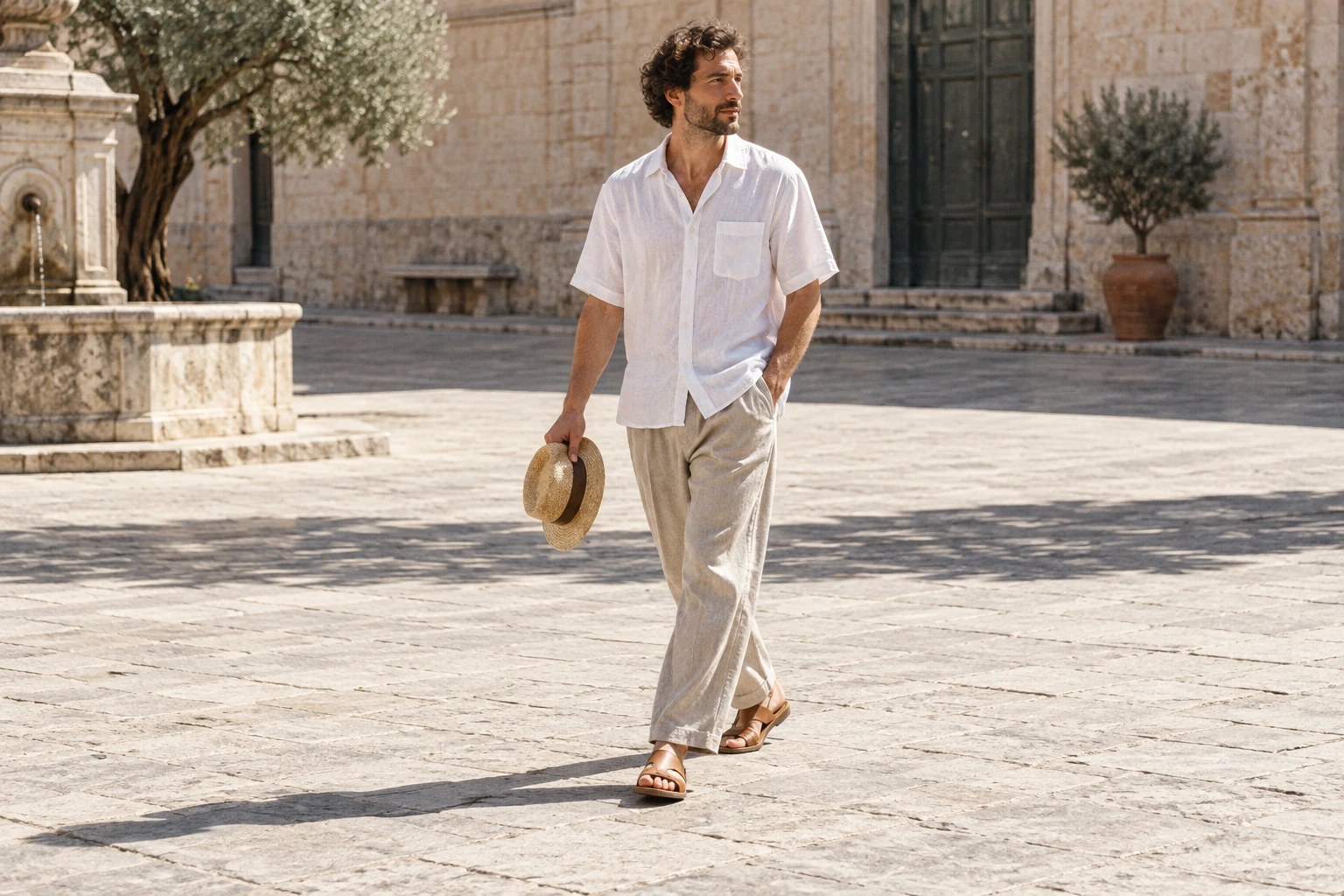
How 80 degrees feels depends on humidity and sun
Eighty is a threshold in forecasting as well as in your closet. The National Weather Service uses plain air temperature as its feels like figure up to about 80°F, and switches to the heat index above it, which combines temperature and humidity. At exactly 80 the heat index barely moves, even on a humid day, but it rises steeply with every few degrees after that, which is why an 80 degree morning that climbs to 86 can feel far hotter than the forecast high suggests.
Sun makes an equally big difference. The weather service notes that heat index values assume shade and light wind, and that full sunshine can add up to 15°F. In practice, an 80 degree afternoon on an open sidewalk or at an outdoor game can feel like the low 90s, while the same outfit in the shade of a café awning feels pleasant. Plan your clothes for where you will spend the hottest hour, not for the number on your phone.
Humidity decides how well sweat works. In dry heat, sweat evaporates quickly and a loose cotton or linen shirt feels cool. In sticky humidity, sweat lingers, so fabrics that dry fast and stand away from the skin become more important than the fiber on the label.
Fabrics and fit that keep you cool at 80°F
Fit matters as much as fabric. Texas A&M AgriLife recommends lightweight, loose fitting clothes for hot weather because air circulating next to the skin carries heat and lets sweat evaporate. A slightly relaxed shirt, a wide leg trouser or an A line skirt will feel cooler than the same fabric cut close to the body, and it also shows sweat less.
For everyday wear, linen is the classic warm weather fiber: it is crisp, it stands away from the skin and it dries quickly, though it creases within an hour. Seersucker, with its puckered stripes, holds the fabric off your skin and hides wrinkles. Open weave cotton such as voile, poplin, chambray and lightweight oxford breathes well, and so does fine jersey for T shirts. Heavy twill, thick denim, fleece and tightly knit polyester trap heat.
There is one useful exception. For exercise, yard work or anything that makes you sweat heavily, AgriLife advises moisture wicking synthetics or merino over cotton, silk and linen, which absorb sweat and stay wet. That advice is about activity, not about a shirt for lunch. A good rule is natural, loose weaves for sitting, walking and working indoors, and technical fabrics for real exertion in the sun.
Colors and sun protection
Light colors reflect more of the sun's heat, and AgriLife notes that darker colors absorb more, so white, stone, pale blue and sage feel cooler in direct sun. The trade off, covered in more depth in our 70 degree guide, is that thin light fabric lets through more ultraviolet light: the Skin Cancer Foundation puts an ordinary white cotton T shirt at a UPF of only about 5, while darker, brighter and more tightly woven fabrics block much more.
For a short day in town, choose the lighter color and enjoy it. For hours outside at the beach, a festival or a kids' game, a tightly woven shirt in a medium shade, or a garment labeled with a UPF rating, is the better choice, along with sunglasses and a hat with a brim of at least 3 inches (about 8 cm) that shades your ears and neck.
Jeans, sweaters and hoodies at 80 degrees
You can wear jeans in 80 degree weather, and plenty of people do, but which jeans matters. Lightweight denim in a loose or straight cut, with a breezy top, is comfortable for an evening or a day spent mostly indoors. Heavy, rigid or skinny jeans hold heat against the legs and stay damp once you sweat, so on a sunny, humid day they will feel like the wrong choice by midafternoon. Linen trousers, cotton chinos, wide leg pants or a skirt give the same coverage with far more air.
A sweater or hoodie at 80°F only makes sense indoors, where some offices, classrooms and cinemas are kept cold. Carry it rather than wearing it. A thin cotton cardigan, a linen overshirt or a light cotton knit folds into a bag and covers the air conditioning without adding weight to the walk.
80 degree weather outfits for men and women
For casual days, men can wear chino or linen shorts that end just above the knee with a camp collar shirt, a linen button down with the sleeves rolled or a well cut T shirt, finished with canvas sneakers, boat shoes or leather sandals. If shorts feel too casual, lightweight chinos or drawstring linen trousers with a short sleeve shirt look put together and stay cool. A cotton polo is the easiest single piece for a day that includes lunch somewhere nice.
For women, a cotton or linen midi dress with flat sandals, a pair of wide leg linen trousers with a tank or a loose shirt, or a denim or cotton skirt with a relaxed tee all work well in 80 degree weather. Shorts in a looser, longer cut with a sleeveless blouse feel cooler than short fitted ones, and a sundress with espadrilles moves easily from the park to dinner. Add a wide brimmed straw or cotton hat for any long stretch in the sun.
At the office, men can switch to tropical wool or cotton trousers and a short sleeve or lightweight long sleeve shirt, with loafers worn without visible socks where the dress code allows. Women can wear a linen blend shift dress, cropped trousers with a shell top, or a midi skirt with a short sleeve knit, and leave a light cardigan at the desk. Our guides to business casual for men and women cover what most offices still expect in summer.
| Setting | Men | Women |
|---|---|---|
| Casual day | Linen or chino shorts just above the knee, camp collar shirt, canvas sneakers or sandals | Cotton or linen midi dress with flat sandals, or wide linen trousers and a tank |
| Nicer lunch | Cotton polo with lightweight chinos | Sundress with espadrilles |
| Office | Tropical wool or cotton trousers, lightweight shirt, loafers | Linen blend shift dress, or cropped trousers with a shell top |
| Long hours in the sun | Tightly woven medium shade shirt or UPF garment, brimmed hat | Same, plus a wide brimmed straw or cotton hat |
Shoes, socks and sweat
Feet swell a little in heat, so leave room in sandals and loafers and choose leather or canvas over synthetic uppers, which trap sweat. Espadrilles, leather slides, breathable sneakers and fisherman sandals all suit 80°F. If you wear closed shoes without visible socks, thin no show socks in cotton or a wicking blend prevent blisters and keep insoles fresh far longer than bare feet.
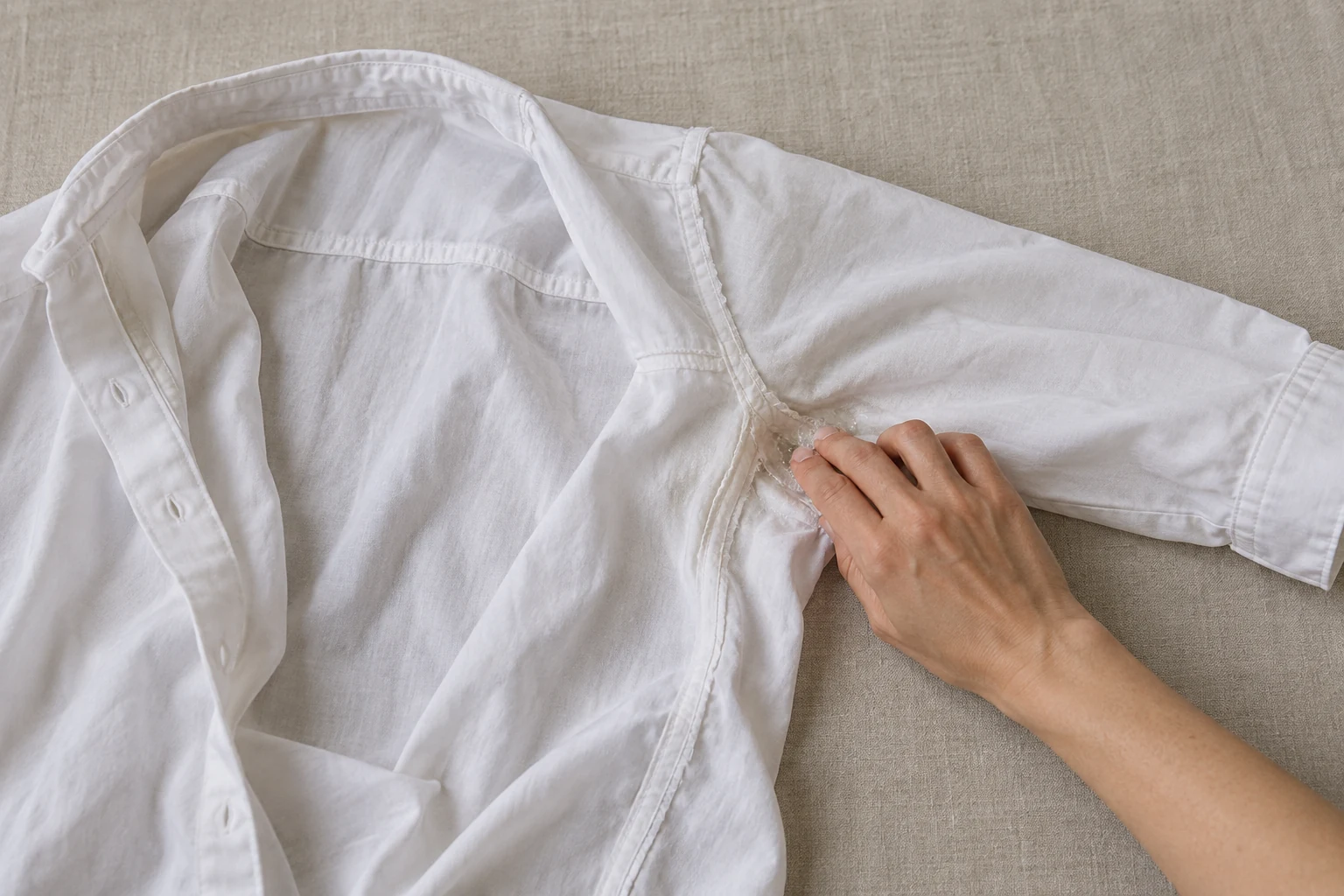
Sweat marks are the other practical problem at this temperature. Loose tops, mid tones and patterned fabrics hide them best, while pale gray jersey and fitted silk show them most. Wash warm weather clothes after each wear rather than letting sweat sit, since dried antiperspirant and sweat can yellow fabric over time. Our guide to removing deodorant and sweat stains explains how to deal with marks that have already set.
Common mistakes
Choosing fitted synthetic tops for a humid day
Tightly knit polyester in a close fit holds sweat against the skin unless it is made for exercise. For everyday wear, a loose linen or cotton shirt feels cooler and looks fresher by evening.
Wearing the sweater instead of carrying it
A cold office is not a reason to walk to work in a knit. Carry the layer and put it on inside, so you arrive dry rather than damp.
Questions people ask
Is 80 degrees considered hot?
For most people, 80°F is warm rather than dangerously hot, and it is comfortable in shade with a breeze. It feels hot in full sun, with high humidity or during exercise. Once the heat index passes about 80, the weather service begins to advise caution for prolonged activity outdoors.
Can I wear jeans in 80 degree weather?
Yes, if they are lightweight and not tight, and especially for evenings or days spent mostly inside. On a sunny, humid afternoon, linen trousers, chinos or a skirt will be noticeably cooler. Light wash denim reflects more sun than dark indigo.
What should I wear in 70 to 80 degree weather?
In the 70s, a light top with one thin layer to carry is the usual answer. As the day reaches the upper 70s and 80, drop the layer, move to linen, loose cotton, shorts, skirts and sandals, and treat a hat and sunscreen as part of the outfit.
What changes at 90 degrees?
At 90°F heat becomes a health concern as well as a comfort question, especially in humidity. Clothes get looser and lighter still, and sun protection and shade matter more than style. Our guide to 90 degree weather covers work, commuting and staying safe.
Sources and further reading
References used for this guide. Each opens the original page in a new tab.
- National Weather Service: National Digital Forecast Database definitions, apparent temperature and heat index Opens in a new tab
- National Weather Service: Heat forecast tools and the heat index Opens in a new tab
- Texas A&M AgriLife Extension, Howdy Health: What to wear in hot weather Opens in a new tab
- The Skin Cancer Foundation: Five things that affect how well your clothes block UV rays Opens in a new tab
Keep reading

Weather
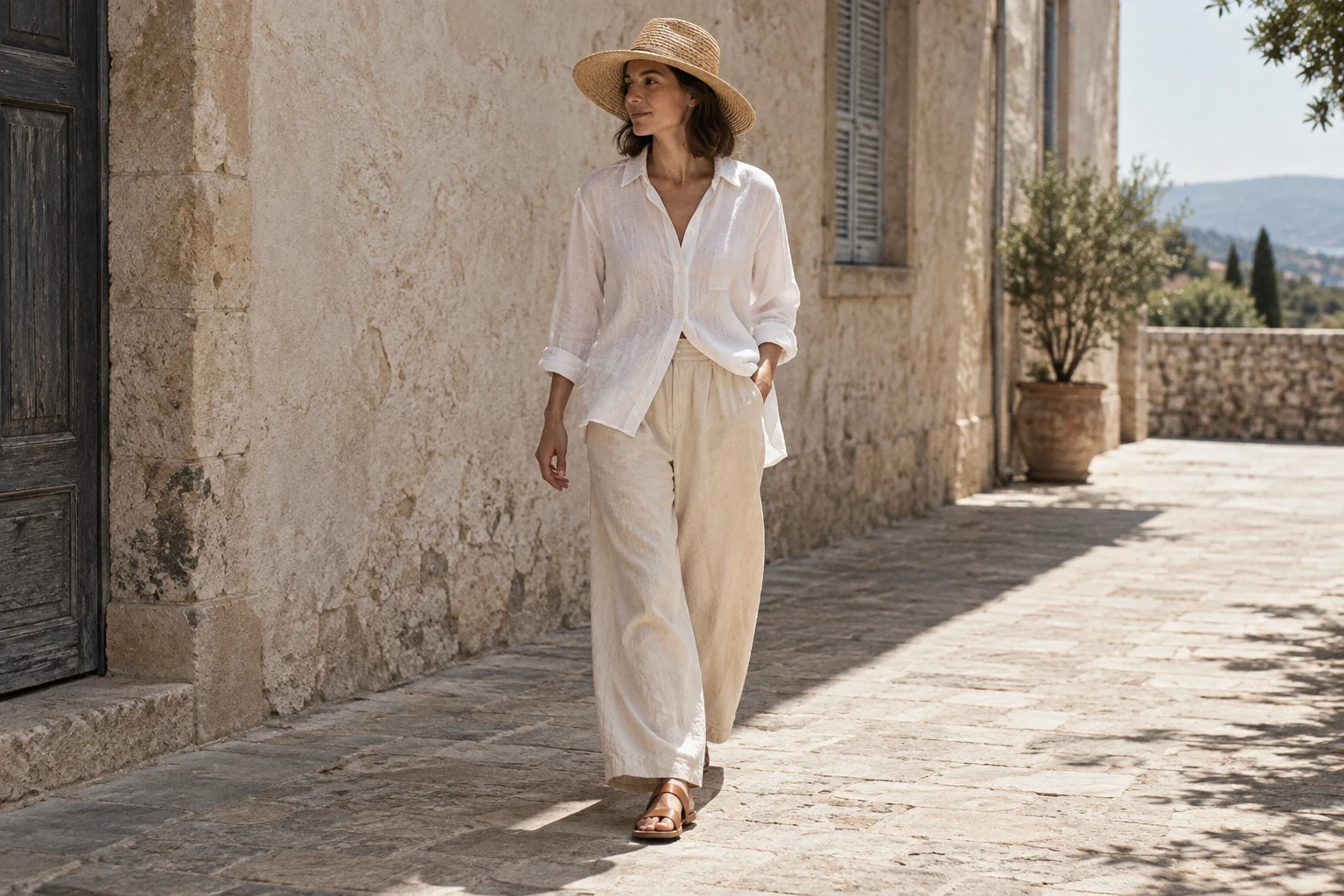
What to wear in 70 degree weather
70°F sounds perfect until the sun, humidity or office air conditioning get involved. Fabrics, shoes and outfits for men and women that stay comfortable.
Weather
What to wear in 90 degree weather
At 90°F clothing is part of staying safe. Loose fabrics, when to cover up, what to wear to work and outdoors, and the signs that heat is getting to you.
Fabrics
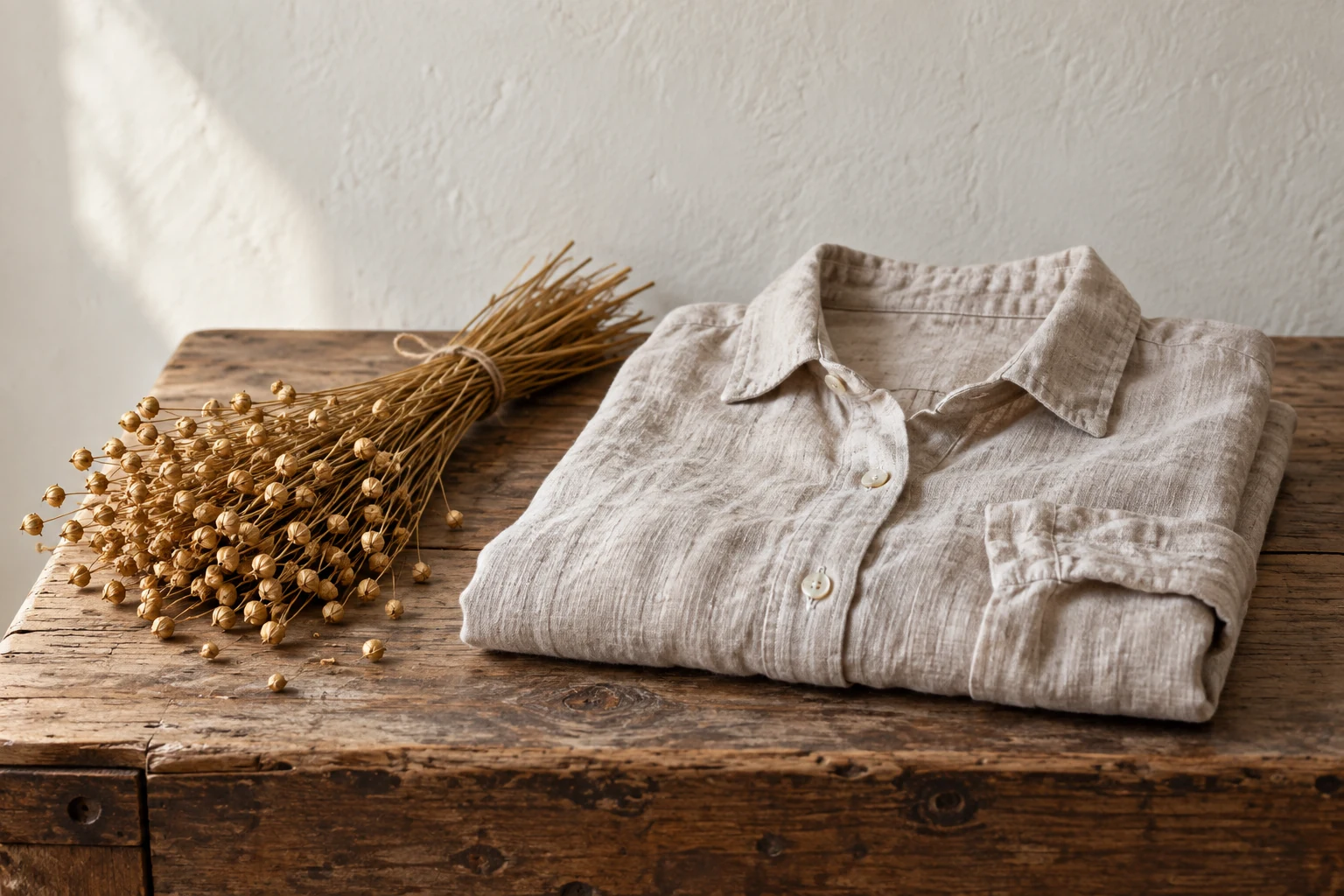
What is linen, and why does it wrinkle?
What linen is made of, how flax becomes fabric, why linen wrinkles, how it compares with cotton, and how to wear and care for linen clothes and sheets.
Fabrics
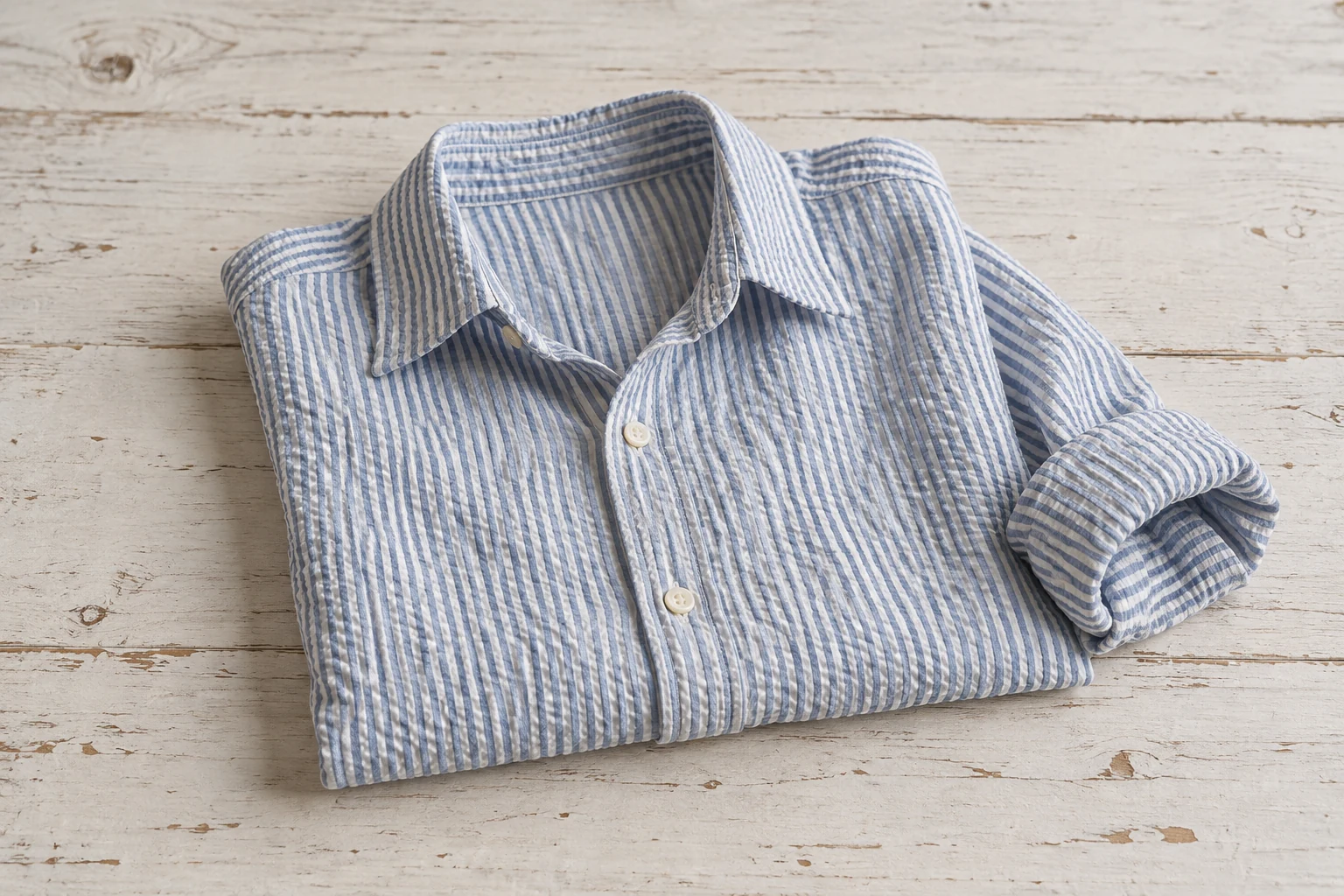
Seersucker: the summer fabric explained
What seersucker is, how its puckered stripes are woven, why it keeps you cool, where it came from, and how to wear a seersucker suit, shirt or dress in summer.
Stain removal
How to remove deodorant and sweat stains
Remove deodorant stains from black shirts, lift yellow sweat stains from white clothes, and prevent armpit stains from building up in the first place.