How to pack a suitcase without wrinkles
In this guide
Packing usually goes wrong long before the zipper refuses to close. The suitcase is open on the bed, the trip is tomorrow, and the pile of clothes next to it is twice the size of the bag. Most of that trouble comes from decisions made too late: the extra pair of shoes, the three just in case sweaters, the shirt that goes with nothing else. Learning how to pack a suitcase well starts before anything goes in the bag, and the folding technique only matters once the pile is the right size.
This guide covers the sequence that works for a weekend carry on or a two week checked bag: plan the outfits, check the rules, decide what to roll and what to fold, layer the bag from the wheels up, and arrive with clothes you can wear straight away.
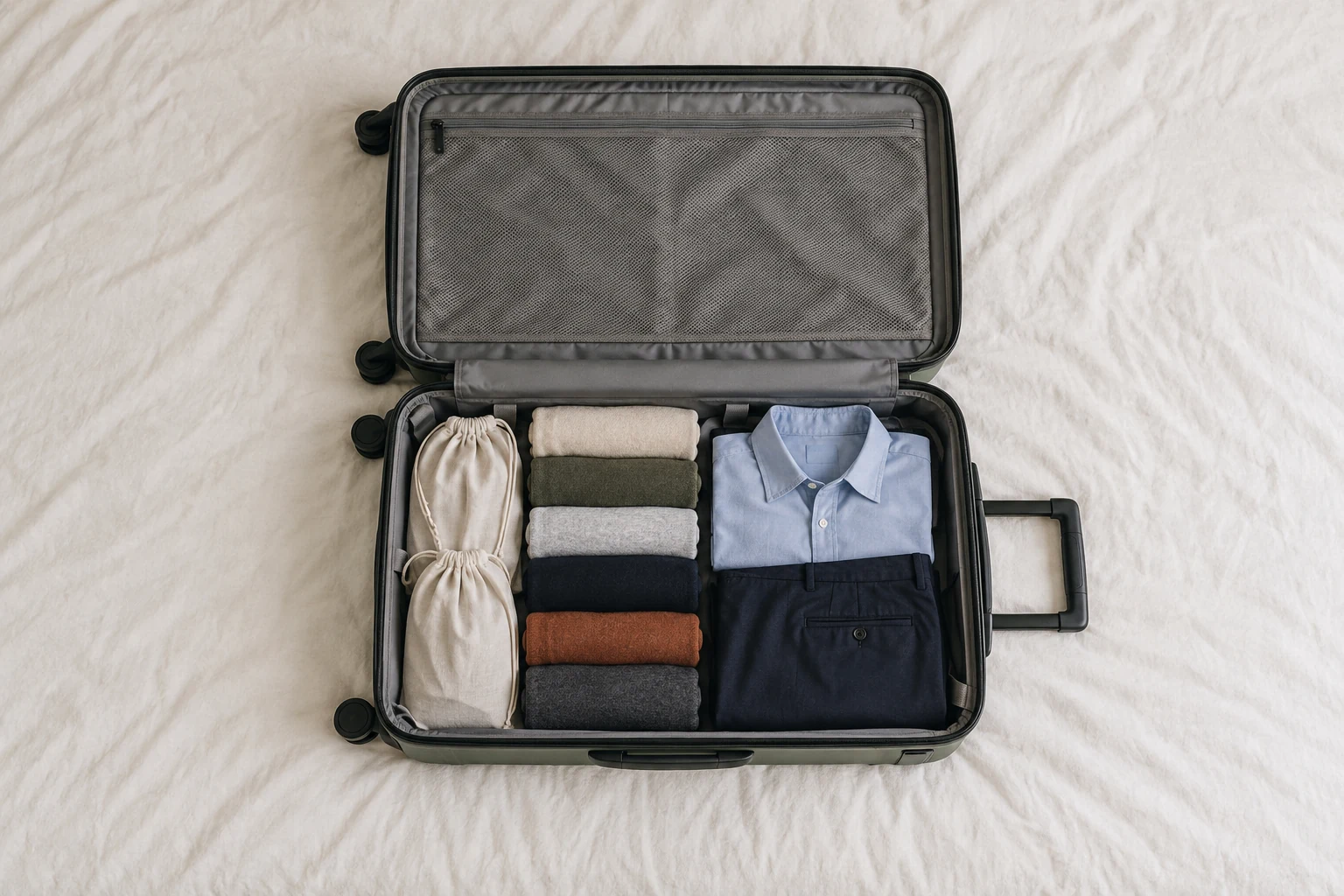
Plan the outfits before you pack
Look at the forecast and the plan for each day, then lay out complete outfits on the bed, one per day plus anything you need for evenings or a specific event. Once they are laid out, look for overlap. The same dark trousers can cover three days, one sweater can layer over four tops, and a single pair of comfortable shoes can carry every walking day. Pieces that appear in only one outfit are the first to question.
Build around two or three colors that all work together, the same idea as a capsule wardrobe, so that every top goes with every bottom. Pack for the weather you expect, with one layer for the weather you do not: a light sweater and a rain shell cover most surprises. For cool destinations, our guide to what to wear in 50 degree weather shows how to layer without packing a heavy coat, and our vacation packing list turns this planning into a checklist by trip length.
A rough count helps when the trip is longer than a weekend. For a 3 day trip, two bottoms, three or four tops, one layer and two pairs of shoes are usually enough; for 7 days, add two or three tops and plan to rewear the bottoms, rather than doubling everything. Past a week, the count barely grows, because it is easier to do one small load of laundry than to carry a second week of clothes. Counting formulas such as the 5 4 3 2 1 method work the same way, and our guide to a travel capsule wardrobe shows how to choose pieces that make those numbers stretch.
Check airline and TSA rules first
If you are flying carry on only, the size of the bag sets the size of the wardrobe. Delta, for example, limits carry on bags to 22 by 14 by 9 inches (56 by 35 by 23 cm), including wheels and handles, and other large US airlines publish similar limits, while budget and international carriers are often smaller and may weigh the bag. Check your own airline before packing, not at the gate. Checked bags have weight limits too, and a bag that is overweight costs extra at the counter.
Liquids set the second limit. In the United States, TSA allows liquids, gels, creams, aerosols and pastes in your carry on in containers of 3.4 ounces (100 ml) or less, all fitting in one quart size bag; larger containers go in checked luggage, with exceptions for medications and baby formula or food. Power banks and spare lithium batteries must travel in your carry on, not in a checked bag, and if your carry on is taken at the gate you need to remove them first. Medicines belong in your carry on in their original labeled containers, as the CDC advises, with enough to cover delays.
Roll soft clothes, fold structured ones
The rolling versus folding debate has a simple answer: do both, depending on the fabric. Soft, springy clothes such as T shirts, knits, jersey dresses, casual trousers, jeans, leggings and pajamas roll well. A tight roll uses space efficiently, fills gaps, and resists the sharp creases that come from heavy things pressing on a flat fold. Our guide to folding a T shirt includes the ranger roll, which locks itself closed, and our guide to folding a sweater covers knits.
Structured clothes such as dress shirts, blouses, blazers and tailored trousers keep their shape better folded flat, with as few folds as possible. To fold a shirt for travel, button it, lay it face down, fold each side in from the middle of the shoulder, lay the long sleeves straight down along each fold rather than crossing them over the back, then fold the tail up once or twice. A jacket or suit has its own method, explained in our guide to folding a suit for travel, which turns one shoulder inside out to protect the other.
How to pack a suitcase in layers
Pack a wheeled suitcase standing upright or lying flat, but think of it as it will stand in the airport: the wheel end is the bottom, and whatever you put there will carry the weight of everything else. Work from heavy to light and from sturdy to delicate.
Put shoes and heavy items at the wheel end
Place shoes sole to sole in shoe bags or plastic bags along the wheel end, with toiletries and any heavy items beside them. This keeps the bag stable when upright and stops shoes crushing clothes.
CheckThe heaviest things form a flat base along one end.
Fill the hollow spaces
Stuff socks, underwear and chargers into shoes and the gaps around the handle frame. The space is otherwise wasted, and filled shoes keep their shape.
CheckNo empty pockets inside shoes or along the edges.
Lay in the rolled clothes
Pack rolled T shirts, knits, jeans and casual clothes in tight rows in the middle layer, or in packing cubes.
CheckThe layer is level and firm, and nothing shifts when you press it.
Put folded clothes on top
Lay dress shirts, blouses, trousers and any folded jacket flat across the top, so nothing heavy sits on them.
CheckStructured pieces lie flat, edge to edge, with no bunching.
Finish with the things you need first
Put a layer for arrival, sleepwear and the next morning's outfit on the very top or in the lid pocket.
CheckYou can open the bag at your destination and find tonight's needs without unpacking.
| Layer | What goes there |
|---|---|
| Wheel end | Shoes sole to sole in bags, toiletries and heavy items |
| Gaps and shoes | Socks, underwear and chargers stuffed inside |
| Middle | Rolled tees, knits, jeans and casual clothes, or packing cubes |
| Top | Dress shirts, blouses, trousers and any folded jacket, lying flat |
| Very top or lid pocket | Arrival layer, sleepwear and the next morning's outfit |
Work from heavy to light and sturdy to delicate, and stop at about 80 percent full.
How to use packing cubes for clothes
Packing cubes are zipped fabric boxes that sort a suitcase into sections. They do not create space by themselves, but they make a bag far easier to live out of, because you can lift out one cube instead of digging through everything. Group them in a way that matches how you get dressed: one cube for tops, one for bottoms, one for underwear and socks, or one cube per day or per destination on a trip with several stops. Roll clothes inside the cubes for the most efficient fit.
Compression packing cubes have a second zipper that squeezes the contents smaller. They are useful for bulky knits, fleece and puffy layers, and for fitting more into a carry on, but compression adds creases, so keep structured and delicate pieces out of them. They also make it easy to pack a bag heavier than you expect. Weigh a checked bag before leaving home, and if a carry on will be weighed, check that too.
Keep clothes as wrinkle free as possible
Wrinkles come from pressure, friction and folds that sit in one place for hours. Pack firmly so clothes cannot slide around, but do not force the lid shut on an overfilled bag. Choosing fabrics helps as much as technique: wool, knits and many synthetics recover quickly, while linen and crisp cotton crease easily and are worth packing flat and on top. Some travelers lay tissue paper or a thin plastic dry cleaning bag between folded layers to reduce friction.
Unpack as soon as you arrive, even if only the structured pieces. Hang shirts, dresses and jackets in the bathroom while you shower, because steam relaxes most creases in a few minutes, and a travel steamer or the hotel iron handles the rest. Our guide to getting wrinkles out without an iron covers other quick fixes that need nothing more than a hanger and a hot shower.
What to keep in your carry on
Even when you check a bag, keep the things you cannot replace quickly with you: passport or ID, travel documents, medicines in their original containers, glasses or contact lenses, phone, charger and power bank, keys, and anything valuable or fragile. Add one change of clothes and basic toiletries in travel sizes. If the checked bag is delayed, that small kit covers the first day, and it takes almost no room in a personal item or tote.
Before you close the suitcase, take one more look at the pile you did not pack. If the outfits are planned, there should be very little you will miss, and the space you have left is space for the trip home. A bag packed to about 80 percent full is easier to close, keeps clothes from being crushed, and leaves room for what you bring back.
Common mistakes
Packing for every possible scenario
Extra outfits for unlikely events fill the bag and rarely get worn. Plan by day, add one warm layer and one rain layer, and leave the rest.
Putting a power bank in the checked bag
TSA does not allow power banks and spare lithium batteries in checked luggage. Keep them in your carry on, and take them out if the bag is checked at the gate.
Too many shoes
Shoes are the heaviest and bulkiest thing in most bags. Two pairs, one for walking and one that dresses up, cover most trips, and you can wear the bulkier pair on the plane.
Compressing delicate clothes
Compression cubes crease linen, silk and dress shirts. Use them for knits, fleece and underwear, and pack structured pieces flat.
Questions people ask
Is it better to roll or fold clothes in a suitcase?
Roll soft, casual clothes such as T shirts, knits and jeans, because rolling saves space and resists sharp creases. Fold structured clothes such as dress shirts, blazers and tailored trousers, and lay them on top. Most well packed suitcases use both methods.
Are packing cubes worth it?
For most people, yes, because they keep a suitcase organized from the first day to the last and make unpacking quick. They do not add space unless they are compression cubes, and even those trade space for more wrinkles.
Where do shoes go in a suitcase?
At the wheel end, sole to sole in a bag, so they form a stable base and do not crush clothes. Fill them with socks or small items to save space and help them keep their shape.
Can I pack toiletries in a checked bag?
Yes. Full size liquids are allowed in checked bags, while the TSA limit of 3.4 ounces (100 ml) per container applies to carry ons. Seal liquids in a zip top bag in case a bottle leaks under pressure.
Do I have to take my shoes off at airport security?
Usually not anymore in the United States. In July 2025 the Department of Homeland Security announced that travelers at domestic airports could keep their shoes on through TSA screening, while ID checks and the other steps stay the same. Rules at airports abroad differ, so slip on shoes and socks without holes are still a sensible choice for international trips.
Sources and further reading
References used for this guide. Each opens the original page in a new tab.
- Transportation Security Administration, Liquids, aerosols and gels rule Opens in a new tab
- Transportation Security Administration, Power banks Opens in a new tab
- Delta Air Lines, Carry on baggage size limits Opens in a new tab
- CDC Travelers' Health, Traveling abroad with medicine Opens in a new tab
- Transportation Security Administration, DHS ends the shoes off screening policy (July 2025) Opens in a new tab
Keep reading
Closet and packing
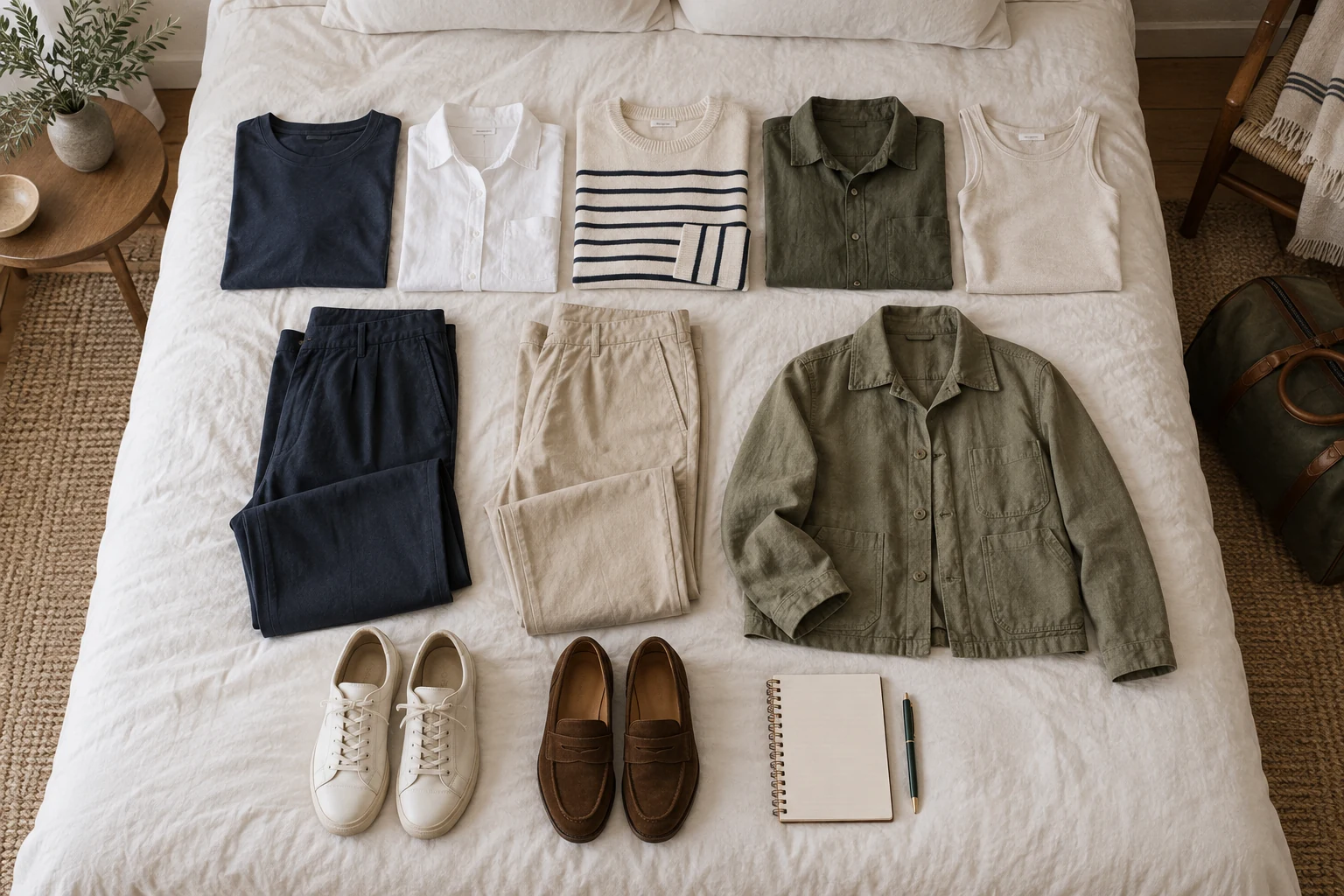
A packing list for vacation, built around outfits
A packing list for vacation that starts from your days and the forecast: how many clothes to bring for 3 or 7 days, travel essentials and a final check.
Closet and packing
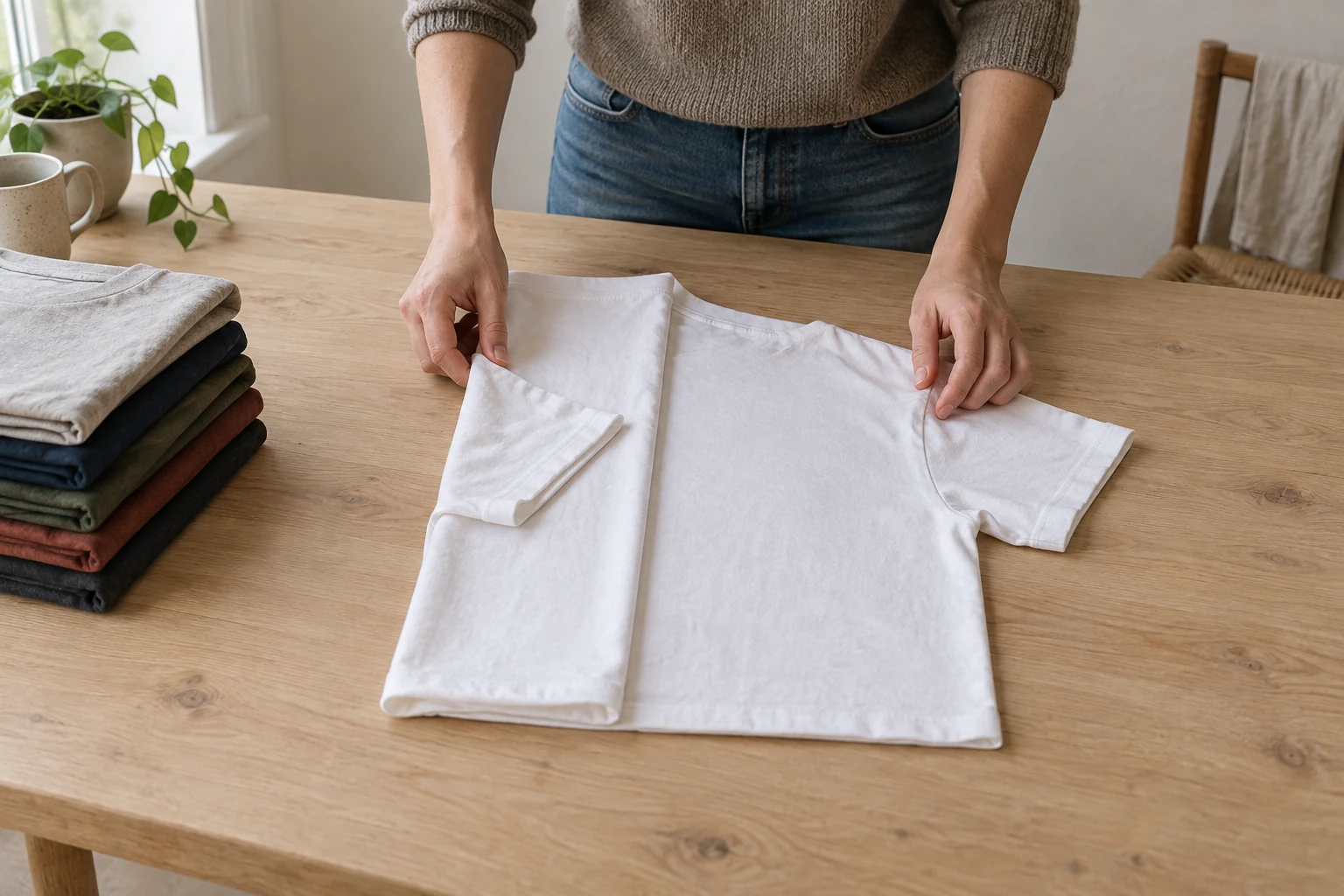
How to fold a T shirt neatly
How to fold a T shirt four ways: a neat shelf fold, the fast two second fold, an upright file fold for drawers and a tight roll for packing.
Suits and tailoring
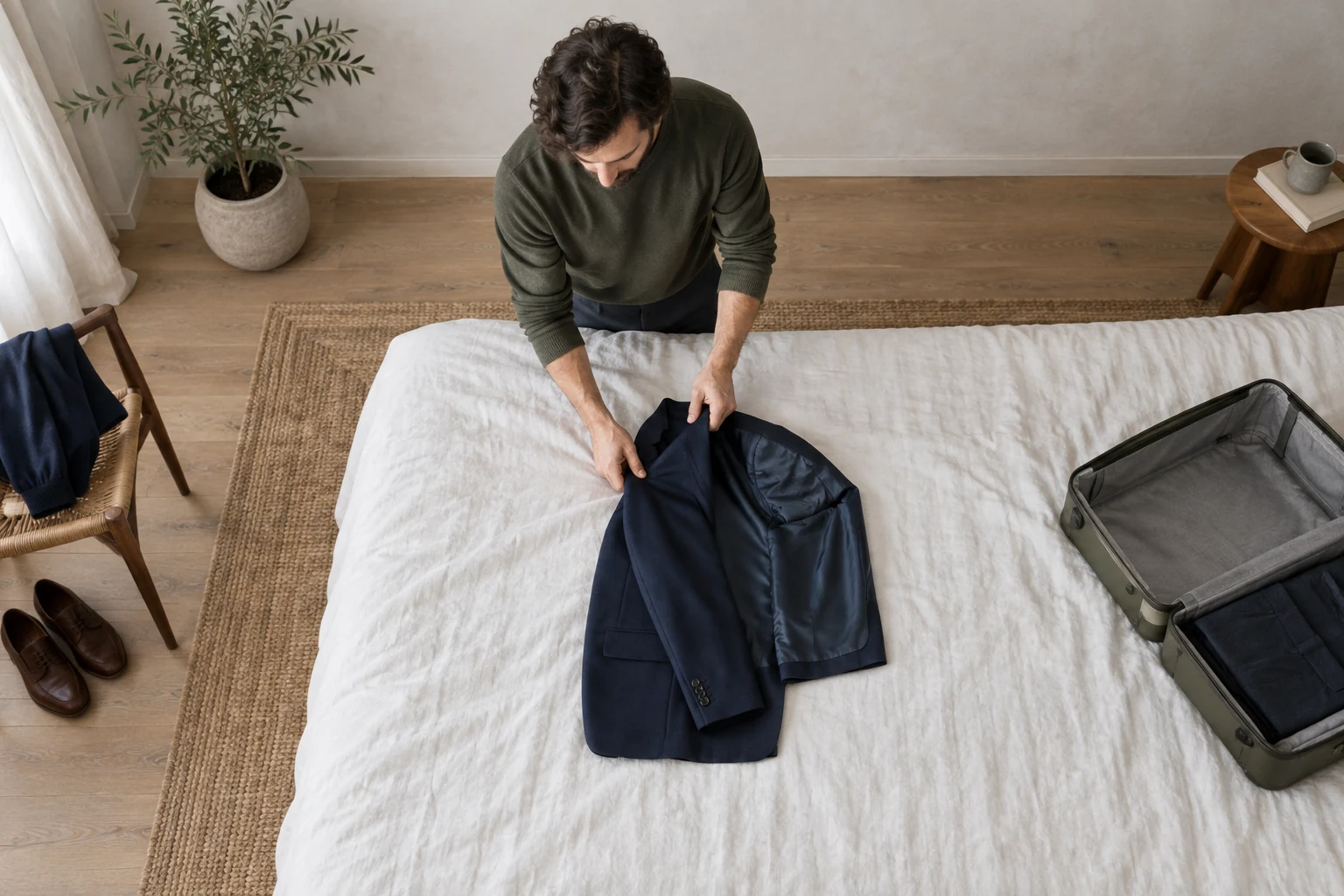
How to fold a suit for travel, jacket and trousers
How to fold a suit for travel: the shoulder inversion fold for the jacket, folding suit trousers, where to pack them, and how to get wrinkles out when you arrive.
Closet and packing
How to fold a sweater so it keeps its shape
How to fold a sweater for a shelf or drawer, fold it over a hanger without stretched shoulders, pack it for travel, and store knitwear between seasons.
Washing and ironing
How to get wrinkles out without an iron
Five ways to get wrinkles out without an iron: a clothes steamer, shower steam, the dryer, a spray bottle and smart hanging, matched to the fabric you have.