Men's jacket size chart: suits, blazers and coats
In this guide
A blazer you like is listed in 38R, 40R, 40L and 42R, and the parka next to it comes in M, L and XL. Both are jackets, but they use different systems, and the numbers on an Italian brand's site are different again. A men's jacket size chart ties all of them to one thing you can measure at home: the circumference of your chest.
This guide explains that measurement, then walks through the reference chart for tailored jackets, the length letters, letter sizes for outerwear, European conversions, and what to do when your chest, shoulders and waist point to different sizes. The numbers are typical rather than universal, because every brand grades its own patterns, so use them to narrow your choice before you check a specific brand's chart.
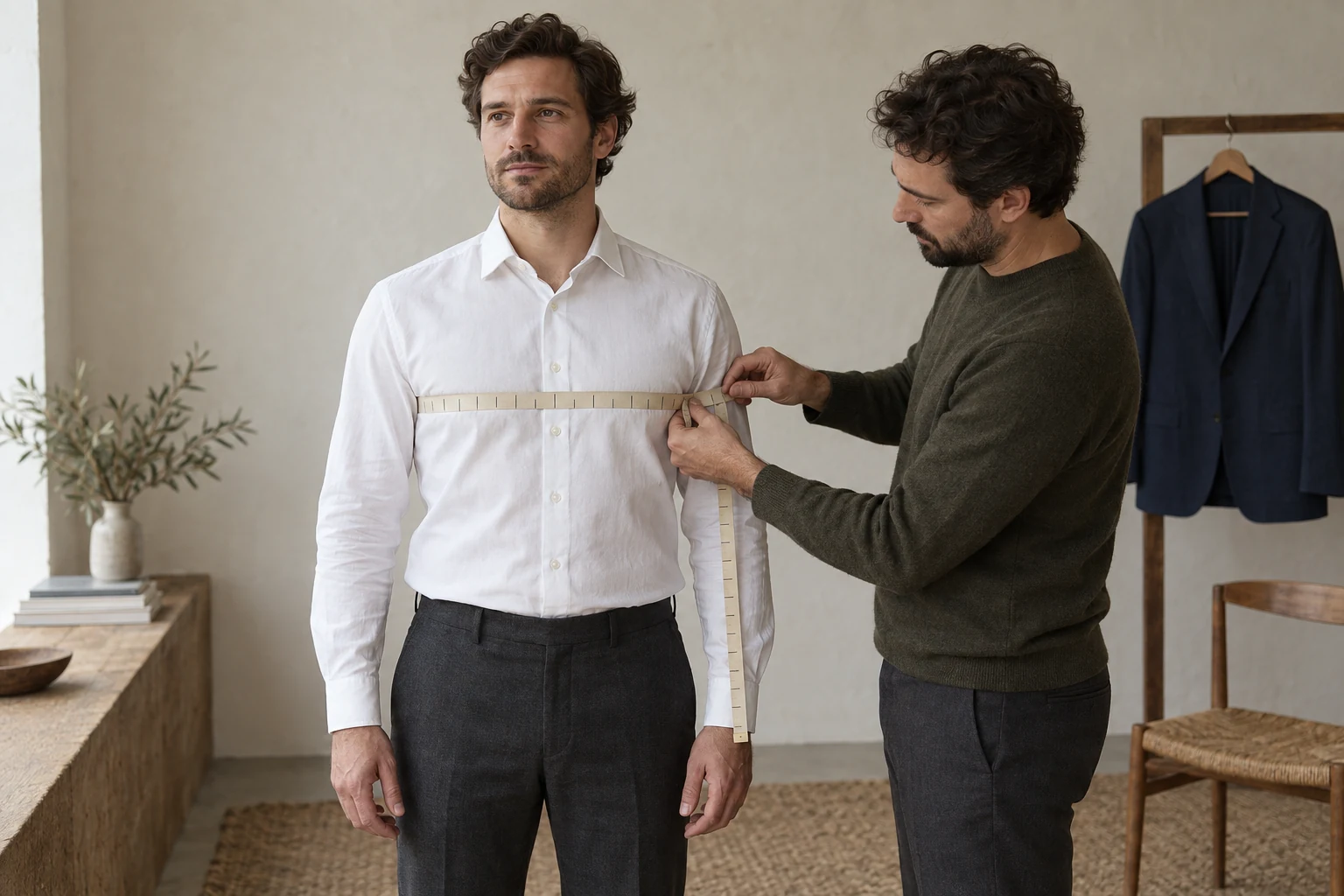
How to determine your men's jacket size: measure your chest
Stand relaxed in a thin shirt, arms at your sides, and wrap a soft tape measure around the fullest part of your chest, just under the armpits and across the shoulder blades. L.L.Bean's instructions are to hold the tape firm and level, and that level part matters: a tape that dips at the back reads an inch or more too large. Breathe normally rather than holding your breath or puffing out. Ask someone to help if you can, since reading the tape behind your own back is awkward. Our guide to measuring your chest shows the positions in more detail.
Round to the nearest inch. That number is your body chest, and for tailored jackets it is also your size: a 41 inch chest usually wears a 40 or 42, depending on build and how the brand cuts. The jacket itself will measure more than your body, because makers add room to move, often several inches. Do not confuse the two when a brand lists garment measurements, such as pit to pit across the chest laid flat; double that figure and compare it with a jacket you already own rather than with your body.
Men's suit and blazer size chart in inches and cm
Suit jackets, sport coats and blazers in the United States are sized by chest in inches, usually in even steps. The chart below is a typical reference for body measurements, with European sizes and the trouser waist that comes with a suit in standard drop 6 sizing, where the trousers are 6 inches smaller than the jacket.
Size 36: chest 36 inches (91 cm), EU 46, trouser waist 30. Size 38: chest 38 inches (97 cm), EU 48, trouser waist 32. Size 40: chest 40 inches (102 cm), EU 50, trouser waist 34. Size 42: chest 42 inches (107 cm), EU 52, trouser waist 36.
Size 44: chest 44 inches (112 cm), EU 54, trouser waist 38. Size 46: chest 46 inches (117 cm), EU 56, trouser waist 40. Size 48: chest 48 inches (122 cm), EU 58, trouser waist 42. Size 50: chest 50 inches (127 cm), EU 60, trouser waist 44. Many brands also make odd sizes such as 39 and 41, and some big and tall ranges go to 60 or beyond.
Drop varies by brand and cut. Tailor Size Guide notes that slim European cuts often use a larger drop of 7 or 8 inches, while some traditional American cuts use a smaller one, around 4, for a fuller waist. If your waist is much smaller or larger than the chart suggests, look for separates, where jacket and trousers are sold individually, or plan on having the trousers altered. Our guide to how a suit should fit explains which adjustments a tailor can make.
| US size | Chest | EU size | Trouser waist, drop 6 |
|---|---|---|---|
| 36 | 36 in (91 cm) | 46 | 30 |
| 38 | 38 in (97 cm) | 48 | 32 |
| 40 | 40 in (102 cm) | 50 | 34 |
| 42 | 42 in (107 cm) | 52 | 36 |
| 44 | 44 in (112 cm) | 54 | 38 |
| 46 | 46 in (117 cm) | 56 | 40 |
| 48 | 48 in (122 cm) | 58 | 42 |
| 50 | 50 in (127 cm) | 60 | 44 |
Every brand grades its own patterns, so confirm with the brand's chart.
Short, regular and long: what the letter means
The letter after the number is the jacket length, chosen by your height and arm length. Ranges differ by an inch or so between brands, but a typical split is short (S) for about 5 feet 4 to 5 feet 7 (163 to 170 cm), regular (R) for about 5 feet 8 to 6 feet (173 to 183 cm), long (L) for about 6 feet 1 to 6 feet 3 (185 to 191 cm), and extra long (XL) above that. Tailor Size Guide describes short and long jackets as roughly an inch and a half shorter or longer than regular, with sleeves changed to match.
Height is only a guide. A man of 5 feet 11 with long arms and a long torso may be happier in a long, and one of 6 feet 1 with short arms may prefer a regular with lengthened sleeves. Check two things in the mirror: the jacket should cover the seat of your trousers, and the sleeve should end where your wrist meets your hand, showing a quarter to half an inch (about 1 cm) of shirt cuff. Our guides to how a blazer should fit and measuring sleeve length go further.
Letter sizes: is a 40 medium, large or XL?
Casual jackets, parkas, fleeces and rain shells are usually sold in letter sizes, and each letter covers a range of two or three chest inches. L.L.Bean's regular men's chart is a good American reference: small fits a 34 to 36 inch chest, medium 38 to 40, large 42 to 44, XL 46 to 48, XXL 50 to 52 and XXXL 54 to 56. Its tall sizes are cut for men about 6 feet 1 to 6 feet 3 and add length to the body and sleeves.
That answers the common questions for most American brands. A 40 inch chest is a medium, at the top of the range, and a 42 is a large. A 44 inch chest is a large at a roomy outdoor brand but often an XL at slimmer fashion and European brands, where each letter tends to run an inch or two smaller. Many Asian brands run smaller again, so always read their chart in inches or centimeters rather than trusting the letter. If you sit at the top of a range or plan to layer a thick sweater underneath, size up; if you want a trim fit over a T shirt, stay with your size.
EU, UK and Italian jacket sizes
UK jacket sizes use chest inches just as the United States does, so a UK 40 is a US 40. European sizes, used by most Continental brands including Italian ones, are close to half the chest measurement in centimeters, which works out to the US size plus 10: a US 38 is an EU 48, a 40 is a 50, and a 42 is a 52. That also answers a common search: a size 48 men's jacket in US terms is a 38.
The conversion is a starting point, not a guarantee, because European cuts are often narrower through the waist and higher in the armhole. If you are between two EU sizes, check the brand's own chart for chest and shoulder measurements, and compare them with a jacket that fits you well. For shirts, the sizing system is different again and based on neck and sleeve, as our guide to dress shirt sizes explains.
Overcoats, and when your measurements disagree
Tailored overcoats and topcoats are usually sized with the same chest number as your suit jacket, because they are cut with extra room to go over one. Buy your suit size unless the brand says otherwise, and try the coat on over a jacket if you can. Puffers, parkas and field jackets in letter sizes are also cut to allow a sweater underneath; if you mostly wear them over a suit, size up. Our guide to types of jackets describes each style and how it should sit.
When your chest says one size and your shoulders another, choose by the shoulders. The shoulder seam should end at the edge of your shoulder bone, and it is the one area a tailor can barely change. A jacket that fits the shoulders can be taken in or let out at the waist, and sleeves can usually be shortened, or lengthened as far as the fabric folded inside allows. If you are between sizes at the chest, the smaller size will look sharper when buttoned, provided it closes without the fabric pulling into an X around the button. For a full set of body measurements, see our guide to measuring yourself for clothes.
Questions people ask
Is a size 42 jacket large or XL?
At most American brands, a 42 inch chest is a large. Slimmer fashion and European brands sometimes put a 42 at the top of large or the bottom of XL, so check the brand's own chart. If you are 42 and like to layer, a roomy large or an XL may be the more comfortable choice.
What does 40R mean on a jacket?
It means a jacket made for a chest of about 40 inches (102 cm), in regular length, which usually suits men of about 5 feet 8 to 6 feet. The matching suit trousers in standard drop 6 sizing have a 34 inch waist. A 40S and a 40L have the same chest but shorter or longer body and sleeves.
Is a 44 inch chest large or XL?
It sits at the top of large on many American charts, including L.L.Bean's, and often counts as XL at slimmer brands. In tailored jackets it is simply a size 44, or EU 54. If you are between letters, the fit you want over your usual layers should decide.
Should I size up in a winter jacket?
Only if you plan to wear it over bulky layers the maker did not allow for, such as a suit jacket under a casual parka. Most winter coats are already cut with room for a sweater. Try it on with the thickest layer you will wear and check that you can reach forward without the back pulling tight.
Sources and further reading
References used for this guide. Each opens the original page in a new tab.
Keep reading
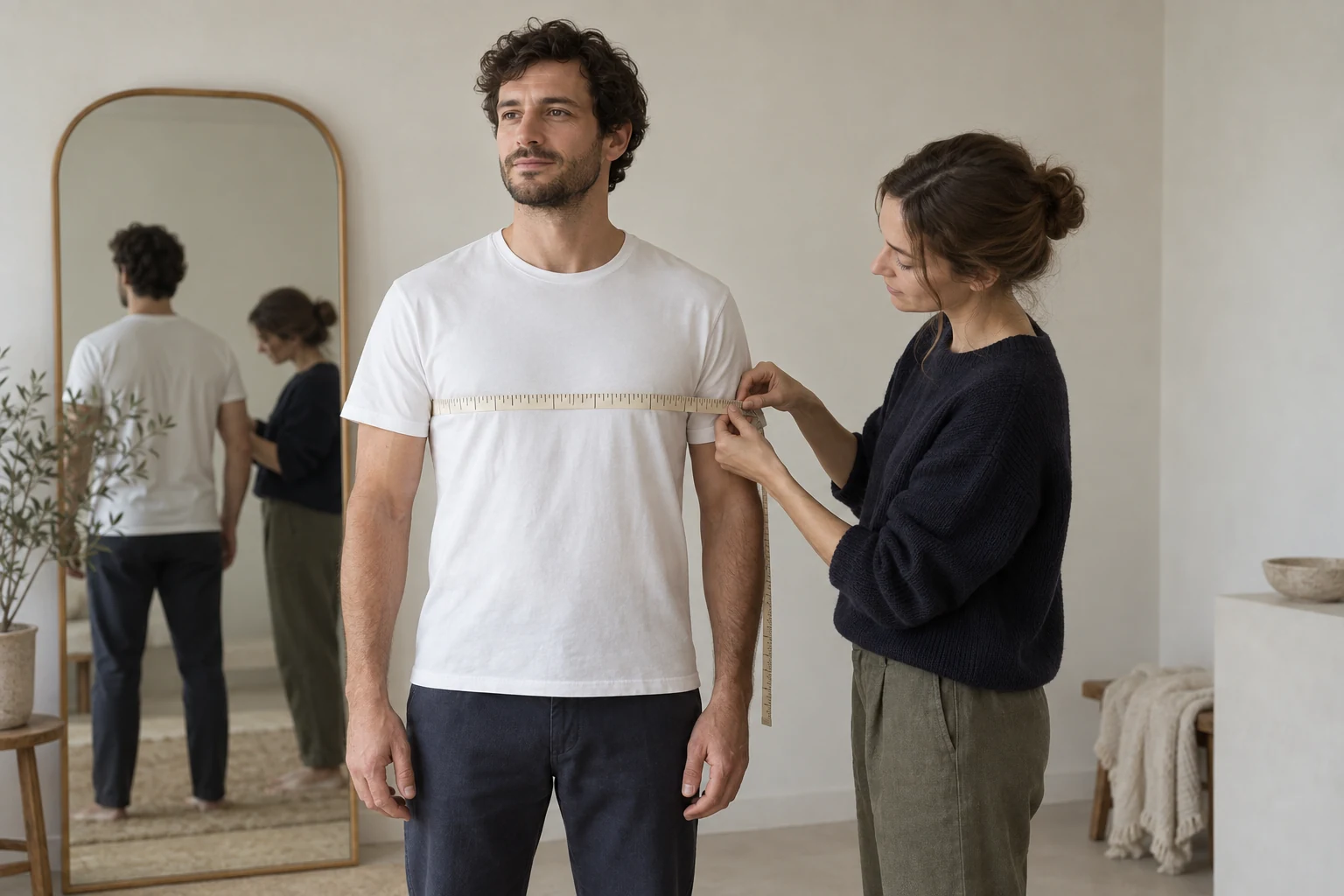
Sizing
How to measure your chest for shirts and jackets
How to measure chest size with a tape for shirts, jackets and dresses: where the tape goes for men and women, bust and high bust, and how to read size charts.
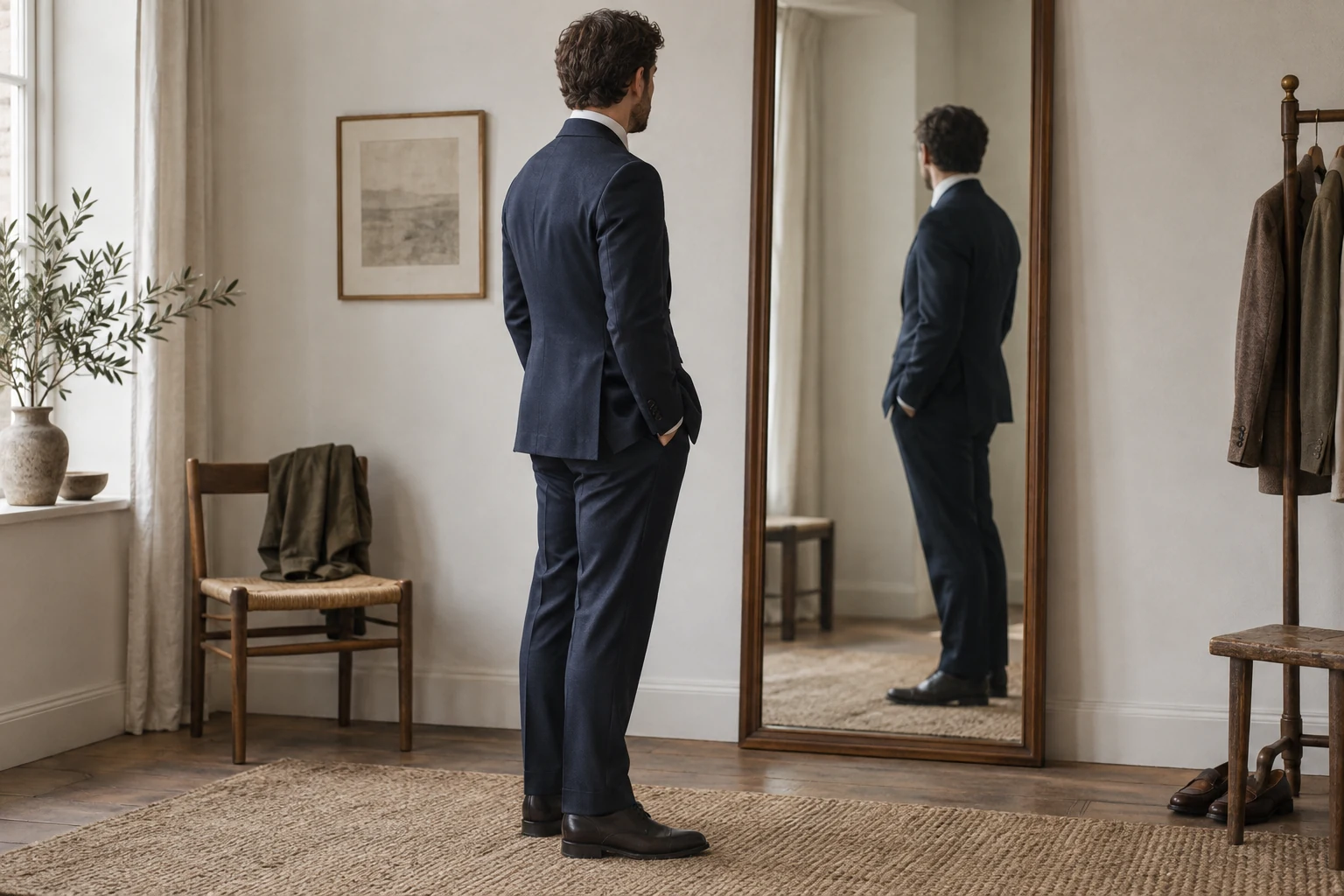
Suits and tailoring
How a suit should fit: shoulders, sleeves and length
How should a suit fit? Check the shoulders, collar, button, jacket length, sleeves and trousers in the mirror, and learn which problems a tailor can and cannot fix.
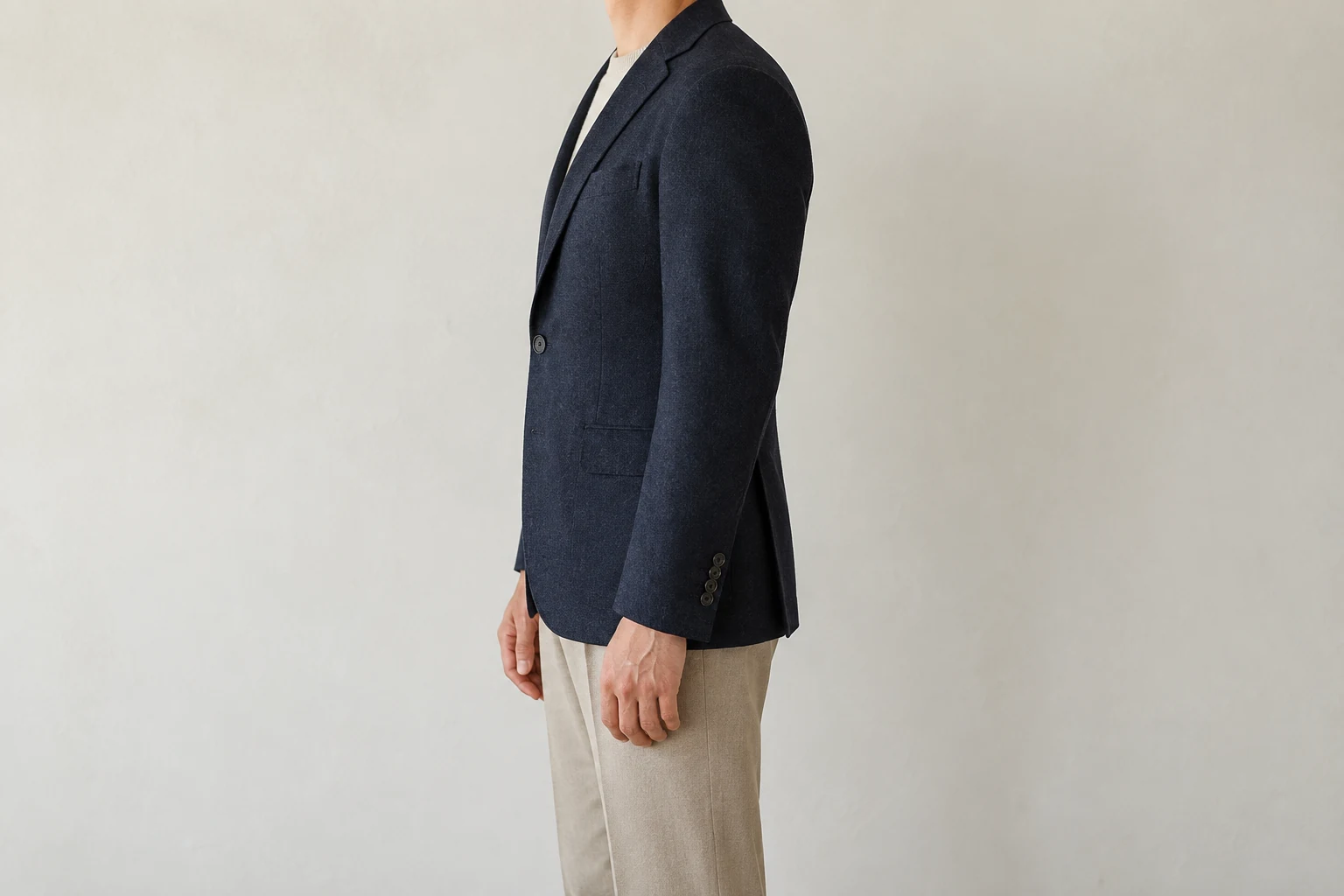
Suits and tailoring
How a blazer should fit, for men and women
How a blazer should fit at the shoulders, chest, button, sleeves and hem, with the differences for men's and women's cuts and which problems a tailor can fix.

Sizing
How to measure your waist and hips for clothes
Where your waist really is, how to measure your waist and hips accurately, how pants and jeans sizing differs, and how to read a size chart before you order.
Everyday style
Types of jackets and when to wear them
A clear guide to the main types of jackets for men and women, from blazers and bombers to parkas and trench coats, with the fabric and weather each one suits.